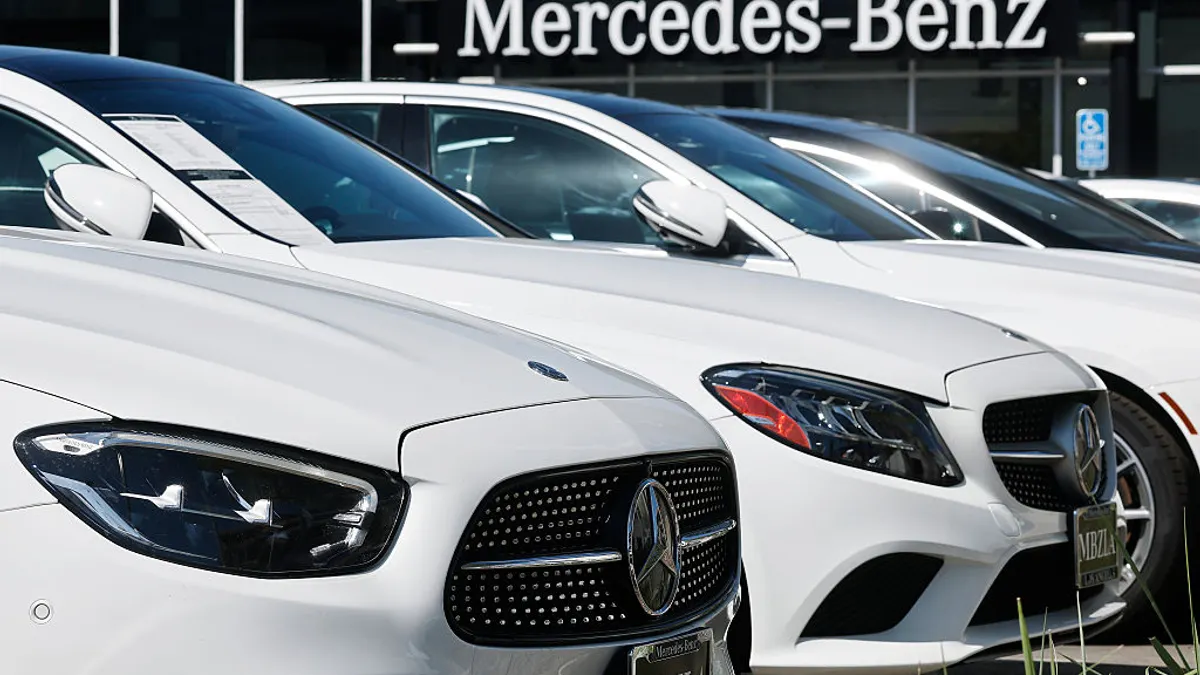
Megadealer groups with a high mix of luxury brands, such as Penske Automotive and Group 1, are hoping to close out 2025 with what has become a traditional year-end sales bang, fueled by consumer incentives from brands such as Lexus, Mercedes-Benz and BMW.
“We saw a little bit of inventory build in some of the luxury makes in the third quarter. I think the real tell will be the fourth quarter, which typically is the largest quarter of the year for the luxury makes and especially the Germans,” said Daryl Kenningham, president and CEO of Houston-based Group 1 Automotive.
“Before I think we would say we see a softening there, I'd want to see how the fourth quarter kind of shakes out and where that heads, to be honest with you,” he said when an analyst asked whether U.S. luxury-brand sales are softening, in a Q3 earnings conference call on Oct. 28.
Luxury mix
Group 1 reported that luxury brands accounted for 38% of its unit sales in the third quarter and 44% of its revenue. Overall, for its U.S. operations on a same-store basis, Group 1 reported total gross profit of $697.7 million in the third quarter, up 5.1% vs. a year ago.
In a separate conference call on Oct. 29, Penske Automotive Group said premium brands accounted for 72% of its retail automotive revenue mix in the third quarter. The group’s top three sellers were BMW/Mini, 26%; Audi, 10%; Porsche, 10%. Volume-import brands, such as Toyota and Honda, accounted for a total of 21% of the Penske Auto mix; U.S. domestic brands, just 4%.
“You look at Lexus, they’ve been one of the hotter luxury brands this year. … I think they’re competing neck and neck with BMW, for the highest-volume luxury car this year,” said Richard Shearing, chief operating officer of North American Operations for Penske Auto.
“I would expect BMW and Lexus to be pretty aggressive in the fourth quarter incentive-wise, to try and knock down that trophy,” he said in the conference call.
Penske Automotive said its retail automotive segment on a same-store basis had a gross profit of $1.04 billion in the third quarter, up 3% vs. a year ago. That includes operations in the United Kingdom and other overseas dealerships.
Leasing making a comeback?
Meanwhile, luxury-brand marketers eagerly await a comeback in leasing, which would be a shot in the arm for premium-luxury sales.
What’s so great about leasing? In the third-quarter conference call, Roger Penske, chair and CEO of Penske Automotive, cited the traditional virtues of leasing vs. loans, from the dealer point of view: a shorter trade cycle; first crack at pitching the lease customer a new-vehicle replacement at turn-in time; plus the inside track on acquiring off-lease returns, for profitable resale as Certified Pre-Owned.
However, across the auto retail industry, lease share fell when automakers slashed lease incentives during the pandemic and the computer-chip shortage. Roughly from 2020 through 2023, customers were lining up to buy scarce inventory, even over sticker price, so OEMs had little reason to offer lease discounts.
Wait until next year
Before the COVID-19 pandemic, leasing reliably accounted for around 30% of U.S. light-vehicle volume, and a much higher share of U.S. luxury brand volume. In the second quarter of 2025, leasing accounted for just 23.6% of new-vehicle originations, according to the latest detailed figures available from Experian Automotive.
Penske Automotive reported that in the third quarter leases accounted for 55% of its premium-brand volume. That included a spike in electric-vehicle leases. Many EVs were only eligible for a $7,500 federal tax break if they were leased but the tax break expired Sept. 30 and, with that, a big reason for leasing EVs expired too.
Leasing began a modest comeback in 2023, as new-vehicle inventory improved and OEMs were more motivated to offer lease incentives. Since most leases are for a 3-year term, customers are due to return those 2023 off-lease units in 2026. The return of those lease customers may encourage new-vehicle leasing, not to mention the resale of those lease returns as CPO used cars.
Shearing of Penske Automotive said in the call: “We expect the lower level of lease return maturities to bottom this year and begin improving in 2026.”