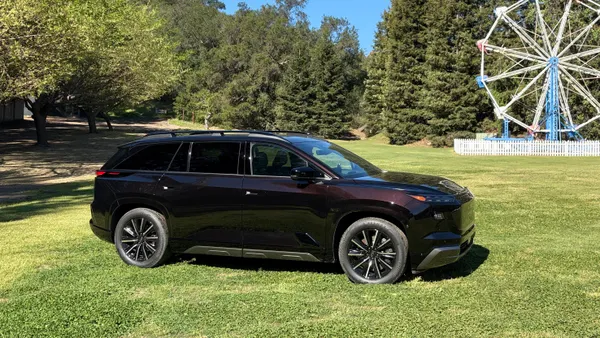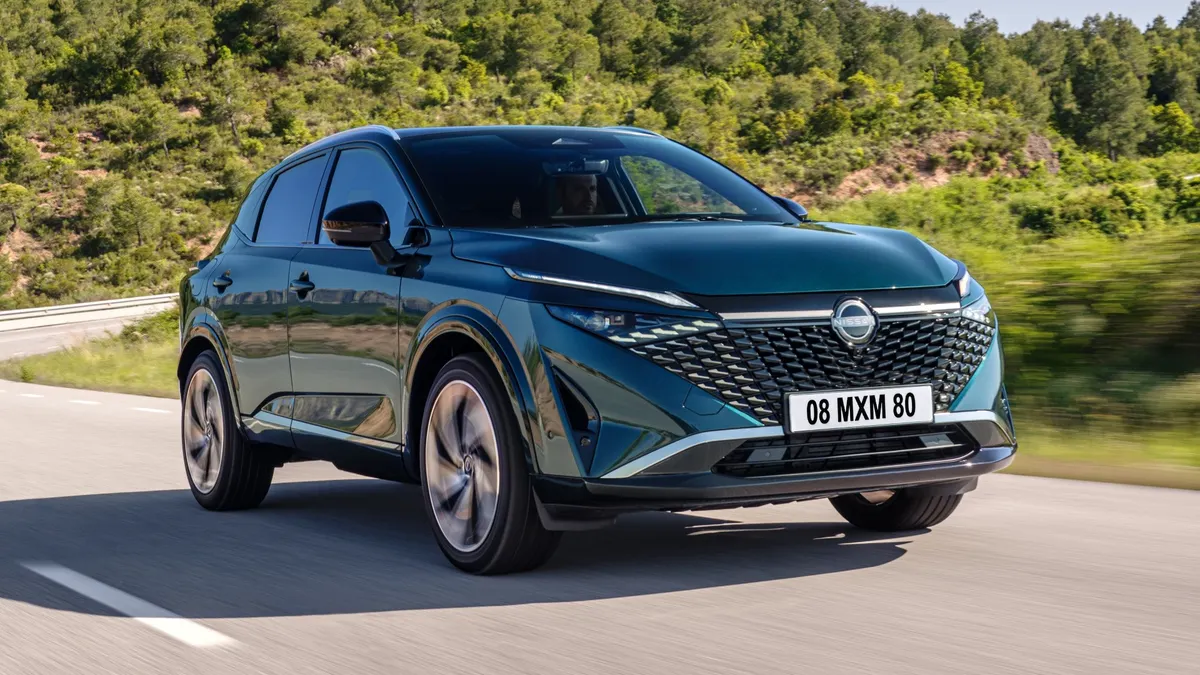
FARMINGTON HILLS, Mich. — Nissan is preparing to introduce its global e-Power hybrid system to the U.S. with the launch of the 2027 Rogue CUV later this year, Nissan officials confirmed at a press event at their technical center in suburban Detroit.
The e-Power Rogue will follow a different hybrid approach than rival hybrid versions of the Toyota RAV4 and Honda CR-V, among others. The Nissan system has a series hybrid setup in which an electric motor drives the wheels exclusively, with an internal-combustion engine serving as a generator, sending electricity to power the electric motor or to charge the onboard drive battery, explained Kurt Rosolowsky, vehicle evaluation and test engineer for Nissan North America, at an e-Power test drive program here. At no point does the combustion engine directly power the drive wheels, he emphasized.
Similar systems offered by other automakers are sometimes referred to as extended-range electric vehicle powertrains, including General Motors’ pioneering system employed in the now-shelved Chevrolet Volt and Cadillac ELR. Stellantis plans to employ an EREV system in the coming Ram 1500 REV and a version of the Jeep Grand Wagoneer.
Unlike the coming Rogue, those vehicles also employ a charging port and a larger battery to allow longer driving distances without the engine-generator having to start up to support the powertrain. The Rogue e-Power eschews plug-in charging in favor of a smaller, lighter 2.1-kWh lithium-ion battery, Rosolowsky said. Regenerative braking also recharges the battery.
Nissan has sold 1.6 million vehicles with e-Power globally since the first-generation system was introduced in 2017 in the Japanese market Note subcompact and Serena MPV. Now in its third generation, the system employs a turbocharged 1.5L 3-cyl. powering a generator, versus the more complex variable-compression turbo 1.5L 3-cyl. in the previous generations, Rosolowsky noted. The new system is optimized for European and U.S. driving at higher speeds over longer distances, he said.
Innovations in the latest system include a larger, more efficient turbocharger, cold-spray valve seats, and what Nissan is calling its 5-in-1 motor-generator. The latter combines the previously disparate parts of the system — motor, generator, power inverter, reducer gearing and increaser gearing — in one unit, saving weight and creating a more efficient system, Rosolowsky said.
In addition, the unique valve seats allow engineers to implement what they’ve dubbed STARC, for “strong tumble and appropriately stretched robust ignition channel.” As a result of the engine improvements, the ICE operates at a high, 42% thermal efficiency versus a typical engine’s 30%-35% efficiency, Rosolowsky said.
Nissan doesn’t yet have U.S. EPA ratings for the Rogue e-Power, but its more optimistic WLTP fuel economy rating for the system in a front-drive Nissan Qashqai e-Power sold in Europe is 4.5L/100 km, equal to 52 mpg, significantly better than the 32 mpg combined rating for the current U.S.-model front-drive Rogue powered by a 1.5L VC-Turbo.
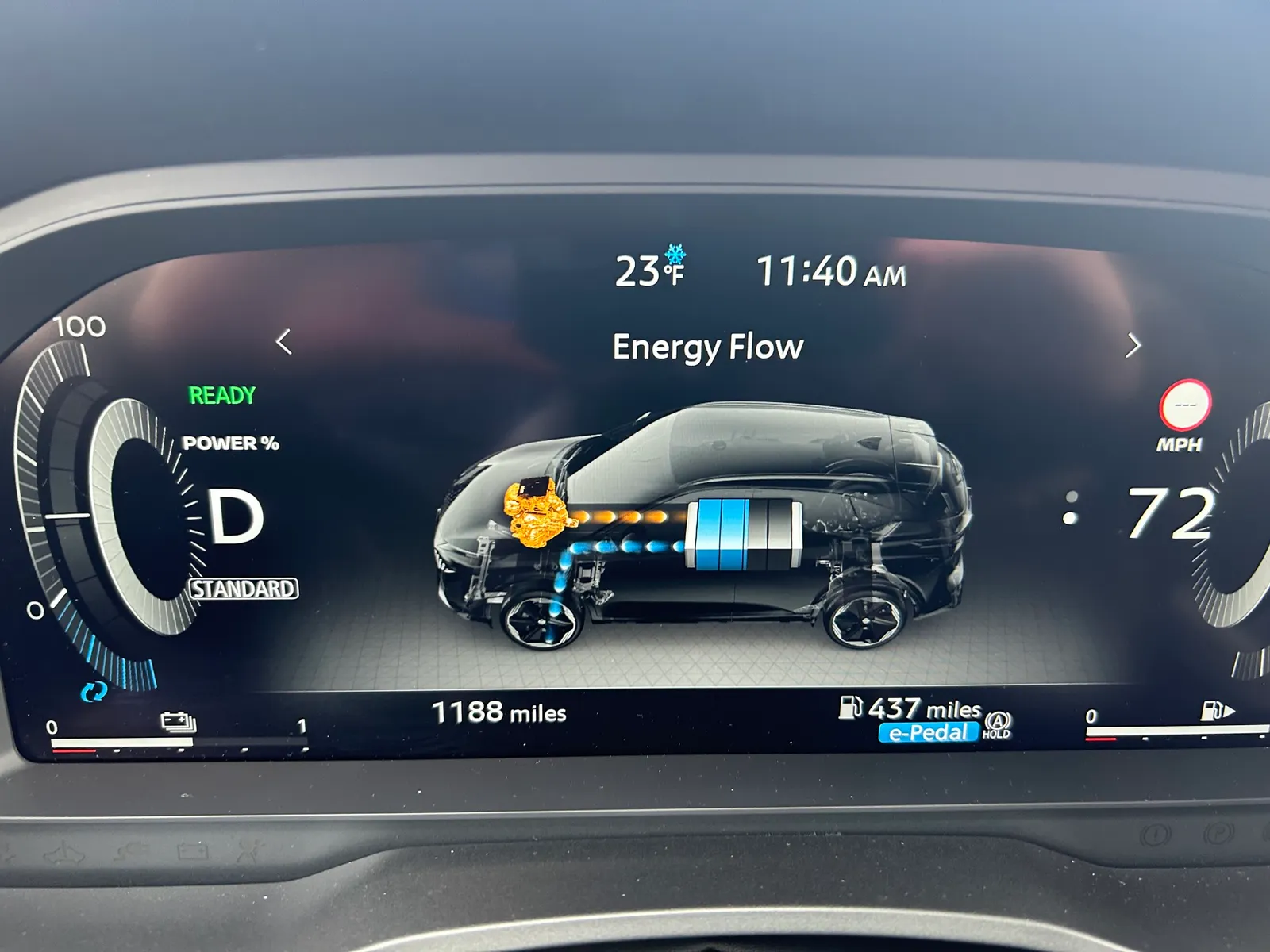
For the U.S. market, the Rogue e-Power model will come exclusively with all-wheel drive, employing a second electric motor on the rear axle, Rosolowsky said. The hybrid version will be offered as an optional powertrain alongside the standard 1.5L VC-Turbo.
Based on sales of e-Power in other markets where the hybrid and traditional powertrains hold equal shares, Nissan officials expect similar results in the U.S.
“We’re not bringing it to the market because we just see it as a niche powertrain,” Rosolowsky said.
The e-Power system is expected to roll out into other global Nissan models as each begins its next life cycle, but Nissan officials declined to share specifics on whether additional U.S. models — especially larger vehicles in the Japanese automaker’s lineup — would employ the system. The Kicks is already on sale in Mexico with e-Power, they noted.