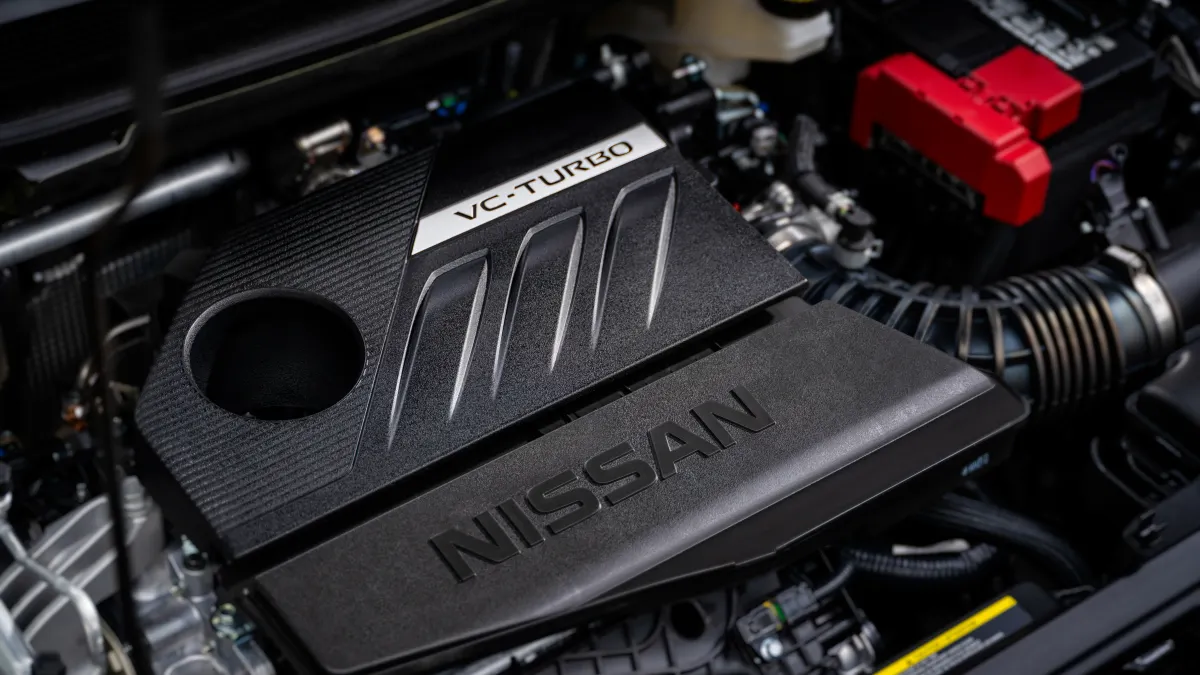
Nissan North America has issued two recalls covering a total of 642,698 model year 2023-2025 Rogue SUVs equipped with 3-cylinder, 1.5-liter engines featuring the automaker’s VC-Turbo technology due to mechanical problems. The separate recalls were each dated Feb. 12 in National Highway Traffic Safety Administration reports.
One of the recalls covers nearly 324,000 Rogue SUVs for increased engine oil temperatures that can potentially cause bearing failures or fire risk. The current recall expands a previous recall in June 2025 that involved multiple Nissan models for engine bearing failures and other mechanical issues, which included the Rogue, Altima and certain Infiniti models.
The second recall covers nearly 319,000 Rogue SUVs for a defect in the electronic throttle body housing. The condition can lead to fractured internal throttle body gears that may prevent forward or reverse drive and increase the risk of a crash, according to the recall report.
Some of the recalled Rogue models are subject to both recalls.
The two recalls include Rogue models produced at various times between Oct. 2, 2022, and April 28, 2025. Within the expanded bearing failure recall, just 0.6% of the recall population is estimated to have the defect. However, Nissan estimates 100% of the vehicles recalled for possible broken throttle body gears have the defect.
Under both recalls, dealers will reprogram the engine control module software and conduct vehicle inspections at no cost, according to the recall reports. For the engine bearing recall, dealers will also test drive vehicles, inspect oil pans for metal debris and if necessary, replace the engine. For the throttle body recall, dealers will replace the assembly if needed. All repairs will be free.
Owner notification letters for both recalls are expected to be sent March 27.
A multi-year investigation of engine bearing failures
The recall for engine bearing failures stems from a multi-year investigation into reports of VC-Turbo engine problems that led to a June 2025 recall of nearly 444,000 Nissan Rogue, Altima and Infiniti brand vehicles.
Nissan issued the latest recall after identifying high oil temperature and lack of lubrication as additional contributing factors causing engine bearings to seize. Some of these vehicles may have been included in the June 2025 recall. However, the defect will be corrected by either recall remedy, per the recall report.
Nissan began reviewing and responding to NHTSA queries in September 2023 after receiving vehicle owner questionnaires and field reports concerning potential engine bearing failures and loss of drive power. In December 2023, the NHTSA opened a preliminary investigation of alleged engine failures in certain Altima, Infiniti and Rogue vehicles.
Between February 2024 and April 2024, Nissan told the NHTSA that the engine issues did not pose an unreasonable safety risk, noting that the bearing failures occurred over time and drivers would be warned by unusual noises or vibration before a complete failure. The automaker also said that the number of field reports were declining, and no crashes or injuries were reported. Nissan also informed the NHTSA at the time that it was replacing the suspect engines under warranty.
Between May 2024 and April 2025, Nissan’s internal investigation continued and the automaker determined that the engine issues were the result of manufacturing problems. The automaker developed software to improve detection of engine mechanical issues and planned a customer service campaign to raise awareness of the potential problem. However, following increased scrutiny from the NHTSA, including a report of a vehicle fire potentially related to the issue, Nissan approved the first recall in June 2025.
After the June 2025 recall was initiated, Nissan continued to monitor field data. Between August and December 2025, the company identified additional bearing seizure incidents in Rogue vehicles that received the software update. The automaker also received additional information requests from NHTSA related to Rogue engine problems after the agency received complaints of abnormal noises, engine stalling and difficulty starting.
On Feb. 4, Nissan determined through its engine teardown analysis that higher oil temperatures could degrade lubrication and contribute to bearing seizures in the 3-cylinder, 1.5-liter engine. The company then amended the original June recall and expanded the recall population for the latest recall.
Nissan reported 690 warranty claims related to the issue, but said it’s not aware of any crashes or injuries related to the issue.
Broken electronic throttle body gears in 1.5L engines
The second recall concerns gears in the electronic throttle body that can break due to stress from a routine diagnostic test that takes place at each vehicle startup. The test activates internal gears within the throttle body, which rotate and press against a mechanical stopper. In vehicles with affected engine control module software however, the test can weaken or fracture the throttle body gears over time.
A broken throttle gear can potentially cause a loss of engine power, including keeping the vehicle from moving forward or backward, which can increase the risk of a crash.
The electronic throttle body is a key component of modern vehicles equipped with "drive-by-wire" systems. It sends a signal to the vehicle’s electronic control unit when a driver presses the accelerator pedal to raise the engine RPM electronically.
These units use internal polymer gears for thermal management to operate the throttle opening, as engine operating temperatures as high as 250 degrees could cause gears made of metal to expand and potentially bind. These polymer gears are subject to teeth fractures in the recalled Nissan vehicles, which can lead to the throttle body getting stuck.
The problem was discovered after a Nissan dealer service technician reported a no-start condition on Feb. 27, 2025, involving a 2024 Rogue, which led the company to open a probe into the issue. Nissan’s investigation determined that the vehicle had a stuck throttle plate, which was resolved after the technician replaced the engine’s throttle body unit.
Between March and April 2025, Nissan continued its investigation into the problem and found that the malfunction was caused by a fractured polymer throttle body gear. The recall report identifies 27 individual part numbers of associated throttle body units.
Between May and June 2025, the company reviewed internal records and discovered that production of the 2024 Rogue included updated engine control module software that resulted in prolonged contact between the throttle gear and a mechanical stopper during the diagnostic startup test.
Nissan determined that over time the throttle gear teeth could weaken or break, and also that a broken piece of the gear could prevent normal movement and trigger diagnostic trouble codes.
Nissan planned to implement a customer service campaign to raise awareness of potential throttle body issues, but following conversations with NHTSA in December 2025 and January the company elected to recall the vehicles on Feb. 4.
Nissan reported 3,111 warranty claims related to the throttle body issue, but is not aware of any related crashes or injuries.