NEW YORK -- The longer the Iran War lasts, the worse the consequences will be for U.S. auto sales and the U.S. economy in general, speakers said at the New York Auto Forum last week, even though – for now – sales forecasts remain largely unchanged.
“Everybody would like more certainty,” said Patrick Manzi, chief economist for the National Auto Dealers Association. “The longer it goes on, the longer it will take for the effects to ripple through the economy.”
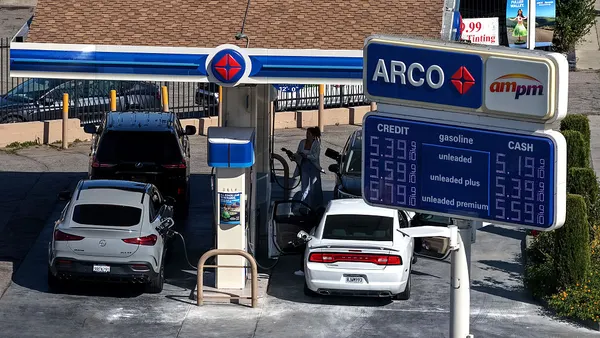
Besides the direct effect of higher energy prices, the Iran war also potentially disrupts auto-industry supply chains, he said. The war also creates economic unease and uncertainty, and that could lead to tighter borrowing conditions, Manzi said.
Other indirect effects include higher global prices for products like fertilizer, which could lead to higher food prices. The net result is, if the fighting persists, the world economy is “likely to see inflation accelerate again across a variety of goods,” Manzi said.
A size XXL asterisk
Meanwhile, even though the Iran war is an extra-extra-large asterisk, auto sales forecasts are surprisingly upbeat under the circumstances — roughly flat compared with 2025.
At the forum, JD Power stuck with its 2026 U.S. light-vehicle forecast, issued in February at the NADA Show in Las Vegas, of 16.3 million cars and trucks, even with 2025.
“While the industry will continue to face numerous macroeconomic uncertainties, we anticipate new-vehicle sales for 2026 will match the volumes we saw last year,” Thomas King, president, JD Power OEM Solutions, said at the forum.
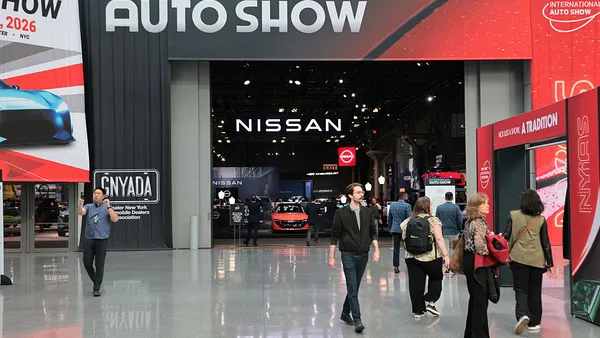
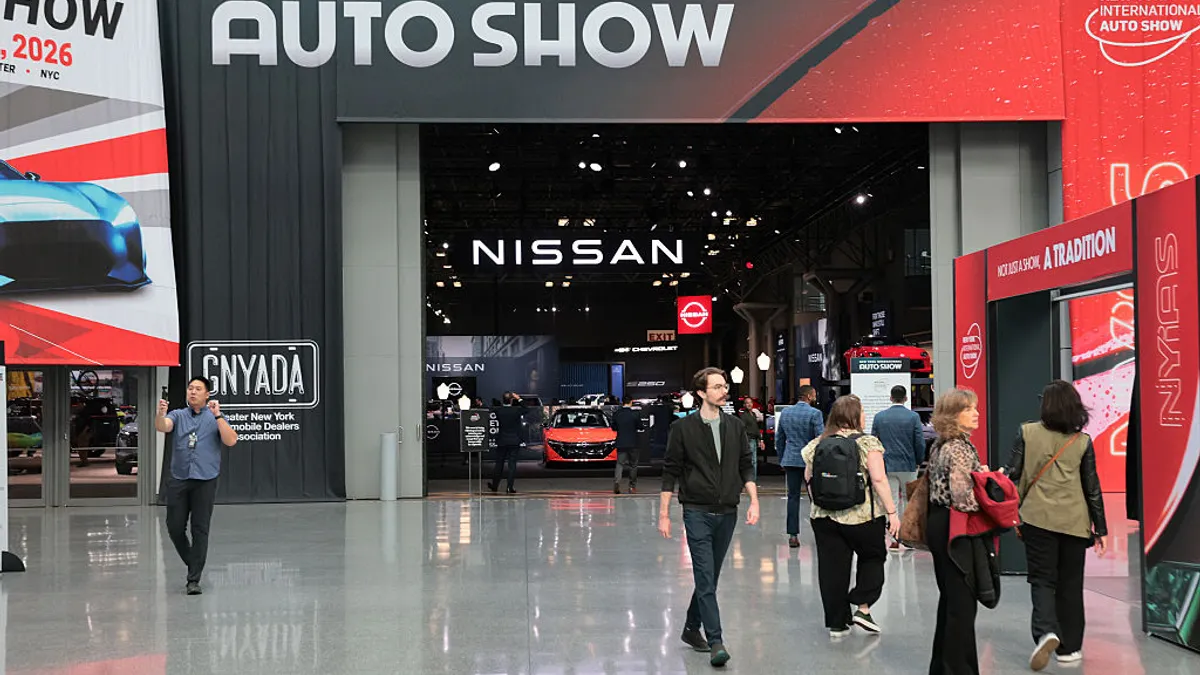
The forum here, on March 31, was co-sponsored by NADA, JD Power and the Greater New York Automobile Dealers Association, hosts of the New York International Auto Show.
The forum and the auto show are held at the Jacob K. Javits Convention Center, on Manhattan’s west side. Press Days for the auto show were April 1 and April 2. The show is open to the public April 3-12.
Separately, Cox Automotive on March 25 also stuck with their earlier 2026 light-vehicle forecast of 15.8 million new cars and trucks, despite the Mideast fighting.
Auto sales take a licking, keep on ticking
Even without the war, pre-existing threats to U.S. auto sales include high sticker prices, high interest rates and high costs for auto insurance, repair and maintenance. Not to mention shaky consumer confidence and tougher times for consumers with subprime credit histories.
However, there are still some significant tailwinds for auto sales in 2026, said King of JD Power.
Those include a comeback in lease maturities, he said. Auto lenders expect an increase of around 500,000 lease maturities in 2026, to 2.4 million, versus 1.9 million in 2025.
In 2026, that should boost sales of profitable certified pre-owned vehicles, which are typically sourced from lease returns. CPO units are reconditioned according to an OEM checklist and come with a factory-backed warranty, on top of whatever remains of the first owner’s new-car warranty.
And since returning lease customers are much more likely than returning loan customers to lease their next new vehicle, the increase in lease maturities should also support an increase in lease penetration in 2026.
In addition, King said average lease payments haven’t risen as much as the average new-car loan payment in recent years, so returning lease customers aren’t going to experience as much sticker shock as returning loan customers. “Lessees coming back today are acclimated to these payments,” he said.
Overall, King said dealer profitability is still good, even if it’s down from record highs. JD Power says the total average retailer new-car profit per unit, defined as new-car gross profit plus Finance & Insurance, was about $6,100 in the first quarter, compared with $6,800 per unit a year ago, or $7,300 in the first quarter of 2024.
“It is a decline,” King said. “But it’s still a phenomenal result.”