Dive Brief:
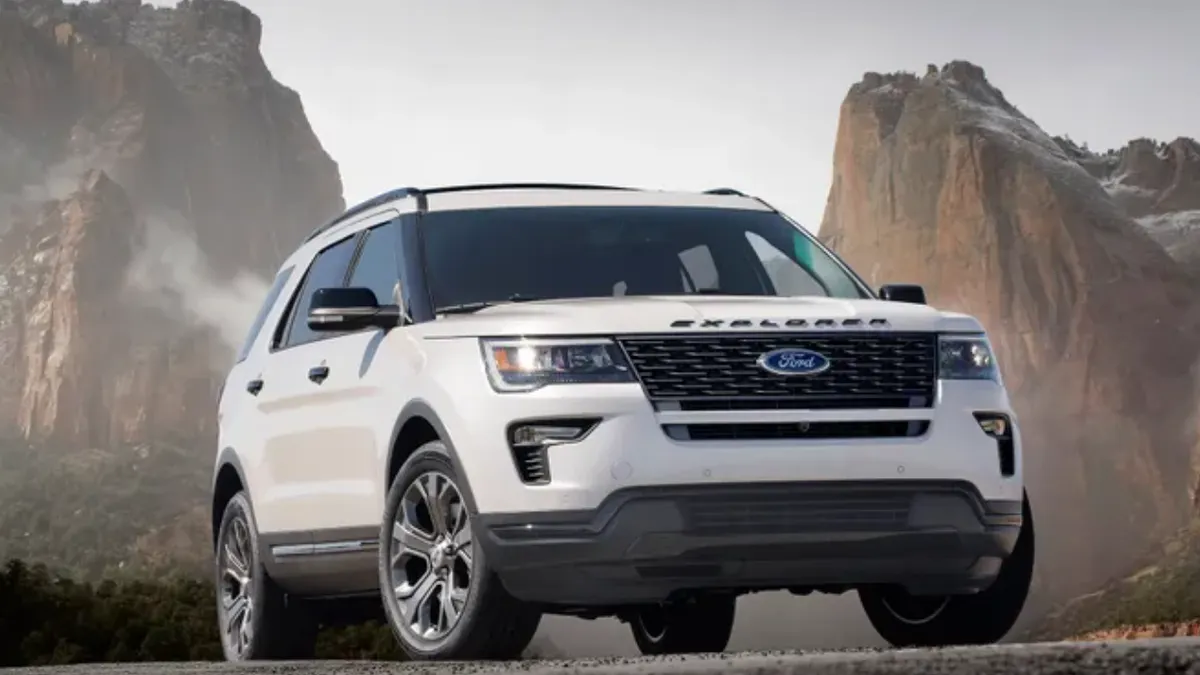
- Ford Motor Co. has issued a recall for nearly 413,000 Explorer SUVs due to rear suspension toe links that can fracture, increasing the risk of a crash, according to the National Highway Traffic Safety Administration.
- The recall covers 2017-2019 model year Explorer models produced between May 16, 2017, and March 3, 2019. Ford estimates about 1% of recalled vehicles have the defect.
- Dealers will replace rear suspension toe links with an improved design at no cost. Owner notification letters are expected to be mailed beginning March 9.
Dive Insight:
The rear suspension toe links help ensure proper wheel alignment and vehicle stability. If one breaks, steering control can be reduced, increasing the risk of a crash, per the report. Drivers of the recalled Explorer SUVs may also notice a clunking noise from the rear of the vehicle, abnormal handling or visible signs of misaligned rear wheels.
Ford has grappled with rear suspension toe link issues in Explorer SUVs since at least model year 2014, when it recalled certain 2014-2015 models in June 2016 due to improperly welded rear toe links that could fracture.
In July 2021, the company recalled more than 630,000, model year 2013-2017 Explorer SUVs for toe link fractures caused by corroded cross-axis ball joints, which are pressed into the rear wheel knuckle, that could seize and place added stress on the toe links causing their welds to fracture. The ball joints in that recall were manufactured by Michigan-based Tier 1 supplier Aludyne.
All reported cases at the time involved vehicles in colder regions of the U.S. and Canada that use road salt to de-ice roadways in the winter months. Prolonged exposure to road salt can cause corrosion and rusting of a vehicle's suspension components.
According to Ford's internal analysis, failure risks were prevalent on Explorer SUVs “exposed to years of operation in regions with a combination of cold winter weather with relative high humidity and substantial road salt use,” per the recall report.
The remedy for the 2021 recall involved replacing the rear wheel knuckle ball joints with a design that’s more resistant to corrosion, manufactured by supplier SAF-Holland. Ford Explorer models produced after September 2017 were built with the upgraded SAF-made components, which were believed to be more durable.
As of July 2021, Ford did not receive any reports of ball joint seizure or corrosion involving Explorer SUVs vehicles equipped with the SAF supplied parts, according to the 2021 recall report.
However, on Jan. 13, 2026, the NHTSA notified the automaker of five vehicle owner questionnaires it received that detailed loss of steering control stemming from faulty rear toe links in model year 2018 Explorer SUVs. These models were equipped with the updated cross-axis ball joints produced by SAF with higher resistance to corrosion.
Ford’s Critical Concern Review Group opened an investigation into the issue on Jan. 20. The group soon identified 26 reports of rear toe link fractures in Explorer SUVs equipped with SAF cross-axis ball joints.
According to the recall report, Ford has not determined the root cause of the toe link fractures, but some of the field reports point to cross-axis ball joint seizure putting additional stress on the toe links, similar to the issue that prompted the previous recall in July 2021.
Based on its findings, Ford’s Field Review Committee approved the recall on Feb. 13.
As of Feb. 20, Ford is aware of two crashes related to fractured toe links that involved vehicles hitting guardrails or road barriers. The company is not aware of any injuries related to the issue.
The recalled Explorer models will be repaired with newly designed rear toe links that are stronger than the previous versions and more resistant to stress in the event of ball joint seizure, per the recall report.