

Solid-state battery production could be the electric powertrain differentiator that Europe’s automakers are looking for to carve out a competitive advantage.
That’s the view of Graeme Purdy, CEO of Ilika, the U.K.-headquartered solid state battery developer. Purdy highlighted that, in the wake of the collapse of its biggest gigafactory investment, Northvolt in 2025, Europe faces a critical point in domestic battery development.
In an interview with WardsAuto, he suggested Europe has a mountain to climb to match the scale of battery production in Asia — but it has opportunities to do this catching-up with better control over the technology.
“Europe is struggling to replicate that,” said Purdy. “So, the industry is at an interesting nexus, and what we're seeing is that Europe is really focusing on taking a license to Asian technology and using Asian assistance in order to get those gigafactories up and running.”
This is the reverse of what happened in China where legacy German brands, Mercedes-Benz, BMW and the Volkswagen Group, allowed access to their technology to get the domestic automaker industry up and running, Purdy said.
“Actually, the most successful gigafactories here in Europe are generally either Asian-owned or joint ventures with Asian companies,” he explained.
While this will allow the scaling up of battery production, Europe will need its own differentiator technology to stay globally competitive and solid-state could hold the answer, said Purdy.
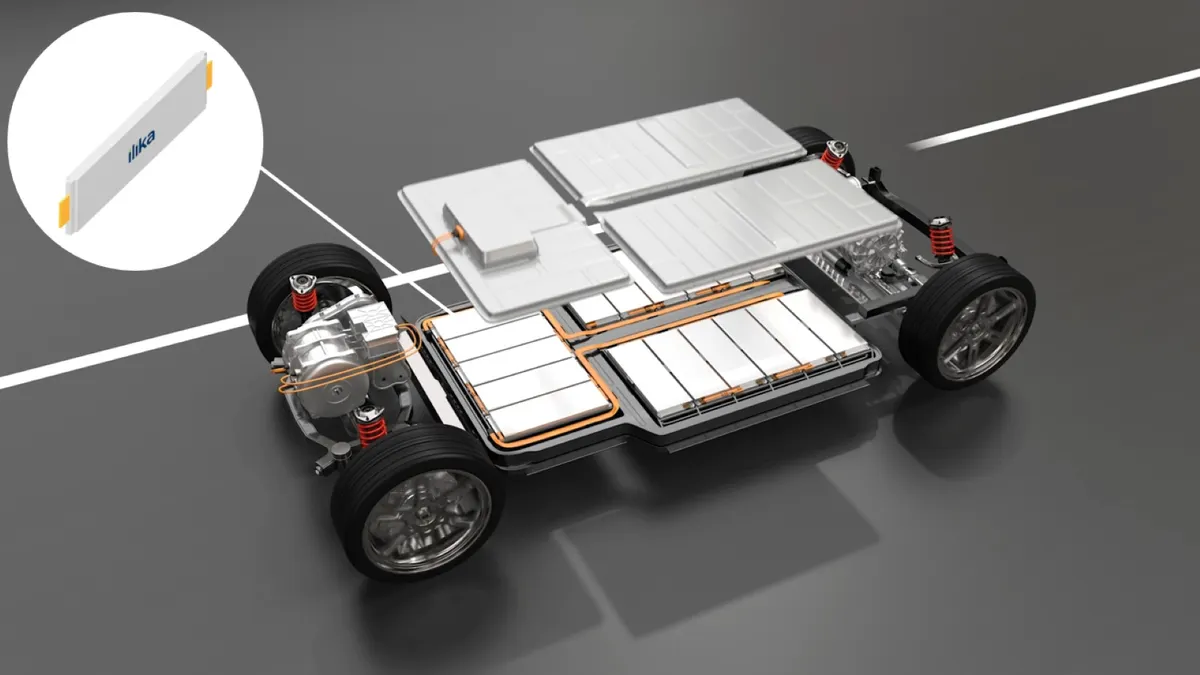
“They've got a series of parameters that are improved relative to existing lithium-ion batteries,” he said. “There are many different combinations of materials that give you a solid outcome,” added Purdy.
Among these are that the production costs of solid-state batteries, when manufactured at scale, offer potential savings for the automaker and the consumer, according to Purdy.
Another is that the technology can use a lithium metal or silicon anode instead of a graphite anode, which gives the battery a greater energy density, Purdy said. As an aside, he added that Asia has an advantage on graphite production so this is also another differentiator for Europe.
“So, you get a greater capacity for a given weight or volume of battery and it could be that they have a high charge rate,” he said.
An additional aspect of solid-state is that with the cathode used, the positive electrode, there are a variety of choices for high nickel or high manganese lithium compounds, which move away from some of the traditional lithium iron phosphate compounds that have been pioneered by China.
“So, I think the answer is we're going to see more diversity of chemistry going forward,” Purdy said. “And, you know, some of that will be less dependent on the Chinese supply chain,” he explained.
Most automakers are exploring the potential of solid-state batteries because competing head-to-head with China using the same technology is not a sustainable strategy, Purdy insisted.
However, the timeframe for solid-state to reach commercial viability is still in some doubt, he said.
“We need to see those gigafactories on a profitable footing and then, within a couple of years of that, you would expect then to see the gigafactories bringing in a second phase of expansion,” which would include solid-state products, he added.