Editor’s note: John McElroy is the president of BlueSky Productions, which produces Autoline Daily, and a longtime opinion columnist for WardsAuto. Views expressed here are his own.
The world sure feels like a dangerous place to me right now. Globalism is dead or dying. The world is fracturing into clumps of trade blocks largely at odds with each other.
On top of that, the nature of warfare is being turned on its head in Ukraine and in the Middle East. Swarms of AI-driven drones and massive missile barrages are obsoleting the weapon systems that most militaries have in their arsenals. And as these conflicts accelerate, a quiet revolution is taking root — a rapidly growing convergence between the military and auto industries in the U.S. and Europe.
The U.S. defense sector is facing a massive wake-up call. It makes the most fearsome weapons systems in the world, but they’re horrifically complicated, extremely expensive and were never designed for mass production. Military experts tell me it takes the United States 15 years to get a major new weapons system in its warfighters’ hands. Many programs are typically years behind schedule and billions over budget.
The Pentagon recognizes it is facing a crisis. In January it officially launched Business Operators for National Defense, a program to recruit “experienced industry experts” — including retired automotive executives — to help it speed up its product development, procurement and manufacturing processes. I personally know three executives who have volunteered their time, and the Pentagon is looking for more.
But it goes beyond recruiting auto execs. The military wants the auto industry directly involved in making materials for its warfighters. And automakers see this as an opportunity for new business that leverages investments they’ve already made.
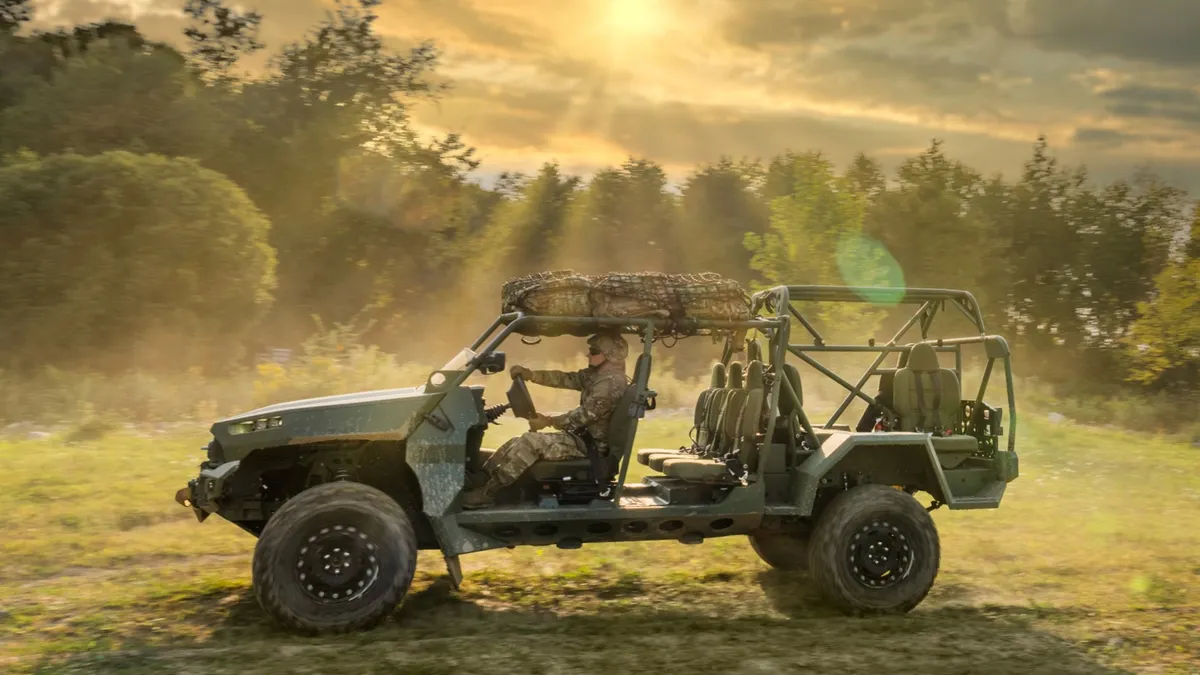
- General Motors Co. is leading the charge in the U.S. with its Infantry Squad Vehicle, built directly off the Chevy Colorado platform, while simultaneously developing mobile fuel cell generators to power off-grid military outposts.
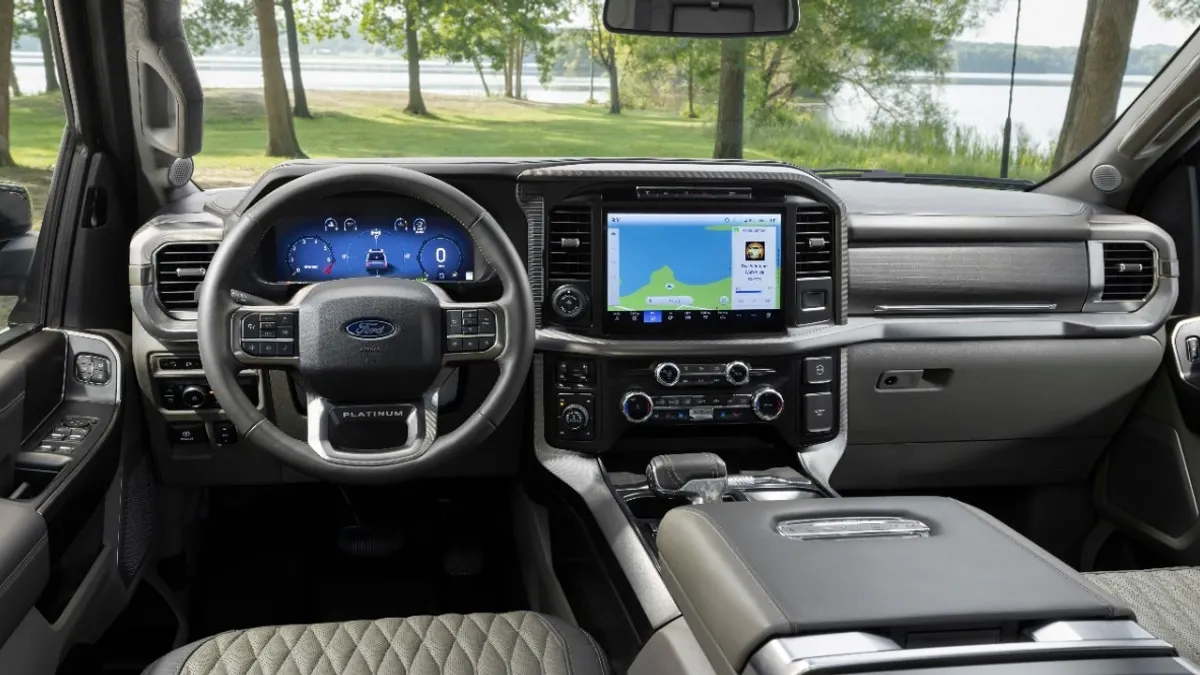
- Ford Motor Co. is expanding its footprint in this segment with its subsidiary, Industrial Platform, the company confirmed in July, turning the F-Series Super Duty pickup into the backbone for modular tactical trucks for the US, and the Super Duty version of the Ranger pickup for other markets, especially in Europe.
- Volkswagen Group is partnering with Israel’s Rafael Advanced Defense Systems to adapt commercial platforms like the Amarok pickup and Crafter van into mobile launch-and-command units for anti-missile systems like the Iron Dome.
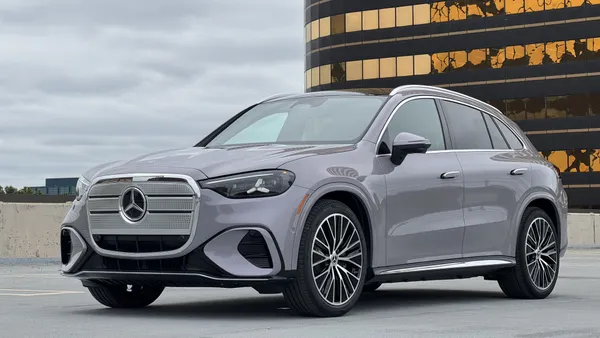
- Mercedes-Benz Group is actively turning its rugged G-Class SUV and Sprinter van platforms into mobile anti-drone defense batteries, including a memorandum of understanding with AI-powered drone firm Tytan Technologies.
- Renault Group has partnered with defense titan Thales to manufacture drone parts using commercial automotive supply chains.
The goal is simple: militaries want to inject the auto industry’s mass-manufacturing DNA directly into the bureaucracy of the defense sector to cut through the noise and build things faster.
If all of this makes you feel a little uncomfortable, you’re not alone. I don’t like the way things are going. But let’s be realistic: doing nothing is a poor choice.
We live in a world where global logistics, advanced manufacturing, and scale are the ultimate deterrents to war. Most auto assembly plants are running below capacity and if some of that capacity can be pivoted for military procurement it makes financial and operational sense.
This isn’t the first time something like this happened. In 1939 the U.S. Army and Navy put on presentations at the Society of Automotive Engineers convention in Detroit to get the auto industry thinking about wartime conversion. That was almost three years before the U.S. got into World War II. At each subsequent SAE gathering, more and more of the presentations were about wartime conversion.
In 1940, the Army Air Corps assigned Major Jimmy Doolittle to Detroit to organize a “shotgun marriage” between automakers and aircraft companies to convert auto assembly lines to making bombers. That same year, President Franklin D. Roosevelt recruited GM President William “Bill” Knudsen to be in charge of wartime production.
As A.J. Baime lays out in “The Arsenal of Democracy,” the results were dramatic. Detroit’s industrial capacity played an outside role in winning the war.
Detroit over the years took on a mythology of its own. Today, the common perception is that Pearl Harbor got bombed, the auto industry flipped a switch, and overnight it went from making cars to making tanks, planes and machine guns.
That’s not how it happened. It took years of advanced planning to get there. And I kind of get the feeling that the same thing is happening again today.