Dealers are bombarded with information on the latest artificial intelligence tools and how they will improve their dealership’s operations. But finding AI that actually makes that operation more efficient can be tough.
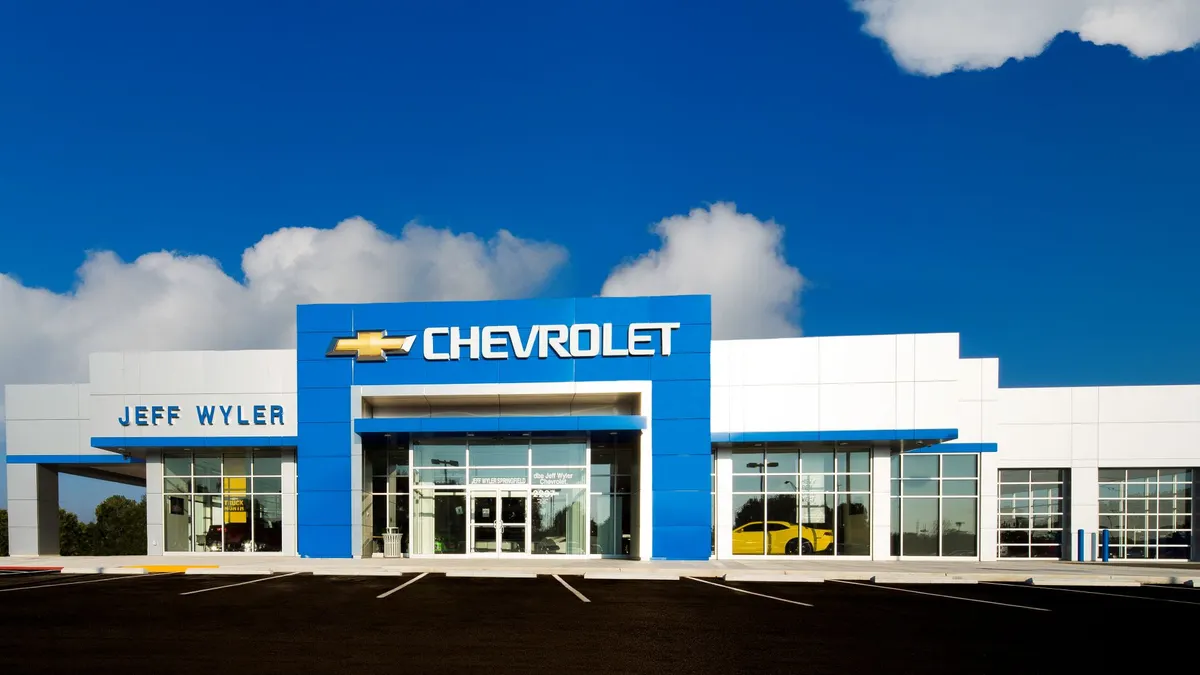
When the Jeff Wyler Automotive Family faced the same issue, it turned inward for a solution. Several of its employees went to school to learn how to use AI. Now, when the group identifies an area where AI could improve its efficiency, it creates its own AI tool to provide assistance.
“The biggest thing to do is, you can leverage agentic AI to build solutions to daily tasks,” Kevin Frye, head coach of marketing at the Jeff Wyler Automotive Family, told WardsAuto on a phone call. While Jeff Wyler Automotive Family is large – it has 24 rooftops across Ohio, Kentucky and Indiana, including several auto malls, and will sell between 55,000 and 60,000 new and used vehicles this year – this do-it-yourself approach isn’t just for big groups, Frye emphasized.
“I don’t want to discourage dealers,” he said. “You can be a single point and follow this same strategy.”
Finding employees who are up to the challenge shouldn’t be difficult, Frye said. “The young talent that is coming into this industry is spectacular,” he said.
Look locally for training
Locating AI training courses shouldn’t be hard, Frye said. “I guarantee every city in this country, you can go online and find a course,” he said. “That is the only way you are going to stay ahead.” Jeff Wyler Automotive Family found that at the University of Cincinnati.
Last year, Michael McDonald, assistant head coach of marketing at Jeff Wyler Automotive Family, took an online Artificial Intelligence Certification course through the university. This year, McDonald, website team leader Jacob Cain and co-op and compliance coach Kyle Bolin took a different University of Cincinnati online AI course.
The three areas where the Jeff Wyler Automotive Family has seen AI make the biggest improvements in efficiency, according to Frye, are:
- Standardization. The group used AI to standardize employee signatures for all its employees at all its dealerships.
- Search Engine Optimization. Website team leader Cain built an agentic AI workflow that went through the group’s more than 60 dealership websites to see what SEO elements each site was missing. Actual humans then went in to make the changes, but using AI vastly speeded up the process, Frye said. “You’d be lucky to get through four or five a day” if human beings looked through the websites for missing SEO elements, he said.
- Compliance. “This is my favorite,” Frye said. Jeff Wyler Automotive Family in January of this year acquired 14 new luxury and ultra-luxury franchises. There were two to three thousand pages of manufacturer’s compliance information to implement, he said. “We use AI to ingest all the OE compliance rules,” Frye said. “We built this ourselves with agentic AI.” It hugely boosted efficiency, he said.
Jeff Wyler Automotive Family now has a weekly online AI hour that all available staff can join, including its graphics and video producers, Frye said. In the meeting, they discuss challenges and how AI might be used to address them.
Look outside automotive
The University of Cincinnati AI courses weren’t automotive-industry specific, but they didn’t need to be, Frye said. The group is approached weekly by vendors in the automotive space doing “exactly what we are doing” with AI, he said.
“The primary fault in automotive and dealers is they rarely look outside the automotive vertical.” The best ideas can come from outside the automotive industry, Frye said, while at an automotive AI conference “you get a narrow view.”
The emphasis of AI usage has to be on efficiency, Frye said. “The dealer that can operate most efficiently is going to win the profitability game.” The retail automotive business grows through volume or efficiency and “selling more cars, you are only going to go so far with that,” he said.