When used car behemoth Carvana began acquiring new car dealerships in early 2025, Chrysler Dodge Jeep Ram dealers fretted about what it would mean for them.
Signs are emerging that it means heightened competition across several channels. The impact of allowing a company whose endgame in owning new car dealerships is quite different than that of a traditional dealer is rippling across the traditional retail auto industry.
For one, Carvana-owned dealerships are marketing and selling far outside their designated market area.
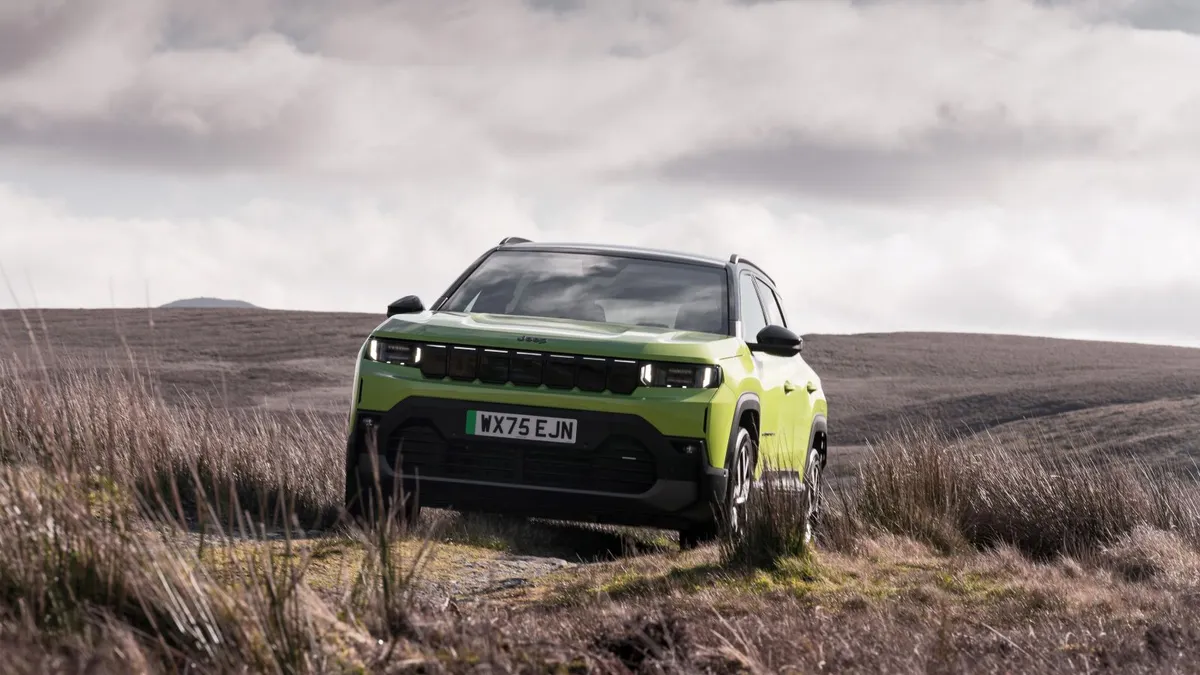
The Carvana Stellantis store in Casa Grande, Arizona, for example, sold 998 vehicles in June, according to data provided to Car Dealership Guy. Previous to being acquired by Carvana, according to the data, its monthly sales volume was seldom more than 50.
Dealers advertise within their area to attract vehicle purchasers that will become lifelong service clients. That is seemingly not part of Carvana’s business model.
Those additional vehicles aren’t being sold in Arizona, Nick Chivinski, VP of marketing and strategy at Savvy Dealer, told WardsAuto on a Zoom call.
Savvy Dealer helps dealerships craft digital marketing strategies. One of its clients, a Chrysler Dodge Jeep Ram store in Pennsylvania, noticed Carvana sold three Dodge Ram pickups in his market area out of its store in Arizona.
It turns out that the number of vehicles Carvana customers were acquiring in the Pennsylvania dealer’s area was much larger, Chivinski said.
“So, you know, we started to work back through some research, and it turns out it's a lot more than three Rams” that Carvana sold, he said.
The Google effect, with a heavyweight
Carvana was buying Google vehicle ads in the Pennsylvania dealer’s area, Chivinski said, and the Arizona store’s inventory would appear at the top of a search for a specific vehicle or configuration.
That means Carvana is “specifically targeting, you know, local demand from seven states away,” he said.
While this is generally not illegal, manufacturers typically discourage selling outside of a dealership’s designated marketing area and competing against other dealers of the same brand, or in the Stellantis case, multiple brands, in the same market area.
The Pennsylvania dealer could obviously do the same. But Carvana has more resources than the average dealer. And dealers generally want to sell in their own area to earn customer service loyalty and repeat purchases.
More than that, however, local dealerships paid for local advertising, generating demand for those Ram trucks in their area, Chivinski said. “The dealer spent money on billboards, the dealer spent money being in the market,” he said.
As well, the Carvana dealership in another state is “won’t be there to service the buyer,” Chivinski said. “They’re not going to be there to service them, they won’t be there to do the recall, they won’t be there to do any of that.”
Promise of franchise ownership lost?
The fact that people are buying from a Carvana store seven states away does point to a demand for the more frictionless sales experience it has created, Cuyler Owens, CEO of Widewail, which monitors online reputation, told WardsAuto on a Zoom call.
“That’s the piece dealers need to take on,” he said, “which is people are buying from Carvana because its easier, its faster, it’s not an inconvenience, it’s not scary.”
But, he said, the “core promise of owning a franchise” is lost, including building a relationship with the customer and winning their trade-in business.
A dealership that sold to a distant customer doesn’t even have the person in their customer relationship management software, Owens said.
Also lost is Stellantis’ promise of caring for the customer, he said. “How is the manufacturer helping that lifetime experience happen?”
Service experience isn’t keeping up
Based on online presence, Carvana-owned stores are slipping in the all-important area of service satisfaction.
Widewail’s analysis of the negative and positive comments on social media for Carvana-owned dealerships found that while the sales experience improved, the service experience declined.
For the Carvana’s CDJR store in Sacramento, California, for example, Widewail found that negative sales mentions dropped to 22.2% from 44.9% while negative service mentions rose to 66.7% from 42.7%.
Review response rates also “collapsed” in the stores after Carvana became the owner — including plummeting to 0% in Boston from 94% and to 27% in San Diego from 95%.
This is happening at a time when numerous studies show franchised dealerships are already losing service to independent repair facilities. With the Carvana model, the only revenue stream left to its dealerships is service, “and you have to fight all the third-party providers to get that business,” Owens said.
That may not matter to Carvana, Steve Greenfield, general partner of Automotive Ventures, a venture fund investing in automotive industry startups, told WardsAuto on a Zoom call.
“Carvana probably doesn’t care too much about optimizing fixed operations,” Greenfield said. He figures it is likely optimizing for number of units sold, and focused on used sales and buying trade-ins.
“I do think the lens through which they are looking is, you know, maximizing used car operations and having new car stores as a unique channel to enable, fuel, catalyze used car sales,” Greenfield said.
As long as the Carvana-owned dealerships aren’t losing money, “I imagine they don’t really care too much about making an individual Stellantis store a profit-optimizing entity,” he said.
Gaining access to manufacturer auctions
By buying Stellantis dealerships, Carvana is also gaining access to another used-vehicle avenue: access to the closed manufacturer auctions. John Murphy, founder and managing partner of consultancy Murphy Automotive Partners told WardsAuto in a Zoom call.
Such auctions are open only to a manufacturer’s franchised dealers and feature vehicles directly from the OEM or its financing arm. Those include off-lease returns and corporate fleet cars.
Dealers have told Murphy that Carvana has snapped up the majority of supply at auctions they attended.
“The new franchise business is good, but if you are a used car retailer starved for supply, not only are you buying a good business of its own, but access to a good used supply,” Murphy said, referring to Carvana buying new car dealerships.
And at a time when used supply is tight, Carvana, which is mainly a used-car dealer, will have access to a good used supply, especially since some 500,000 more off-lease vehicles are returning back to dealers in 2026 compared to 2025, a 25.7% increase, according to Edmunds.
Carvana can afford to pay more for those closed auction vehicles because of their business model, Nathan Shaver, managing partner of Shaver Automotive Group in Thousand Oaks, California, told WardsAuto in a Zoom call.
For example, Carvana doesn’t charge reconditioning for its cars because, through its 2022 acquisition of ADESA, it has plentiful recon facilities.
“If you’re not planning to have a $1,200 to $2,000 recon ticket on a used car, you can pay more and still have a margin,” Shaver said.
Message to dealers: Carvana approach sells more cars
Potential advantages from its size and scale aside, the fact that consumers are willing to buy a vehicle from a Carvana dealership on the other side of the country sends a message to traditional dealerships, Owens said: “The Carvana experience is better, and it’s going to win deals.”
Carvana’s entry into new-car sales and ability to sell nationwide means dealers “are going to have to up their game,” Greenfield said.
If a consumer has the option of buying a Jeep from Carvana and having the vehicle delivered to one’s home versus spending four hours in a dealership, in most cases consumers will choose the Carvana option, Greenfield said.
But this could also represent an opportunity for dealers in the affected areas, Greenfield said.
If a Carvana dealership is selling into a distant market, Stellantis dealers in that market should let the buyer know, “hey, if you’re buying from Carvana, we want to service your Jeep,” he said.