Dive Brief:
- Ford Motor Co.’s BlueCruise automated highway driving system contributed to two fatal highway crashes in 2024 that killed three, the National Transportation Safety Board concluded after an investigation into the two incidents.
- In a Feb. 24, 2024, crash in San Antonio and March 3, 2024, crash in Philadelphia, the NTSB determined that in both cases the Ford vehicles operating with BlueCruise active failed to automatically brake before striking stationary vehicles. The agency also concluded that the drivers’ overreliance on BlueCruise to operate the vehicle was a contributing factor in both crashes.
- The NTSB is calling for greater federal oversight of hands-free driving systems and adopting standardized performance requirements to improve the safety of the technology. Its final report on the incidents will be published on the NTSB website in the upcoming weeks.
Dive Insight:
The National Highway Traffic Safety Administration’s Office of Defects Investigation also opened a safety probe of Ford Motor Co.’ s BlueCruise in January 2025 after the agency received notice of the two fatal collisions.
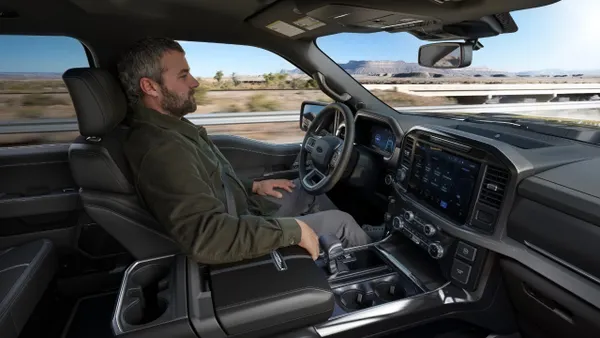
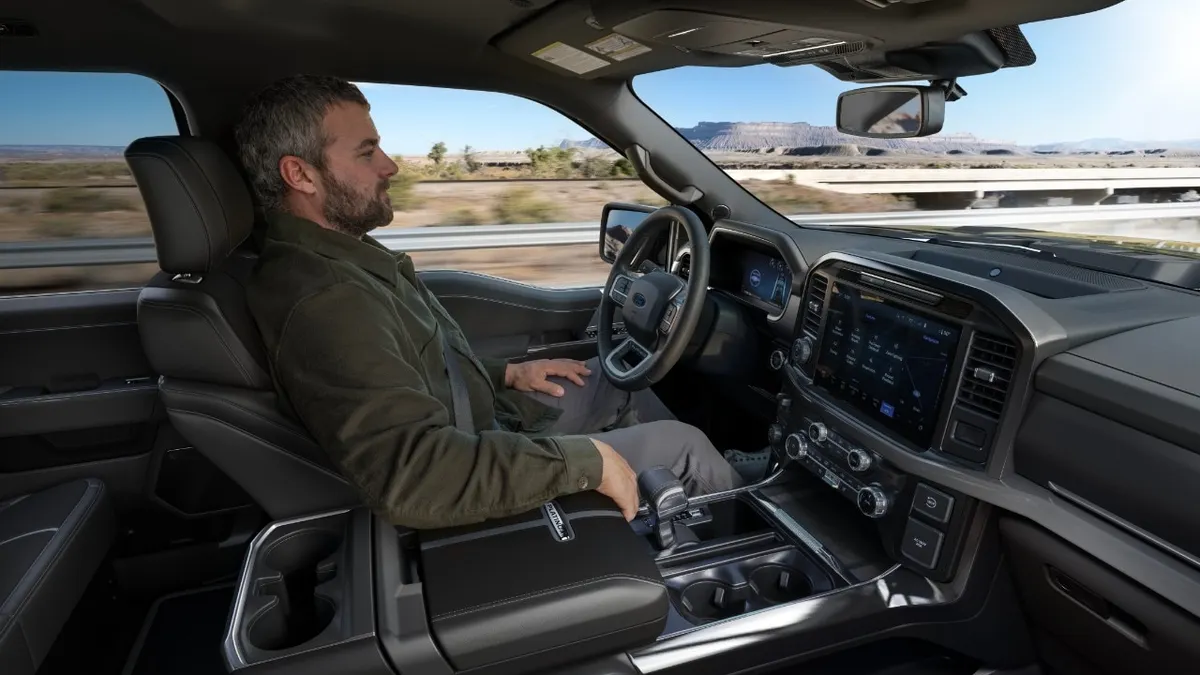
Ford’s BlueCruise automated driving feature controls a vehicle’s speed, steering and braking on 130,000 designated miles of divided highways in North America. It can also perform automatic lane changes. The system uses a combination of cameras and radar to detect and classify objects, such as other vehicles. It’s available for the Mustang Mach-E, F-150 and Expedition and Explorer SUVs, and the technology extends to several Lincoln vehicles.
Like Tesla’s Autopilot and General Motors’ Super Cruise, BlueCruise is classified as a Level 2 system automated driving system, meaning that the driver must pay attention to the road ahead at all times when it's activated and be ready to take over manual control of the vehicle if prompted.
The NTSB investigation of BlueCruise uncovered what it says were “several gaps in safety and oversight.” It concluded that Ford’s driver monitoring system was ineffective at detecting driver distraction or disengagement, allowing off-road glances to go undetected. It also failed to distinguish between a driver’s attention to the road ahead and other distractions, such as cell phone use while behind the wheel.
The NTSB also noted that drivers can disengage the vehicle’s automatic emergency braking system when using BlueCruise and that drivers can set a Ford vehicle’s intelligent adaptive cruise control up to 20 mph higher than the posted speed limit, which it says increases the risk of serious injury in a crash.
WardsAuto reached out to Ford for comment on the NTSB findings, but did not hear back as of publication time.
The NTSB also noted in its investigation that there are no federal requirements in place for automated driving systems to record vehicle data during crashes. Therefore, OEMs lack the needed information to comply with the National Highway Traffic Safety Administration’s standing general order that requires automakers to report any crashes to the agency involving their self-driving technology.
The U.S. agency issued its recommendations to the Department of Transportation, NHTSA and Ford, which call for enhanced crash data recording, as well as changes to Ford’s BlueCruise system to reduce excessive speeding and improve its driver monitoring system to detect distractions and ensure drivers are paying attention to the road ahead.
The NTSB adds that without manufacturer awareness and consistent data collection, crucial information about crashes involving Level 2 automated driving systems remains inaccessible to regulators, investigators, law enforcement and safety groups.