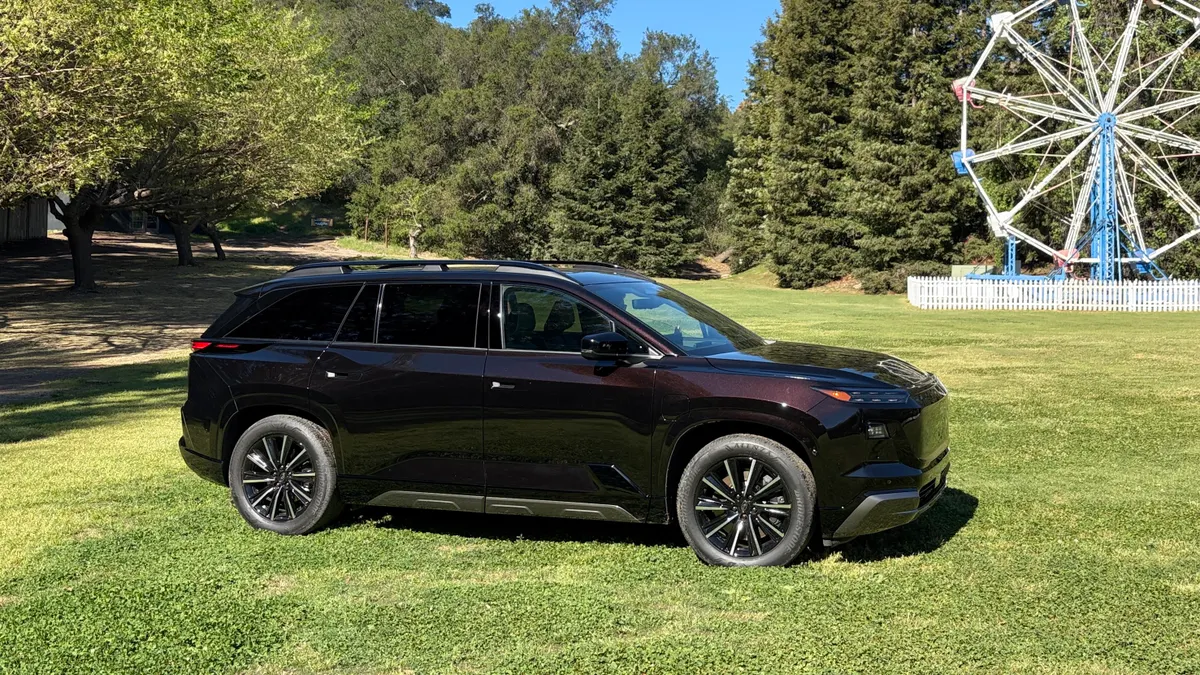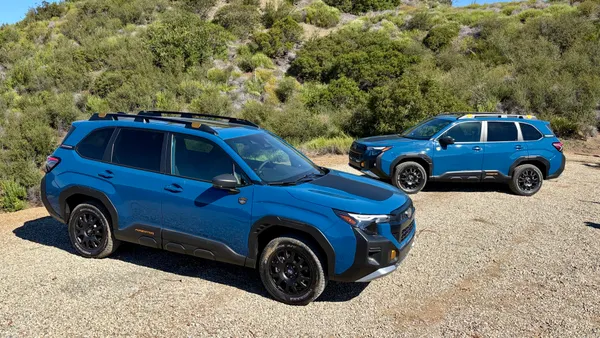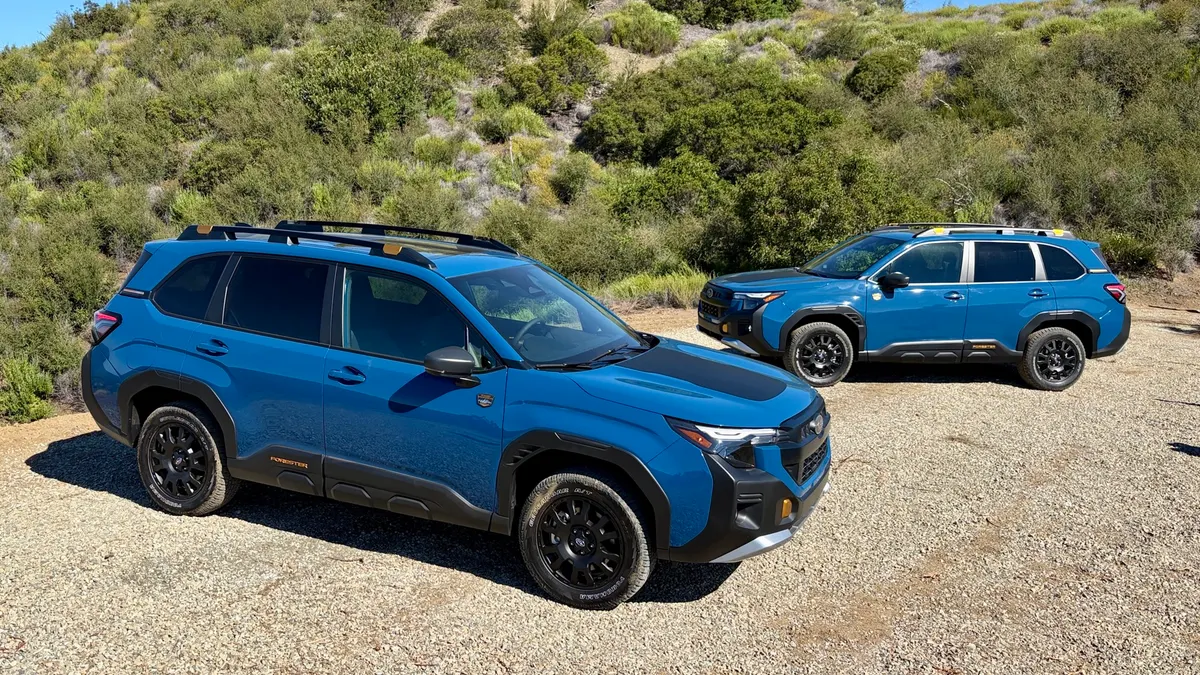
Last year, Subaru introduced both a new generation of its off-road-optimized Forester Wilderness SUV and a Forester Hybrid. Later this year, it plans to marry the two ideas with the launch of the 2027 Subaru Forester Wilderness Hybrid, the automaker confirmed Wednesday at the New York Auto Show.
This convergence might have seemed inevitable. Since Subaru’s original launch of Wilderness editions of the Forester and Outback, in 2021 and 2022, there’s been a surge of other off-road sub-brands riding this extra-outdoorsy wave, including the Toyota Woodland, Hyundai XRT, Kia X-Pro and Nissan Rock Creek.
But as Subaru explained in a Southern California product preview last week, this Forester it calls “its most fuel-efficient, lowest-emissions Wilderness model” wasn’t a shoo-in that simply meant raiding two different parts bins at once.
Wilderness versions of Forester, Outback and Crosstrek accounted for roughly one out every seven sales of these models — nearly 250,000 cumulatively through 2025. “It’s a big part of where we’re going with our brand to sort of enhance people’s understanding of what a Subaru can be,” said Bill Stokes, car line planning manager at Subaru of America.
A Wilderness Hybrid has to keep with the mission of previous Wilderness models, with upgraded off-road capability and utility plus a style statement, while also improving on fuel economy and drivability, outlined Stokes.
Subaru of America sold about 175,000 Foresters in the U.S. in 2025 — virtually unchanged versus the previous year. But with Forester production recently shifted to Indiana, it eyes growth for the hybrid model. The compact SUV segment accounts for the largest by sales volume in the industry, at over 3 million annual sales projected by 2028, according to S&P Global. From 2026 to 2029, S&P Global sees hybrid models accounting for 50% of all sales in the segment.
Subaru hasn’t yet detailed standard equipment and trim levels for the Wilderness Hybrid, but it confirmed that it will carry over the same specs for its powertrain—derived from Toyota’s familiar planetary-gear hybrid system—from other Forester Hybrid models. Here it means an Atkinson/Miller-cycle version of Subaru’s 2.5L flat-4 engine makes 162 hp and 154 lb-ft of torque, while a main motor-generator produces 118 hp and 199 lb-ft. A second motor serves primarily as a generator and starter.
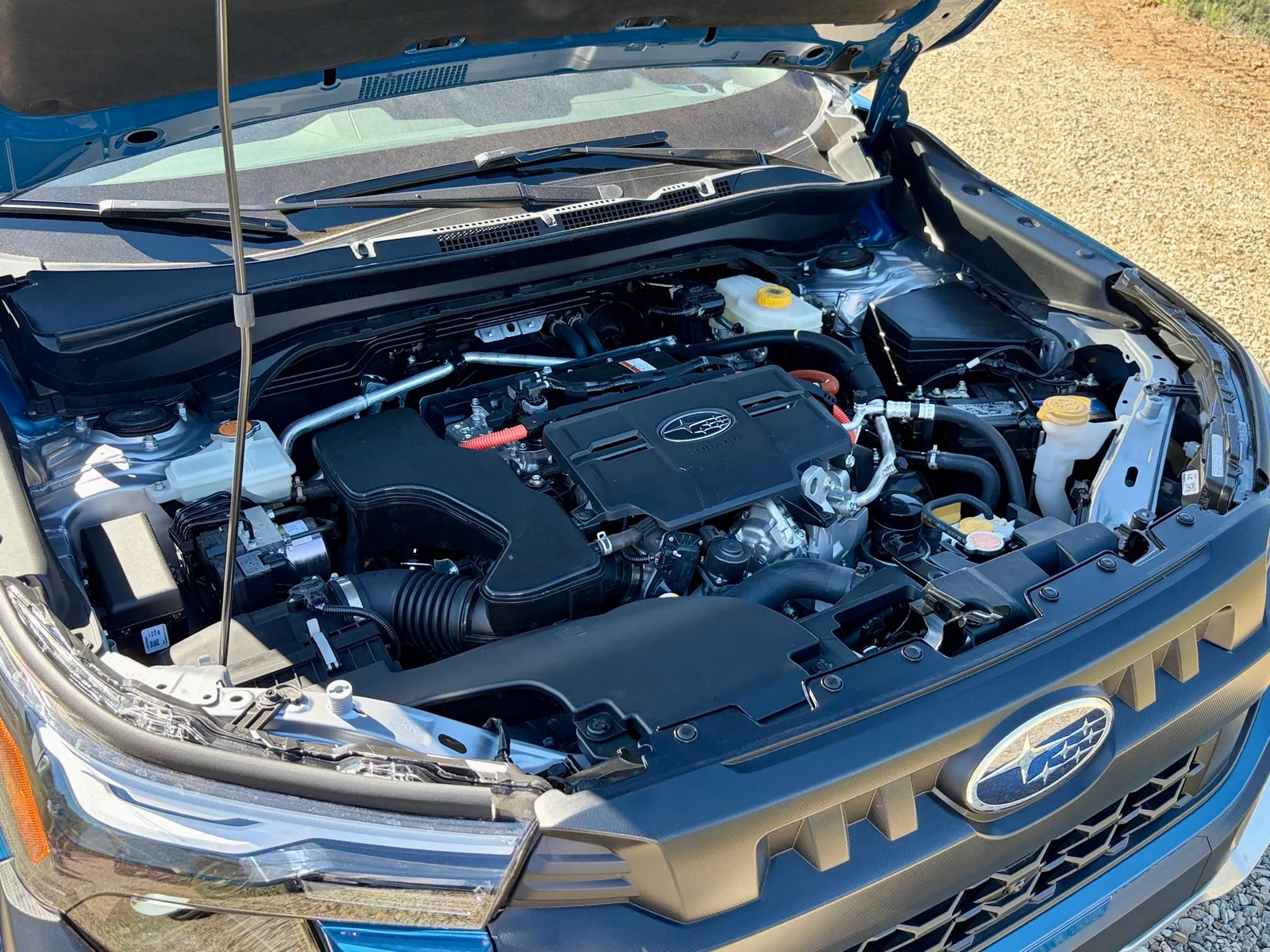
The Forester Wilderness Hybrid will make 194 hp, up from 180 hp in non-hybrid versions. Subaru hasn’t shared fuel economy for the Wilderness Hybrid, but it touts it will be up to 25% better that ICE versions and similar to the Forester Hybrid, with an EPA city rating of 35 mpg, versus 26 mpg for the standard Forester.
With our first drive of the 2026 Crosstrek Hybrid and of the non-Wilderness Forester Hybrid, we noted a relaxed driving experience that intermittently relies only on electric power at city speeds and the lower speeds common on forest trails and unpaved roads. There was no detectable change in traction or momentum as the engine turned on and off. Subaru is proud to point out that the Forrester Wilderness hybrid relies on an adapted version of the same all-wheel-drive system in Subaru’s other gasoline vehicles.
With 27.5 cubic feet of cargo space behind the rear seats or 69 cubic feet behind the fronts, the Wilderness Hybrid—like the other Forester Hybrid models—doesn’t lose any room to the hybrid components. The 1.1-kWh hybrid battery is at the back of the vehicle, and it’s air-cooled via a fan that draws air into a duct next to the back seat.
The Forester Wilderness Hybrid will include Subaru’s dual-mode X-Mode system, including settings for Snow/Dirt and Deep Snow/Mud. It will ride on Yokohama Geolander all-terrain tires on 17-inch matte-black wheels, in a combination that Subaru points out is intended for grip in gravel or mud, and says is exclusive to this model.
Perhaps most importantly to the target buyer, the Wilderness rides taller thanks to longer coil springs, boosting ground clearance to 9.3 inches, from the standard Forester Hybrid’s 8.7 inches. That also translates to improved approach, departure and breakover angles, and eases some worry with skid plates. The roof rack on the Wilderness can also handle a static load of 800 pounds, making it a solid pick for rooftop tents or other accessories.
Stokes emphasized that the Forester Wilderness hybrid faced tougher expectations from Subaru’s own shoppers — as Wilderness customers are more active than normal Forester customers, according to its own data.
“With the tire enhancement, with the ground clearance enhancement, with the added underbody protection, we still end up with a much more capable product than what our competitors are offering in the hybrid space,” he summed.