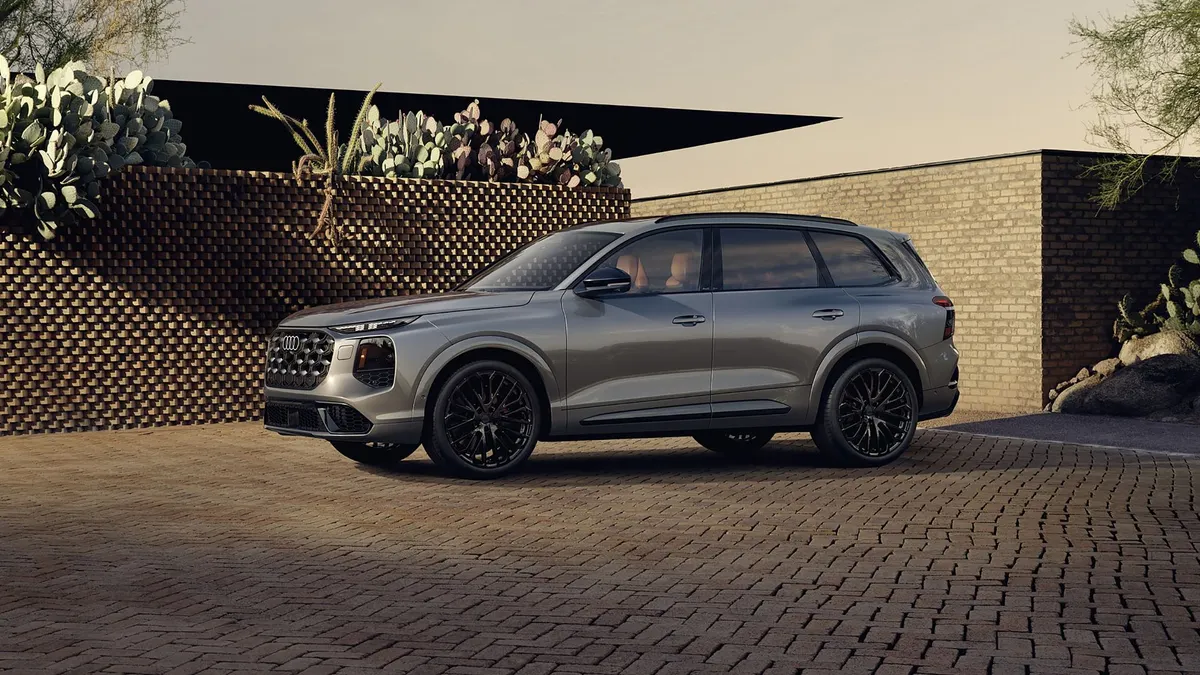
INGOLSTADT, Germany — Audi has unveiled the third-generation Q7, ushering in a comprehensive overhaul of the SUV that launched the brand's push into the luxury SUV market more than two decades ago.
The Q7 and its higher-performance SQ7 variant remain among Audi's most important global models, competing in the premium SUV segment against rivals including the BMW X5, Mercedes-Benz GLE, Volvo XC90, Range Rover Sport, Genesis GV80 and Lexus RX.
The new 2027 Q7 lineup, due at North American dealerships in the fourth quarter of the year, receives a redesigned exterior, an all-new interior, upgraded digital technology, and a revised range of gasoline engines, according to Audi.
The arrival of this new generation of the Q7 comes ahead of the launch of Audi's larger and more luxurious Q9, which is due to be revealed later this year and will become the German automaker's new SUV flagship. That allows Audi to position the Q7 more directly against established premium rivals while creating greater separation within its expanding SUV lineup.
Audi CEO Gernot Döllner described the new model as a continuation of the qualities that have defined the Q7 since its launch in 2005.
"The Audi Q7 has stood for the perfect premium SUV for more than 20 years," he said. "With the new generation, we are consistently continuing that claim."
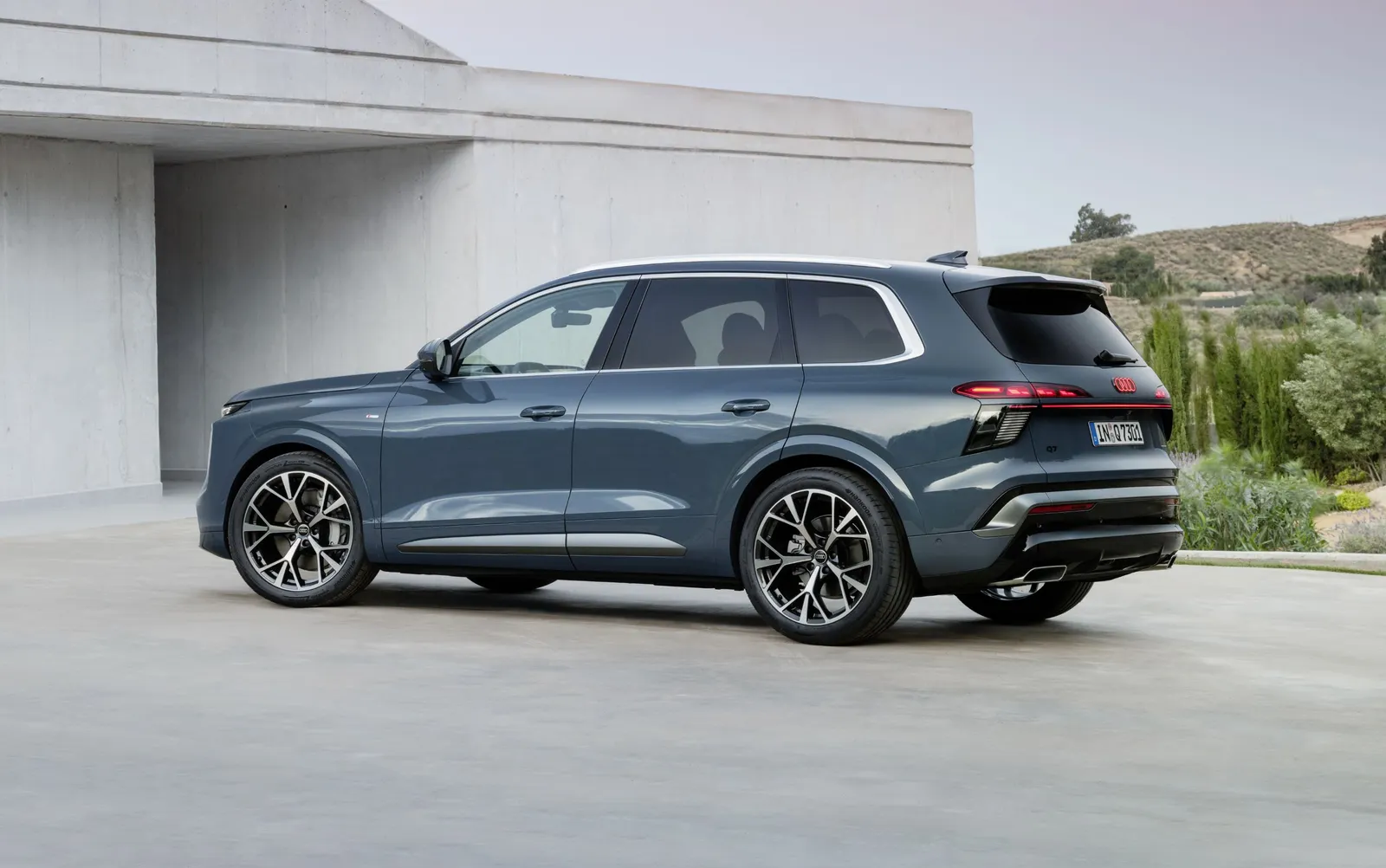
While retaining its familiar silhouette, the latest Q7 adopts a bold, more upright and muscular appearance, with a higher hoodline and more pronounced wheel arches. Audi also managed to raise the shoulder line and steepen the rear pillar while improving interior packaging and load capacity.
Lighting technology forms a major part of the redesign. The optional Digital Matrix LED headlights, which use micro-LED technology to project high-resolution light patterns, now work closely with the Q7’s driver assistance technology. That allows lane guidance, construction-zone assistance and blind-spot warnings to be projected directly into the driver's field of view. Audi assured that the Q7 will offer this feature in the U.S.
At the rear, third-generation digital OLED taillights gain communication functions designed to alert following drivers to hazards ahead. Audi also claims a world first with an extended turn-signal system that projects directional indicators onto the road surface at night, providing additional warnings for pedestrians and cyclists.
The 2027 Audi Q7 will for the first time come with a choice of six- or seven-passenger layouts, with the six-seater replacing the traditional second-row bench with individual captain's chairs. The move mirrors a wider trend among premium SUV manufacturers as buyers increasingly seek greater rear-seat comfort without moving into larger luxury models such as the Mercedes-Benz GLS or Range Rover.
The cabin receives a redesigned center console, expanded storage areas and a standard passenger display. Cargo capacity is 15.1 cubic feet behind the third row of the seven-seater and expands to 43.9 cubic feet behind the second, or up to 78.1 cubic feet if the second and third rows are folded down.
Audi has also introduced a panoramic glass roof featuring switchable transparency technology. The roof is divided into nine independently controlled segments and can transition between transparent and opaque settings — going opaque automatically when parked. An optional lighting system integrated into the roof structure uses 78 LEDs and forms part of the vehicle's wider ambient lighting package.
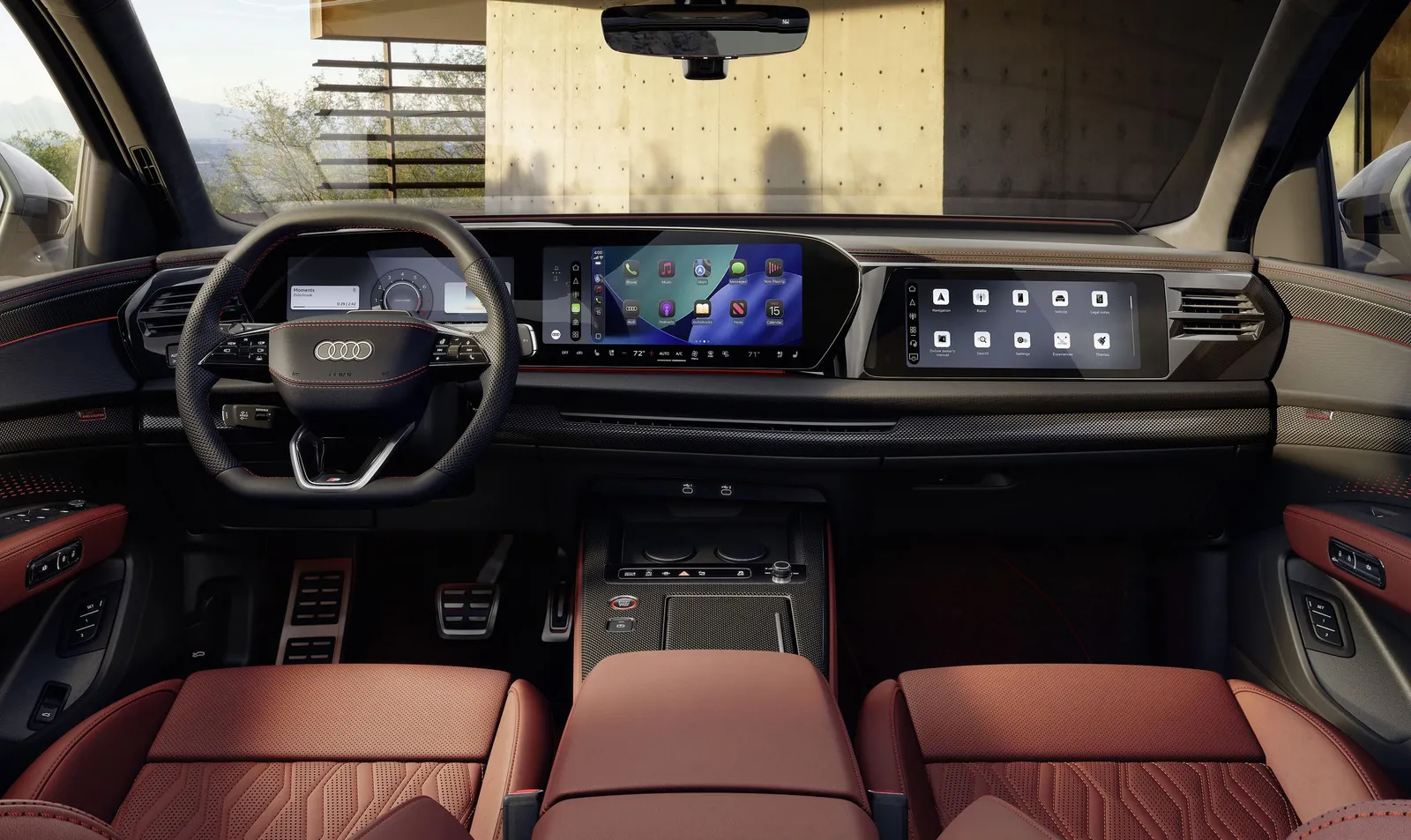
Interfaces have been extensively revised. The latest MMI infotainment system combines a curved OLED panoramic display with a standard passenger display featuring a privacy mode to prevent driver distraction. An upgraded Audi Assistant integrates ChatGPT functionality, allowing natural-language interaction when the vehicle's native system cannot answer a request.
The new 2027 Audi Q7 drops the outgoing second-generation model's entry-level 261-hp turbocharged 2.0L 4-cylinder engine. That leaves a turbocharged 2.9L V6 producing 429 hp, while the range-topping 2027 Audi SQ7 will use a twin-turbocharged 4.0L V8 delivering 591 hp.
The move represents a significant increase in performance. Previously the standard Q7 came with a 335 hp turbocharged 3.0L V6, while the SQ7 produced 500 hp from its earlier iteration of the twin-turbocharged 4.0L V8.
The engines to be offered in the U,S, are paired with an 8-speed automatic transmission and permanent quattro four-wheel drive. The latest generation of Audi's quattro system adopts a revised self-locking center differential, which is claimed to improve traction, agility and directional stability.
Audi offers three suspension configurations for its latest SUV model, including two adaptive air suspension systems, with the latter for the performance-oriented SQ7 and capable of lowering the ride height by nearly 1.2 inches. All air-suspension variants can automatically adjust ride height based on route data and road conditions.
Four-wheel steering is also available, improving maneuverability at low speeds and stability at higher speeds.
The 2027 Q7 also receives a comprehensive suite of driver assistance systems, including adaptive cruise control with lane guidance, automated parking, trailer reversing assistance and a 360-degree camera system.
Among the more notable additions is a new emergency assistant capable of detecting an unresponsive driver. On highways, the system can slow the Q7, activate its hazard lights and, where conditions permit, steer onto the hard shoulder before bringing the vehicle to a stop and initiating an emergency call.
A new trained parking function allows the Q7 to memorize up to five individual parking maneuvers of up to 650 feet in length. Once recorded, it can repeat the maneuver automatically under driver supervision.
Another feature aimed at everyday usability is the introduction of optional powered doors. Using sensors mounted around the vehicle, the system can automatically stop a door opening if an obstacle is detected. The doors can also be operated remotely via Audi's smartphone app.
The 2027 Audi Q7 and SQ7 are set to be produced in Bratislava, Slovakia. U.S. pricing has not yet been announced.