BEIJING — Smart Automobile Co. is preparing the ground for a potential return to the U.S. market, even as it navigates an increasingly complex geopolitical and regulatory landscape, senior executives revealed this week ahead of the 2026 Beijing Auto Show.
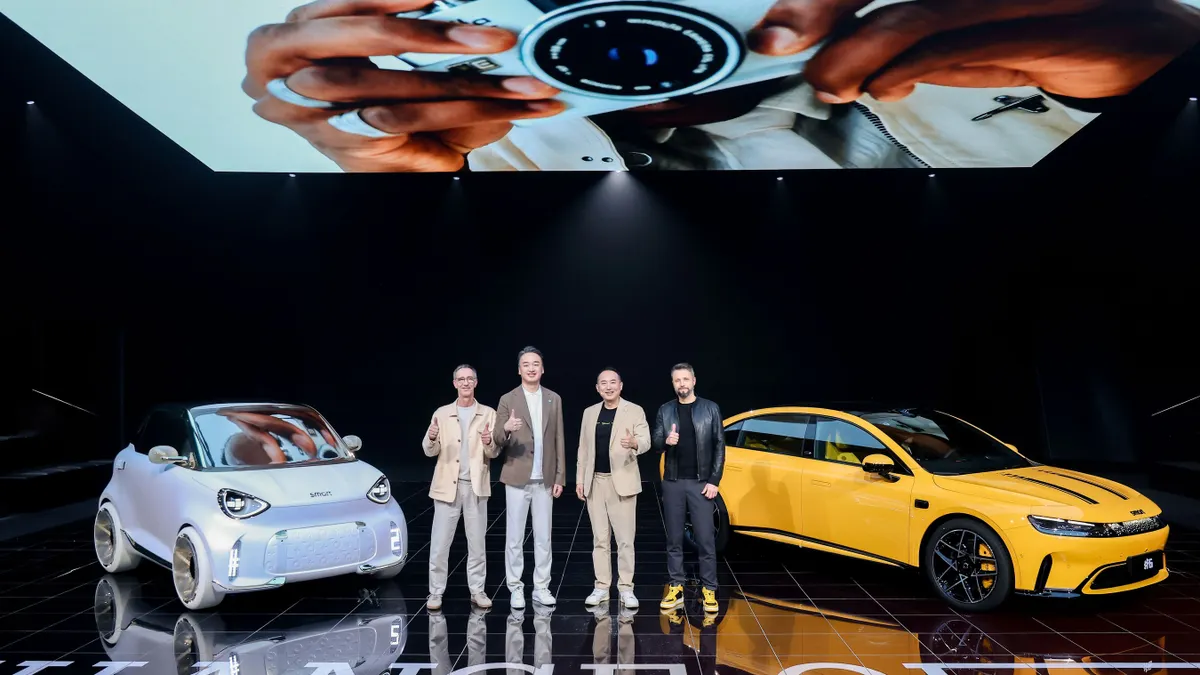
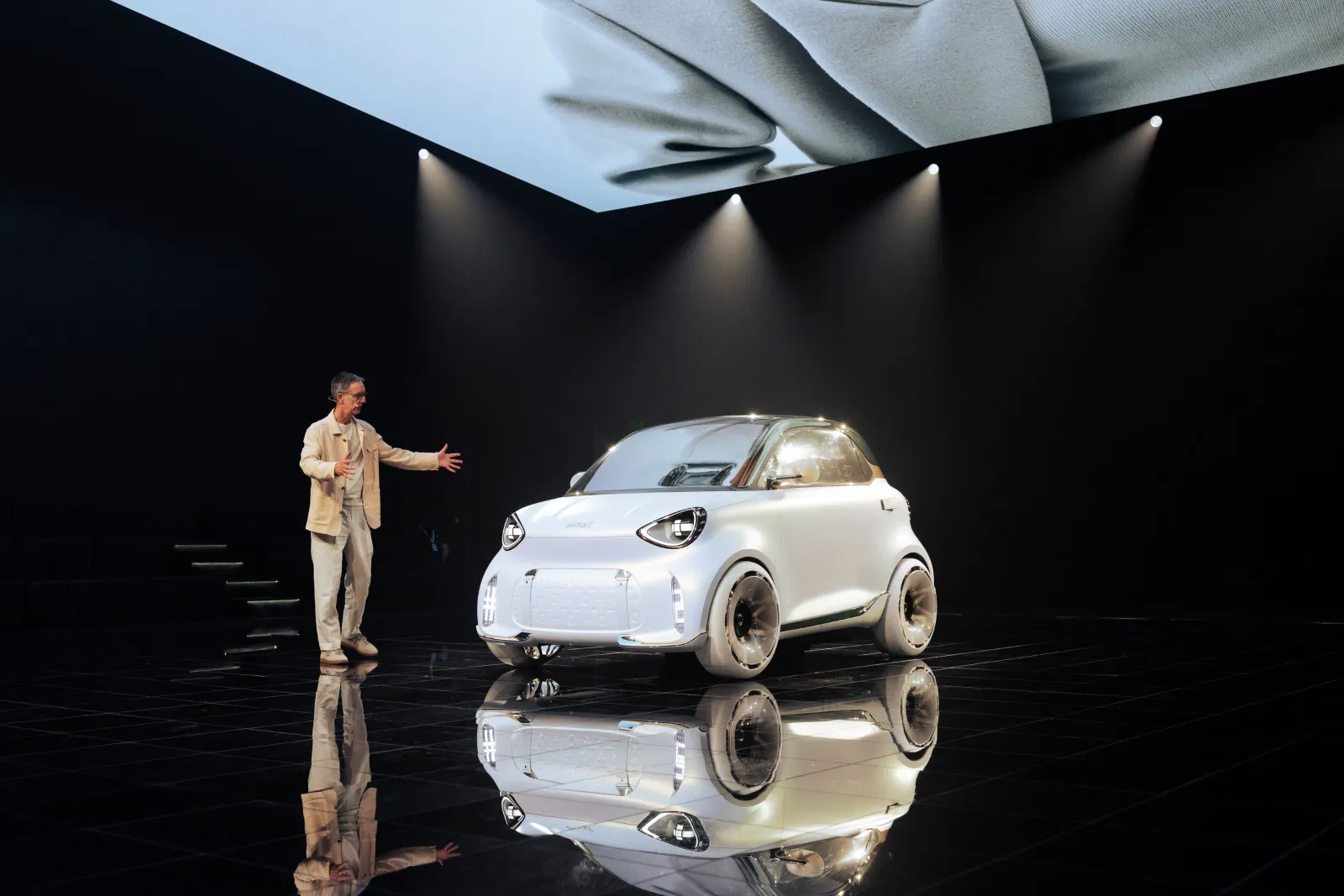
The comments came at the unveiling of the Smart Concept #2, a compact two-seat design study that previews an upcoming electric-powered successor to the Fortwo and marks a return to Smart’s city car origins.
“We’d love to go back. We have quite a bit of history there,” Smart’s Global Central Marketing Officer Kang Yi said at the reveal event, referring to the company’s previous presence in the U.S., which began in 2008 and ended in 2019.
However, Kang acknowledged that current trade tensions remain a major barrier.
“It’s complex. At the moment, the geopolitical situation prevents us,” he said, pointing to high tariffs and broader uncertainty in U.S.-China relations. “We’re not closing the door. We hope that when President Trump visits China in May the relationship can somehow be normalized.”
The Smart brand has undergone a significant transformation in recent years. Founded by Daimler-Benz and Swiss watch maker SMH as the Micro Compact Car AG in 1994, the vehicle brand is now operated by Smart Automobile Co., a joint venture between Mercedes-Benz AG and Geely Automobile Group Co.
Once synonymous with compact urban transport, the joint venture has broadened the Smart brand’s lineup with a series of larger, more mainstream models. Current models include the #1 and #3 compact crossovers, larger #5 SUV and the newly unveiled #6 sedan, a spread that gives the company a far broader customer reach than at any point since the launch of its debut model in 1997, the Smart City Coupe.
All four Smart models are based on the Geely Group’s Sustainable Experience Architecture platform and are produced at factories in the Chinese cities of Xi’an (#1, #3) and Huzhou (#5, #6), according to Matthias Reintgen, a spokesperson for Smart Europe.
At the same time, Smart has set about broadening its drivetrain options. While its reinvention under Mercedes-Benz and Geely was initially forged around the pure electric #1 and #3 crossover models, shifting buyer preferences in China has prompted the introduction of plug-in hybrid variants of the #5 SUV and #6 sedan.
Against this backdrop, the pure electric Concept #2 represents a counterbalance as much as replacement for the Fortwo, which ended production in 2024.
Measuring just over 9.1 feet in length, the new two-seat model retains the proportions, rear-mounted electric motor and rear-wheel drive layout that defined the Fortwo, while adopting a new Electric Compact Architecture platform developed by Geely.
Smart said the production version of the #2, scheduled to be unveiled at the 2026 Paris auto show in October ahead of a planned 2027 launch, will target a range of up to 186 miles on the Worldwide Harmonised Light Vehicle Test Procedure test cycle and support DC fast-charging that Kang said can take its battery from a 10% to 80% of charge in under 20 minutes.
The design, led by Mercedes-Benz under Smart design boss Kai Sieber, blends familiar cues from the Fortwo with altered detailing and increased scope for personalization.
For Smart, the #2 is intended to re-anchor the brand in a segment it effectively created, even as it continues to pursue growth in larger, more volume intensive market segments.
That balancing act extends to its global ambitions. Smart is now present in around 40 markets globally, with China and Europe its two largest by sales volume. A return to the U.S., while not imminent, remains part of its longer-term thinking.
Smart, now based in the Hangzhou, China, has explored various routes into the U.S. market over the years. At one stage, it came close to introducing a rebadged version of the Nissan Micra in partnership with its U.S. distributor run by the Penske Automotive Group, although the plan was ultimately shelved before reaching fruition.
In a separate initiative, Smart also outlined plans for a compact SUV, dubbed the Formore, aimed at broadening its sales appeal in the U.S. That project also failed to materialize.
These earlier aborted efforts underline both the opportunity and the difficulty of gaining traction in the U.S. market, particularly for a brand historically associated with small city cars in a landscape dominated by larger cars and trucks.
Now, with a reworked line-up featuring models more suited to U.S. buyer tastes and backing from Geely’s global engineering resources, Smart appears better positioned than before. But as Kang’s comments make clear, any return will depend as much on political conditions as product readiness.
For now, the Concept #2 serves as a reminder of where Smart began, and a clear signal that, even as it evolves, it has no intention of abandoning its city car roots.