

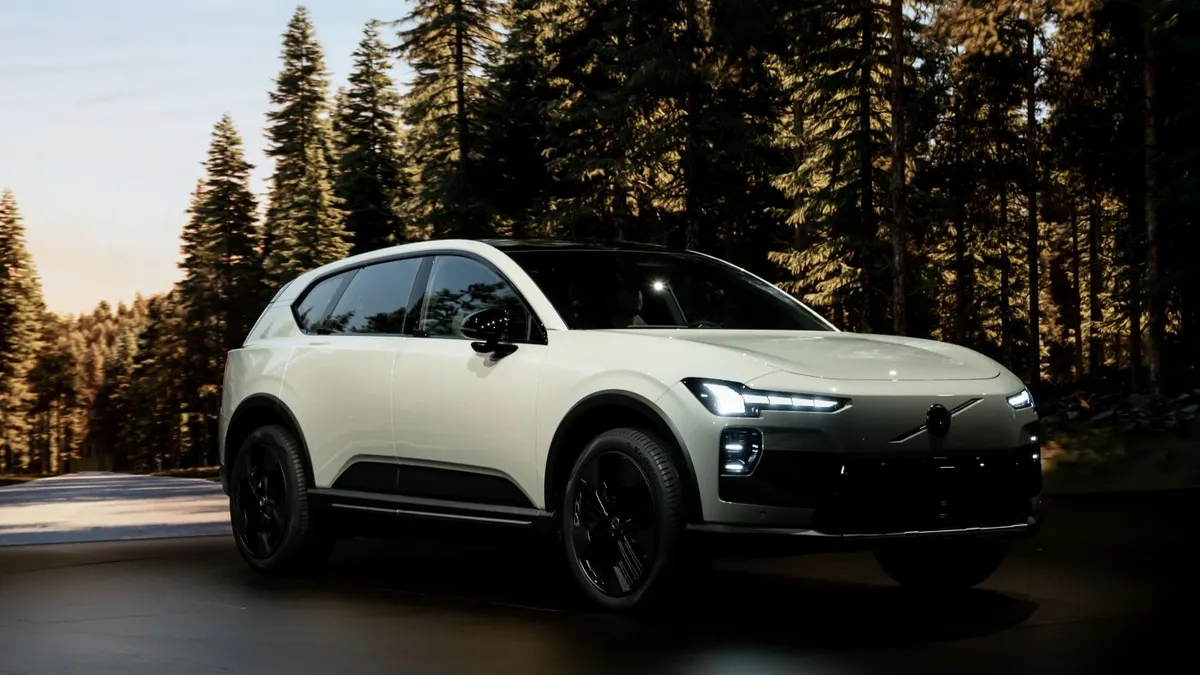
Higher-than-expected customer demand for the new EX60 midsize electric SUV has persuaded Volvo Cars to boost production capacity at its Swedish plant.
In the company’s March 04 release, Volvo said nearly all major European markets are reporting retail orders considerably higher than internal forecasts.
More than 3,000 orders have been taken in Sweden alone, just over a month after the EX60’s launch in January, said the company, helped by its aftersales Care offer that includes three years of free home charging.
Currently, the pace of new orders is significantly higher than it was for its entry-level EX30 compact electric SUV with a lower price point.
At the moment, EX60 is only available in European markets with U.S. order books due to open later this spring, Volvo said.
Now it will prioritize a steady and prudent ramp-up of EX60 production at its Torslanda plant in Sweden.
The model is priced to compete against Volvo’s best-selling plug-in hybrid XC60 sibling which is slated to join the assembly line at its Ridgeville plant outside Charleston, South Carolina, later in 2026.
Volvo Cars added that it is holding talks with employee unions hoping to keep the Torslanda facility open for an extra week in the summer to meet demand, a move that would be a first in the company’s history.
“That so many customers ordered the EX60 in the first month has surpassed our expectations, and it’s a good ‘problem’ to have,” said Erik Severinson, Volvo’s chief commercial officer in the company release. “We are very encouraged to see such strong demand for our game-changing electric SUV and we are now reviewing our production plans for 2026, as we gear up for the start of customer car production next month.”
Meanwhile, Volvo also admitted the challenging trading position with U.S. tariffs and regulation changes hit its sales between December 2025 and February 2026, the company said in a further March 04 statement.
It reported Volvo Cars overall global sales were down 10% at 156,965 cars shipped for the three-month period compared to the same period between December 2024 and February 2025.
However, the bright spot was electric vehicle sales which rose 18% for the period while hybrid and ICE vehicle sales fell 17% and plug-in hybrids down 16%.
“Our sales for the period were impacted by the continued tough market conditions, impacted by tariffs and unfavorable regulatory developments especially in the US. The prolonged new year holiday period in China further affected our performance,” said Severinson.