Back in December 1995 Toyota booked two sales for the then all-new, first-ever RAV4.
Two.
Thirty years later, in the first three quarters of 2025 Toyota sold 358,134 of its midsize crossover, putting it at the top of the category.
Asked whether the ’96 model-year RAV4 had anything that indicated it would lead to such a sales success, Jack Hollis, former chief operating officer of Toyota Motor North America, answered with a hint of incredulity in his voice: “You’re talking about the first-generation, with a tire on the back?”
Yes, that one.
The original RAV4 was something very different from today’s model, which last year racked up 475,000 deliveries in the U.S. It was a 120-hp so-called “cute ute” that truly was a compact crossover, with a length at most around 164 inches (4,166 mm), roughly 12 inches (305 mm) shorter than Toyota’s current smallest CUV retailed in the U.S., the 2025 Corolla Cross.
Another big difference that the RAV4 had from other vehicles in the small SUV segment of Omdia Automotive (formerly Wards Intelligence) was that it had unibody construction. That’s right, vehicles including the Geo Tracker, Isuzu Amigo and three Suzukis: the Samurai, Sidekick and X90, were body-on-frame. Also worth noting is that from that group, only two other nameplates – and U.S. passenger-vehicle brands – are around today, the Jeep Wrangler and the Kia Sportage.
Of course, the RAV4 approaching its 30th birthday is a distant cousin twice removed from that original “cute ute” with the tire on the back, evolving sharply from the first-gen and second-gen models, which were modest successes with 57,000 sales and 86,000 sales, respectively, in their first full years of sale in 1996 and 2001, Omdia Automotive data shows.
Not until the third generation did sales enter six-figure territory. Launched in 2005, it famously added a third row and V-6 engine as options, and sales grew to some 152,000 by 2006.
In 2013, the launch year of the fourth-gen CUV (eventually adding a hybrid variant to the lineup for model year 2016) sales for the RAV4 surpassed 200,000.
Formula for success
The RAV4’s success, according to executives and analysts interviewed by WardsAuto, was made possible by several factors. For one, Toyota kept the vehicle in the market. And two, it consistently changed and improved it over time.
But even with the first one it had something.
“When it came in, body-on-frame SUVs were more common at that point and they’re rougher in general: they’re not as smooth, they have more off-road capability – but not everybody needs as much of that every day of their lives,” said Stephanie Brinley, associate director, AutoIntelligence for S&P Global Mobility.
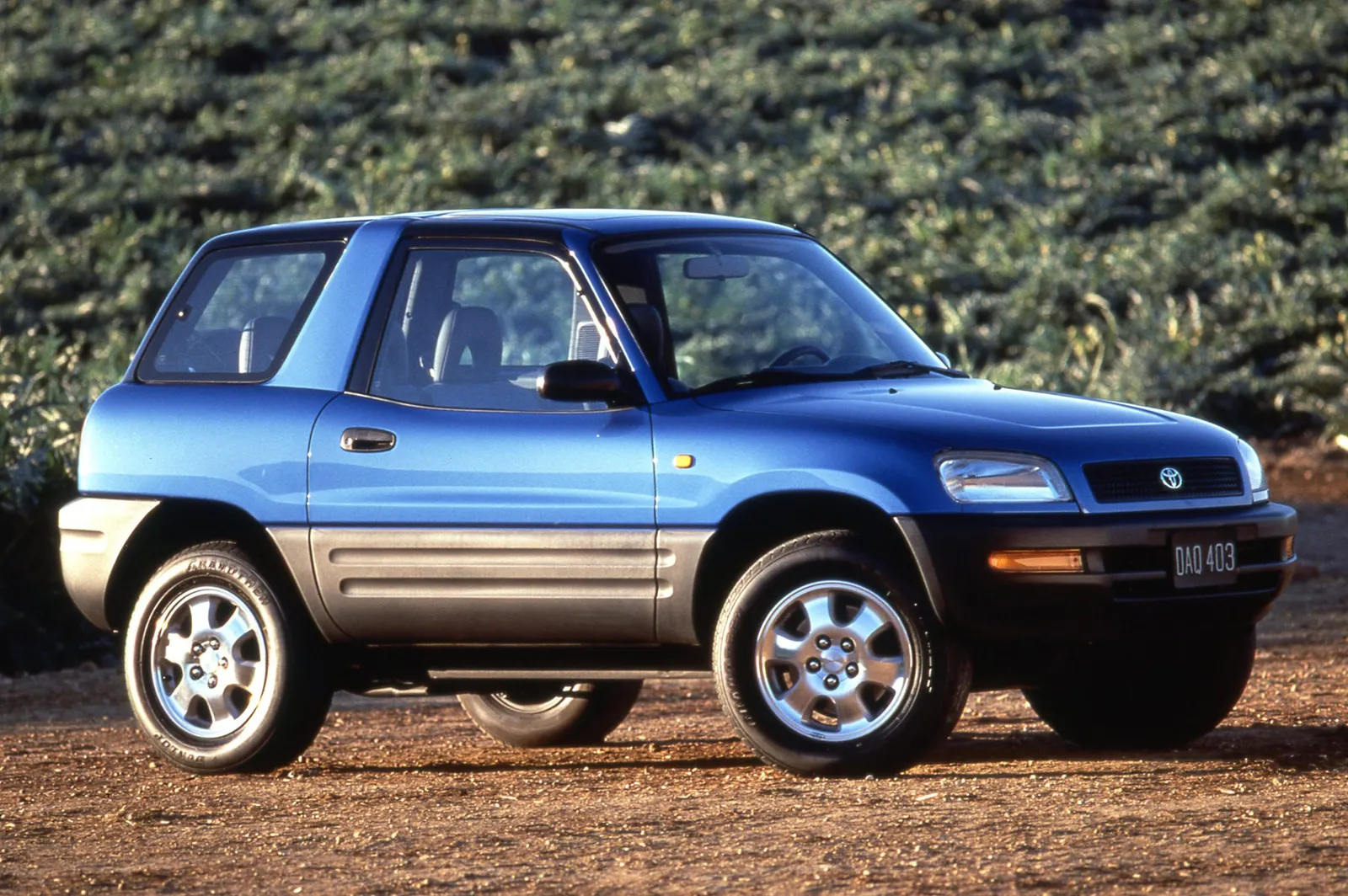
The first small Toyota utility was the first to present an answer to a consumer need that consumers at the time didn’t even necessarily know they needed, said Ed Kim, president and chief analyst for AutoPacific. “(It) had all these SUV attributes but drove more like a car and got gas mileage more like a car,” he said. “It really set the template for the crossovers that took over the SUV market and are still there today.”
Kim believes the RAV4 is a good example of a product that’s been very carefully and appropriately evolved over time, and a top Toyota official said that was no accident.
“The idea of a compact crossover was new, and it was uncertain if buyers would embrace a car-based SUV,” David Christ, group VP and general manager, Toyota Division, Toyota Motor North America, told WardsAuto in an emailed response of the early days of the RAV. “What made the difference was Toyota’s willingness to listen closely to dealer and customer feedback and then act on it.”
Hollis, who retired from TMNA early this year, also credits Toyota’s dealers, specifically those who were on its national product council subcommittee within its national dealer council, for making the RAV4 a high-volume player.
“We had market research on the RAV, but what we were really taking in was the dealer research (from their dealings with customers buying new RAVs or trading in older ones),” said Hollis, now managing partner at Accrual Equity Partners.
Christ said a feedback loop developed over time, with dealers requesting for the vehicle more all-wheel-drive options, more interior space, and higher fuel efficiency, while customers pushed for flexibility and everyday usability. “Toyota responded with each generation – refining the size, versatility, safety, technology, quality and importantly, value,” he said.
Decade in a shift occurs
Hollis recalls somewhere around the fourth-gen’s 2013 debut, a market shift could be seen from midsize sedans, for decades the top vehicle of choice for millions of Americans, to small or midsize crossovers.
He said that a group of TMNA executives got together and debated the question: “Could RAV4 overtake Camry as the No. 1 vehicle in our lineup?”
At the time, RAV4 was in third place, behind Toyota’s Camry midsize car and Corolla compact car.
“We never said it’ll be bigger than Camry, we did that later, but (at a dealer meeting) we let everybody know that RAV was going to be our largest growth vehicle…and that’s when it really took off,” Hollis said.
Annual U.S. sales surpassed 300,000 during the fourth-gen model’s lifecycle and in late 2017, roughly a year ahead of the early 2019 launch of the fifth-gen model, U.S. RAV4 sales topped 400,000.
Hybrid hype
The fifth gen’s appeal has been greatly helped by Toyota’s decision to “aggressively ratchet up the hybrid mix,” said Kim, noting the standard hybrid and plug-in hybrid RAVs together make up about half of the vehicle’s total U.S. sales.
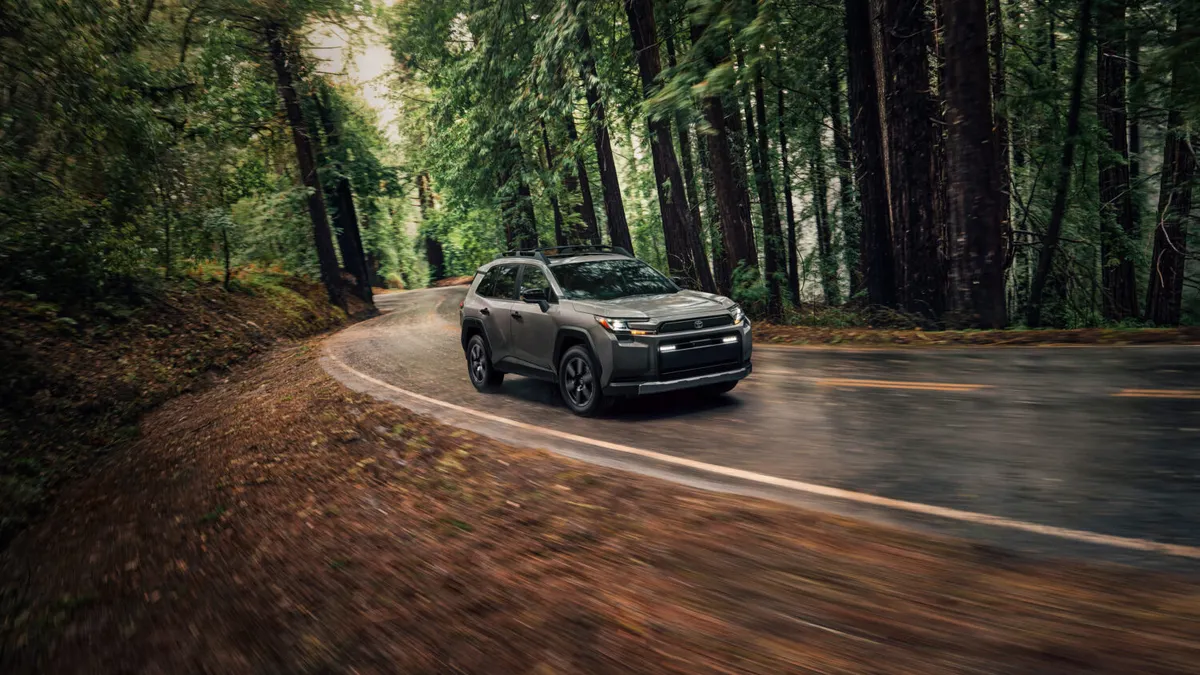
Because of the popularity of the fuel-sipping duo, analysts see no danger in Toyota’s decision to only offer hybrid powertrains in the new, sixth-generation 2026 RAV4 debuting in late 2025.
Of this hybrid-only approach Brinley said, “I don’t think it will hurt anything. Toyota is, of course, dominant in hybrids.” She also said affordable pricing has been a big factor in the RAV4 hybrid’s ascension.
Kim credits Toyota’s dedication to hybrids enabling cost savings, to the point it can make a hybrid powertrain the standard powertrain in a model but keep the hybrid premium over an ICE model to a few hundred dollars versus a few thousand.
“For the mainstream consumer, the hybrid is really kind of a total win-win situation,” Kim said, adding it doesn’t require any behavioral changes like charging a battery-electric-vehicle does.
“Buyers get massive improvements in fuel economy” even though they still refuel at gas stations, he said.
Although Toyota will limit the powertrain choices to hybrid or plug-in hybrid, it still will continue to provide a variety of grades within the model offering. Christ noted this has been a key reason for the RAV’s maintained popularity over the years.
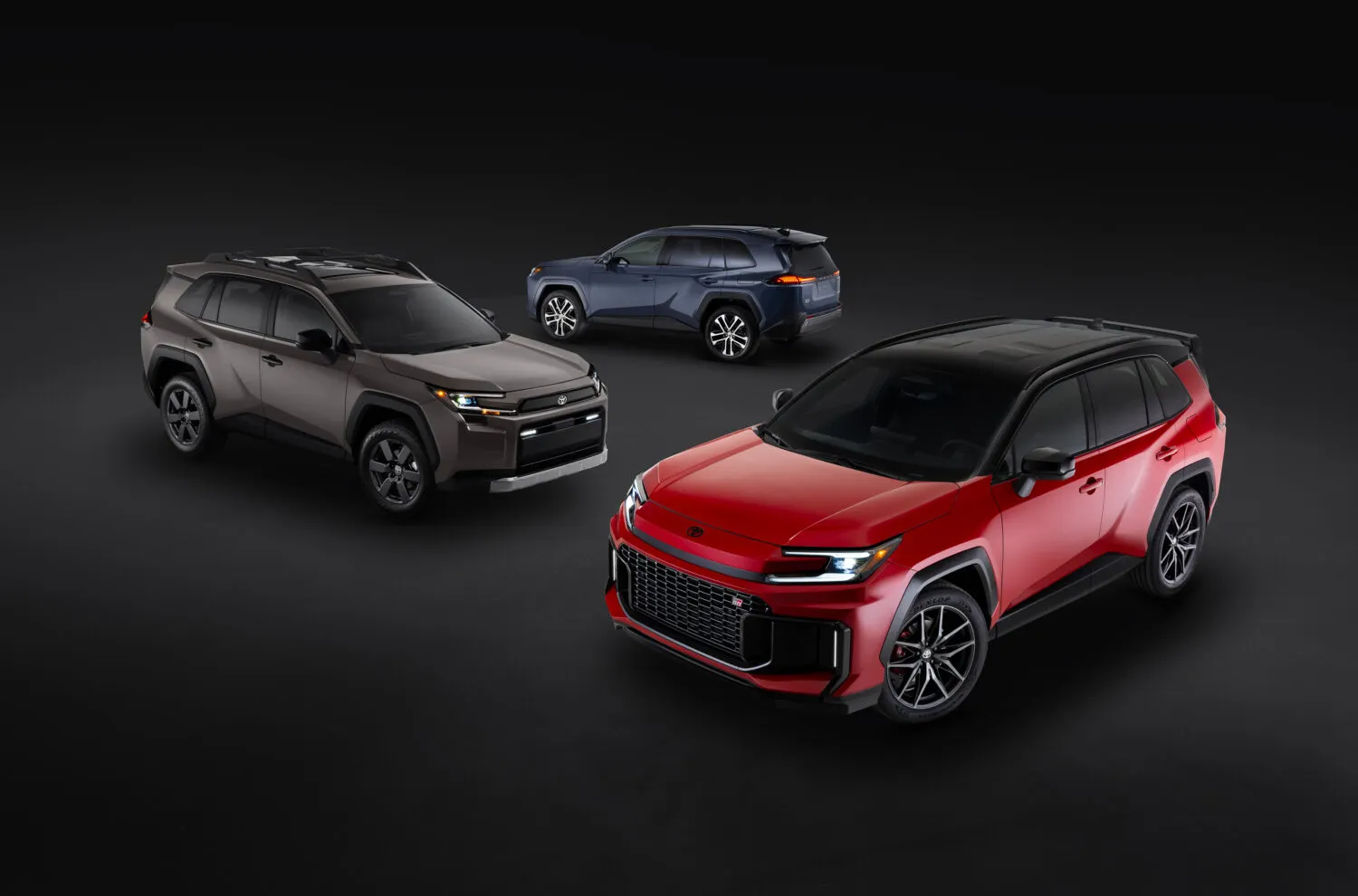
With the 2026 model even more choices are due, Christ said. Plans are set for Core, Sport, and Rugged styles across seven grades, including a new-look off-road Woodland grade and all-new GR SPORT grade.
“The wide range of RAV4s (has) a flavor for everyone,” he said, with this kind of diversification helping turn the vehicle “into a phenomenon.”
Damon Rose, VP of sales for Toyota brand at TMNA, has no worries about dropping the ICE-only model, as Toyota got good results transitioning the Camry to hybrid-only. That experience, plus economies of scale and strong hybrid residual values, drove it to the hybrid-only decision for RAV, he said. Additionally, the number of days RAV4 hybrids spend on dealer lots, i.e. the turn rate, is smaller than even for the gas model, Rose told WardsAuto during a recent Toyota sales call.
“That would be one thing to justify (the hybrid-only decision seeing short turn rates just) in San Francisco or (Los Angeles), but you know, when you see it in Oklahoma…it gives you a lot more confidence.”
Gary Vasilash contributed to this story.