

Toyota officially declared its transition from an automaker to a mobility company back in 2018. But for an automaker deeply entrenched in the Japanese philosophy of Kaizen for continuous improvement, its boldest move on how the past weaves into the future has been a bet on a purpose-built, real-world experiment — Woven City.
This multi-billion-dollar Toyota venture, near Mt. Fuji and about 90 minutes from Tokyo, terms itself a “real-world test course for mobility.” Executives have referred to Woven City, named after the weaving looms Toyota started making long before cars, as a tugboat that will help guide Toyota’s transformation into the next 100 years.
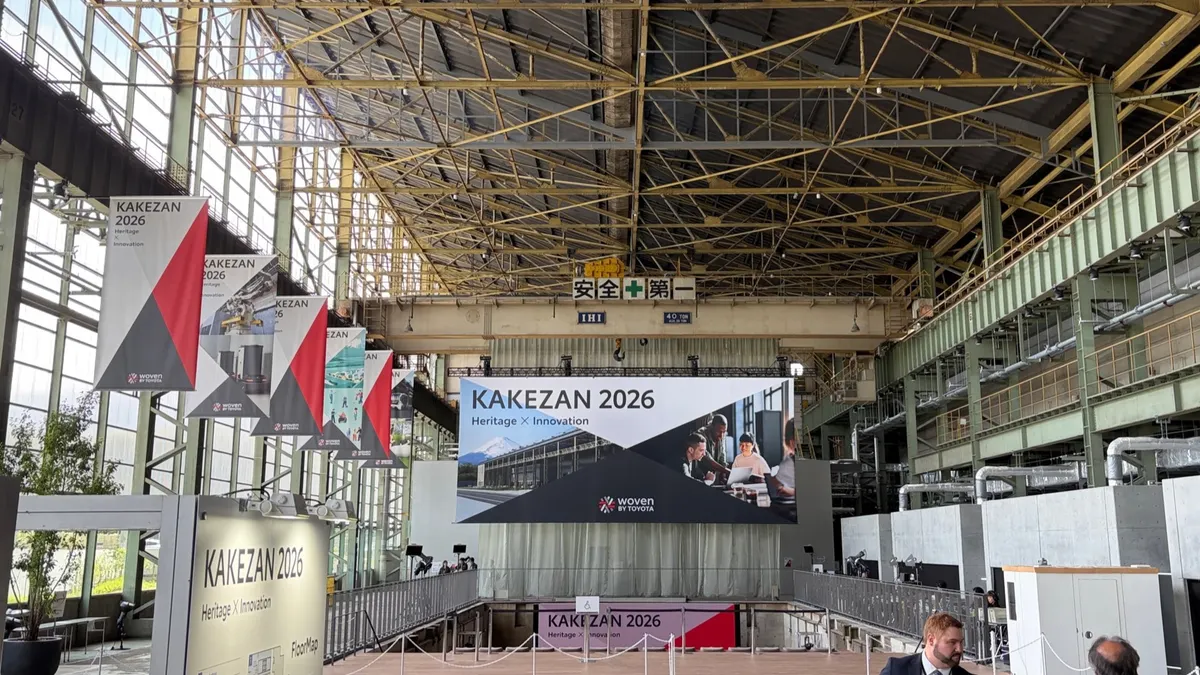
Plans for Woven City were revealed in 2020. But Toyota and its subsidiary Woven by Toyota didn’t open the fledgling project to international press or other visitors until April of this year, when WardsAuto got to walk around this city-in-the-making and see Toyota’s vision of how cars fit into the futurescape.
As Woven by Toyota senior vice president Daisuke Toyoda — the son of longtime top executive Akio Toyoda — laid out before our tour: Although automakers already have proving grounds, those are mostly focused on vehicles that are moving. There are also smart urban test courses being put to use around the world.
What makes the project different, Toyoda and colleagues explained, is the understanding that a “trinity” needs to exist between mobility, people and infrastructure. Thus, Woven City leans into testing solutions that address elements of all three.
The quiet walk through some of Toyota’s Woven City, on a drizzly afternoon, felt a bit like peeking into a movie set still taking form — one in which we patiently waited for a long pedestrian crosswalk light to confirm we could cross one of this community’s nearly empty streets.
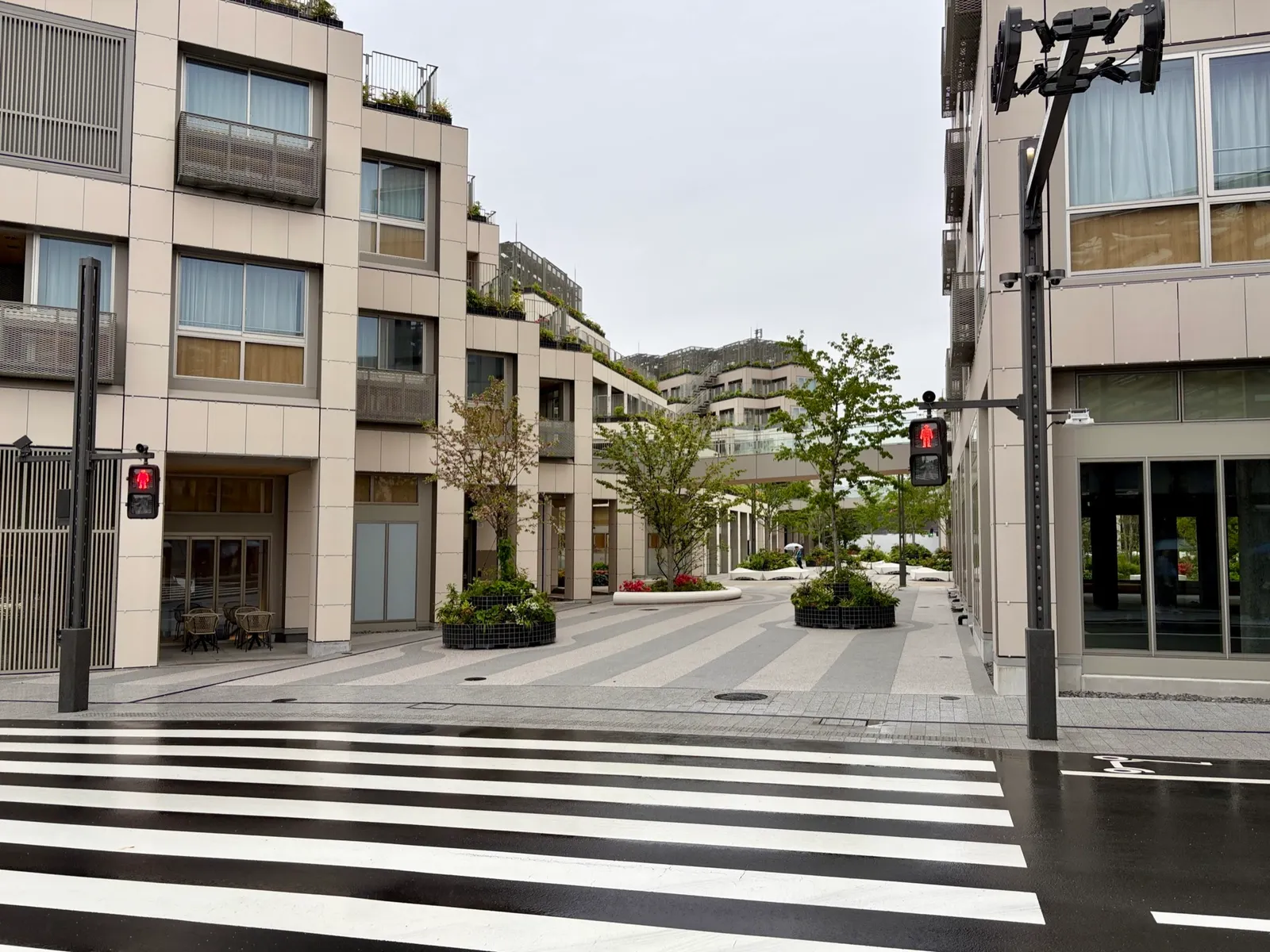
As Toyoda recalled a series of mishaps with city lights turning on in the middle of the night, flawed crosswalk signals and a stuck robot in the middle of the street, he pointed out that testing, and sometimes failing, is part of the process here.
Aiming for a carbon-neutral grid, Woven City’s electricity is generated using fuel-cell generators, with green hydrogen from a nearby Eneos facility piped directly into Woven City. It’s encouraging a distributed energy system for appliances and micro-mobility using portable hydrogen cartridges.
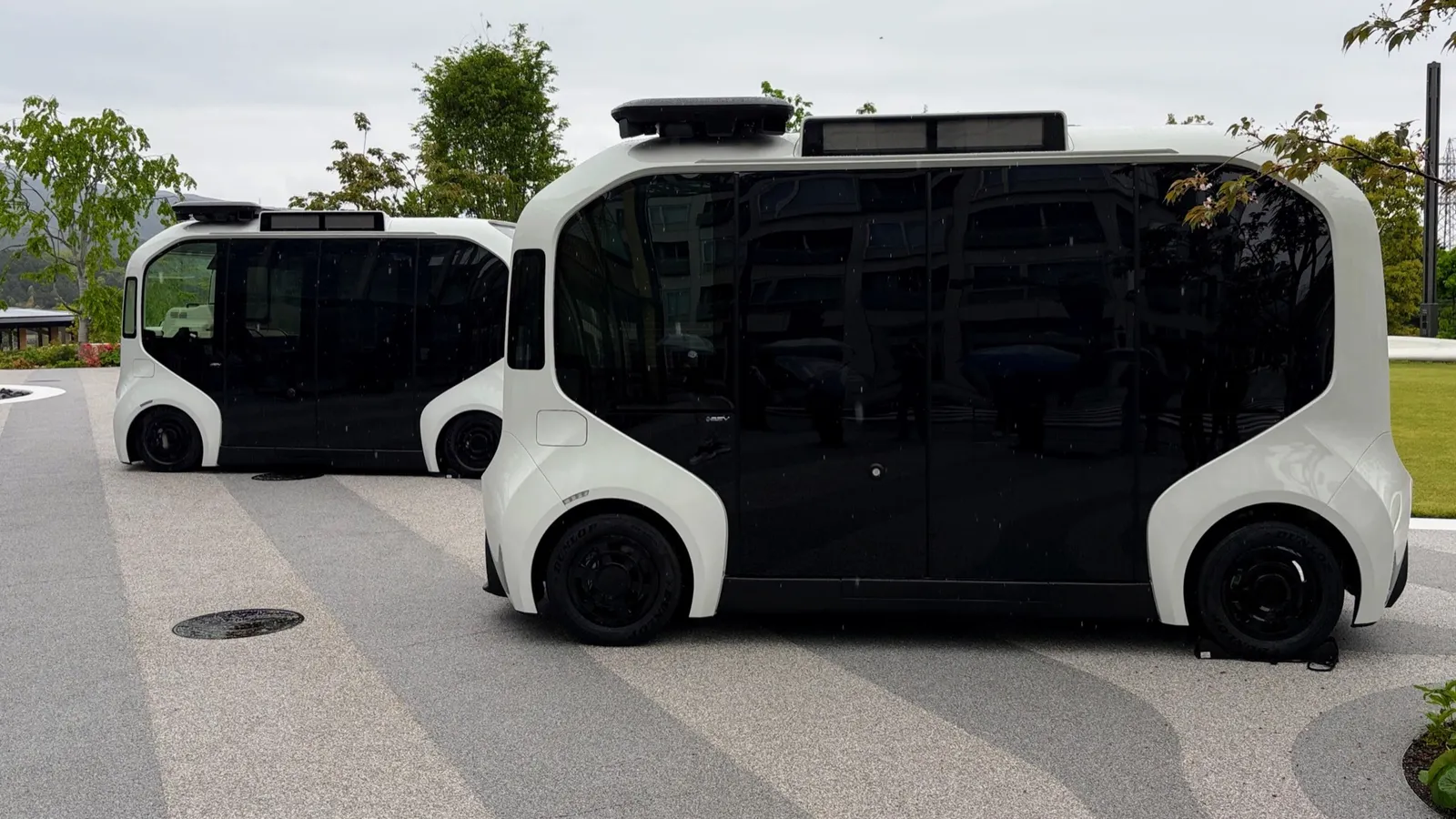
The few vehicles we encountered in motion leaned toward compact and unconventional, as Woven City shapes up to serve as a testbed for micromobility, robots, last-mile delivery innovations and more. Toyota’s boxy e-Palette electric people-mover was out on the move, and we saw a garageful of its Swake dual-rear-wheel electric scooters ready to be tested by a sharing pilot.
A Toyota bZ electric vehicle was the only model we recognized from American roads. It was part of a demonstration with a futuristic robotic utility rig called Guide Mobi equipped with an advanced sensor array that can “pair” with a vehicle that isn’t as sensor-equipped, and guide to into a parking spot or around the block as if it were a self-driving vehicle. It can also pick up small payloads like groceries or gardening supplies to carry across town — loaded or picked up by a different type of robot, perhaps.
Woven City may never feel the same from month to month, let alone year to year, as it’s positioned to be ever-evolving, implementing infrastructure and mobility solutions as they’re being developed in-house, connected end-to-end and adaptable to real validation needs. One of the key takeaways is that all of these ideas and pieces of technology won’t be limited to the inventors’ own small labs or sample sets, but tested by the entire city of inventors and their families who live there, dubbed Weavers.
It takes people to test the mobility and infrastructure at Woven City, and there are currently about 100 Weavers residing there. With phase one complete, the population will soon expand to 360. Phase Two is also planned and earth-movers have already drawn out its space. “Future phases” will stretch into the 2030s and Woven anticipates roughly 2,000 residents by then.
Visualizing a better cup of coffee
How Woven City fits into Toyota today is as much a work in progress as the earth-movers and construction equipment we saw in the periphery at the development. And how Woven City fits into the future may involve understanding how its foundational AI Vision Engine can fit into this “trinity” with people and infrastructure, even before the automaker rolls it out to cars.
Woven City is overseen by Woven by Toyota, which is the 18th company in the Toyota Group. While it’s headquartered in Tokyo and Woven City is its laboratory, it’s 100% owned by the automaker, and Toyota’s total investment in the venture has not been revealed.
Woven by Toyota was established in April 2023, although it took form under a preceding company, Toyota Research Institute–Advanced Development, Inc. The technologies directly under Woven by Toyota include the Arene integrated software platform for SDVs, automated driving and an Active Learning Loop, the AI Vision Engine, a coordinated Anzen data system, a Woven City Robot Platform, an Infra Hub for data gathering and collaboration, a Data Fabric privacy framework and a Kaizen platform aimed at “digitizing operations across every field.”
Toyota is still working on getting all its group companies and partners to use AI and work toward a software-defined architecture. But Woven already has partners using its AI Vision Engine in the City.
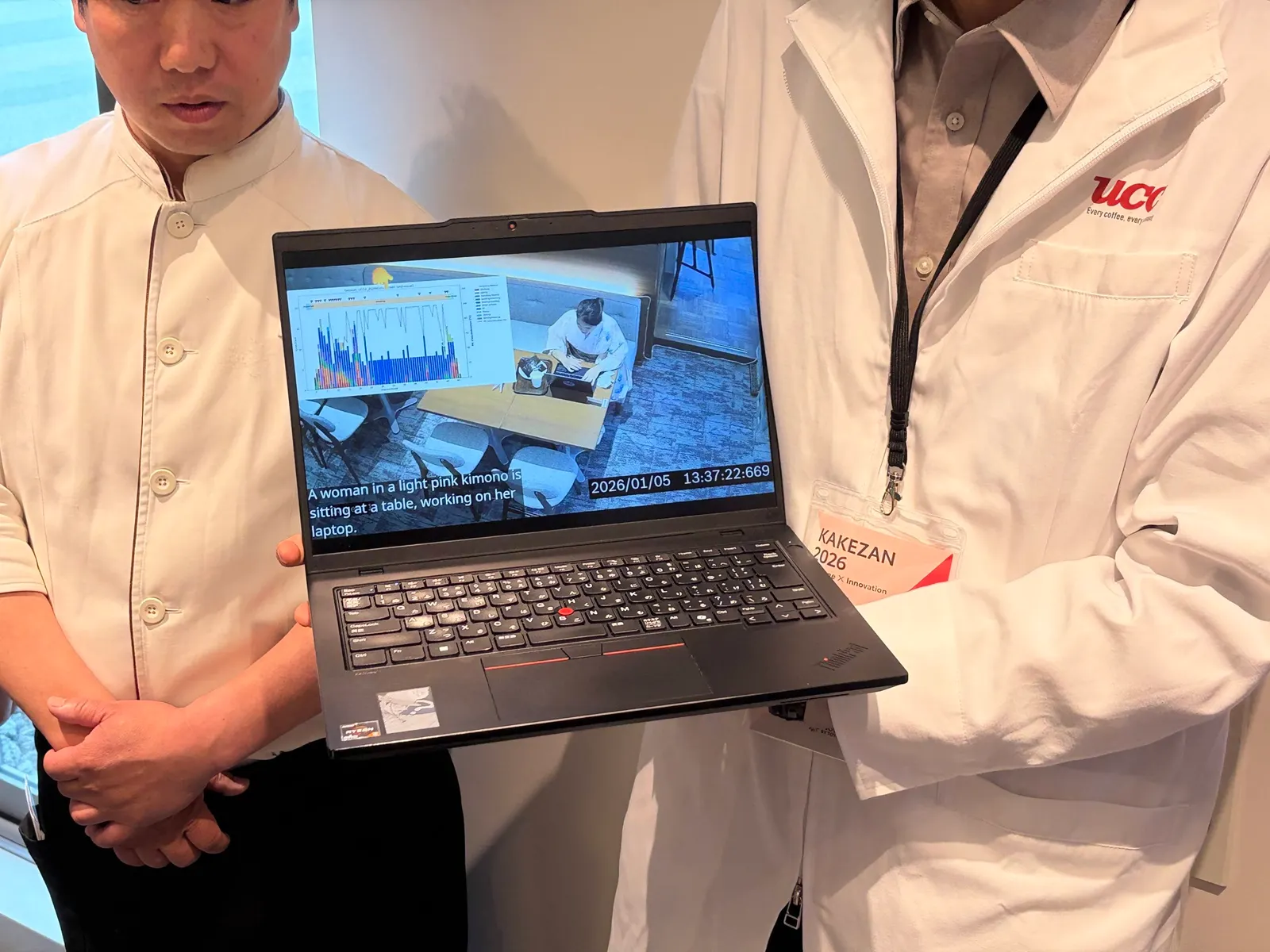
Japan-based coffee giant UCC is using the vision language model to study customer habits at Woven City’s coffee shop, including how quickly they consume their coffee and how deeply they’re focused. Although the coffee at the shop is not yet roasted with hydrogen, the company said that’s in the works too.
In another room on the ground floor of a building that looks a bit like a storefront, we learn how Daikin Industries is studying the effects of subtle air pressure changes on creating a “pollen-less space”—a project that isn’t yet focused directly toward any particular vehicle or mobility device, although we were told it could be.
Inventor Garage is an incubator for companies old and new
The hub of activity at Woven City is its Inventor Garage, which functions as an incubator for ideas that stretch beyond mobility. We saw a hydrogen e-bike pilot project and efforts from DyDo to make less visually distracting vending machines. How about Nissin Food Products’ studies of optimized go-anywhere meals or Daiichikosho’s experiments for spontaneous karaoke sing-alongs? That’s there too.
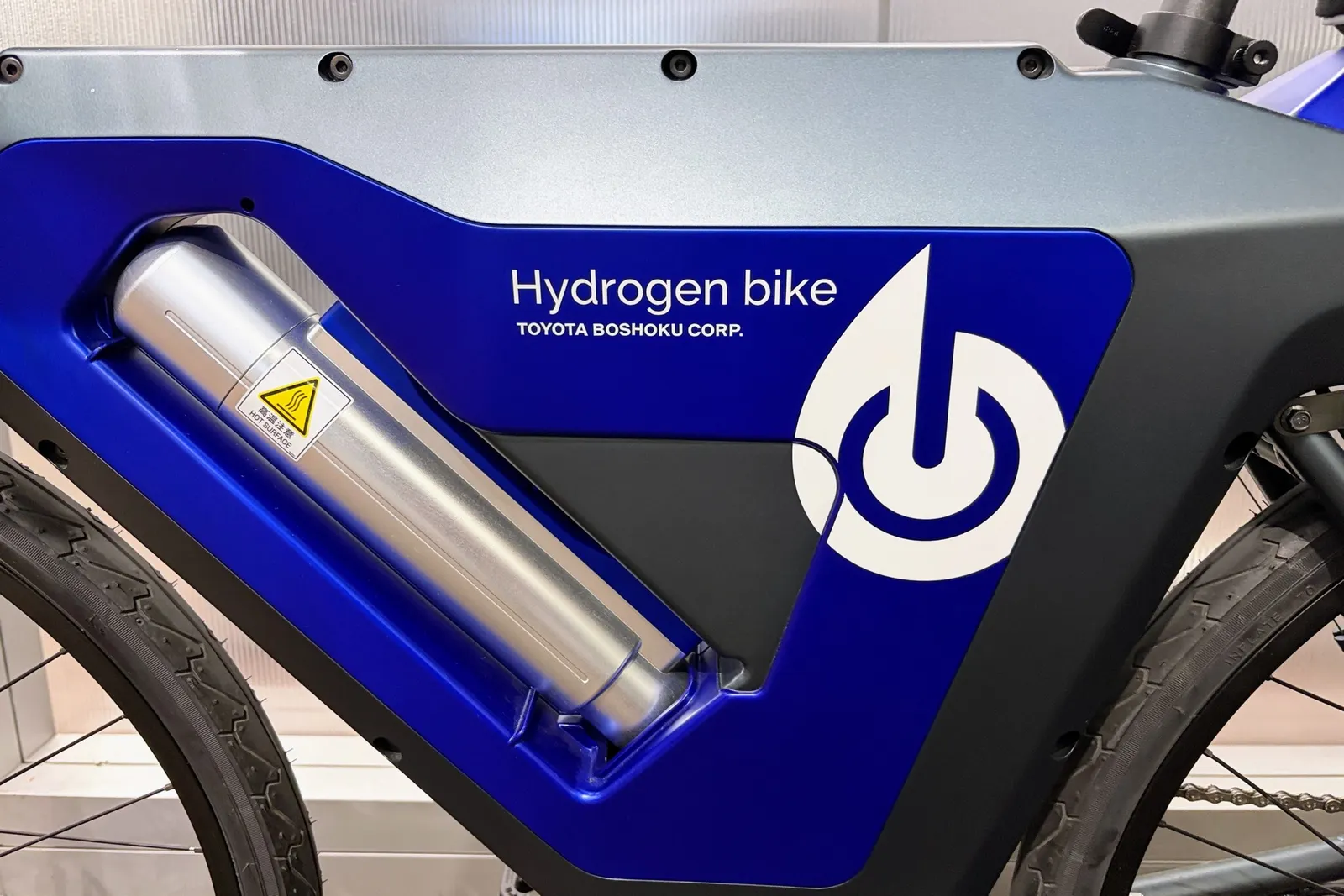
The Inventor Garage is built in the former Higashi-Fuji Plant, part of Toyota Motor East Japan. The assembly plant employed more than 7,000 and over its 53 years produced approximately 7.52 million vehicles, including the Sports 800 and Century.
Meanwhile, to expand AI adoption across Woven projects for everyday tasks and shift teams toward more meaningful, high-value work, the initiative also created “Akio AI”—an AI system trained on Chairman Akio Toyoda’s day-to-day leadership style and decision-making approach.
Specifically, it’s Generative AI trained with various speeches and communications from Toyoda over the past 10 years. Woven says it could help its leaders “gain the perspective and conviction needed to lead.”
In addition to established companies conducting research, startup-style incubation is part of the facility’s focus, too.
A walk around a series of startup exhibits summing ideas and technologies at the Inventor Garage showed those startups are all over the map and certainly not all related to cars or mobility. Among the ideas represented as finalists in the Woven City Challenge incubator program were companies developing:
- urban space storage innovations
- immersive virtual reality
- wireless charging for robots
- detergent-free washing
- thermal waste treatment
- AI-driven viral diagnoses
- a health-assessing instant urine testing service
And more directly on the mobility front, it included Refined Robotics, which claims to be “the world’s first bipedal last mile delivery company,” good for delivering goods up stairs, through rough terrain and where other robots can’t go.
Reinventing from the inside out
Toyota emphasizes co-creation within Woven City, but there’s some nuance to navigate and some boundaries in place. Of the 24 companies currently involved in Woven City, 12 are part of the greater Toyota Group.
Helping remake Toyota itself as a mobility-and-software company is only part of the goal for Woven City, though. The rest is reaching out and fostering ideas through its Inventor Garage — and, for Toyota, absorbing some of them.
Among the Toyota Group inventions, we learned of a Toyota manufacturing team seeking to harness the AI Vision engine for greater efficiencies, by following parts all the way through production — and of an energy-bank system being developed internally at Woven City. Called xEV-VPP, it’s aiming to treat banks of fleet vehicles together as large-scale batteries, rather than individual elements in a V2G infrastructure, effectively turning parking structures into “social infrastructure.”
That could help achieve not just corporate decarbonization and ESG goals, but also supply emergency power or enable peak shifting so as to keep renewable sources on and emissions-producing power sources off for a greater part of the day. And a next-generation dynamic wireless bidirectional charging system that’s being developed with Denso promises to help some of the smaller EVs at Woven City truly cut the cord.
Who keeps that invention?
As executives admitted, as Woven City invites more partners in, the multitude of financial pathways Toyota has helped pave means there may not be a single clear-cut answer to who keeps the intellectual property and production rights to a product after its conception.
For instance, Joby Aviation, a company focused on electric vertical takeoff and landing aircraft in which Toyota has already invested hundreds of millions of dollars, has joined Woven City and will be exploring an air mobility ecosystem.
“The partners bring their own IP and their own business models and ideas that they want to try out, and in those cases, those things are their IPs — that’s what they’re going to take away from coming here and doing that,” explained Woven by Toyota CFO John Absmeier to WardsAuto. “The use cases that we’re testing are our IPs, and the things that we’re developing around Vision AI are our IPs.”
Some of the projects at Woven are being supported by Toyota Invention Partners Co. Ltd., established in 2025 as a strategic investment subsidiary with 100 billion yen ($670 million) with the focus toward helping recast Toyota as a mobility company. Others are funded through Woven Capital, which serves as Toyota's growth-stage venture investment arm and created a second 120 billion-yen fund in 2025 — bringing the total to a touted $1.6 billion — and Toyota Ventures remains focused on “early-stage VC backing of frontier technologies and climate solutions.”
These ventures, explained Absmeier, “are working as part of this ecosystem to try to figure out how to build businesses that yes, of course, if we’re providing value and investment and the space to do the work, we will have a stake in their success.”
Woven City’s long runway is on-brand for Toyota
Both Woven Capital and Toyota Ventures suggest an investment period of 10 years or more — a much longer runway than for any typical venture capital funding.
“We are required to create return-on-investment business cases,” said Absmeier. “And of course, we have to be a little bit flexible and agile about how we measure and change course as necessary, including deciding to stop investments — which is always one of the hardest things to do.”
Within each of the four core pillars of Woven by Toyota there are multiple products, Absmeier said. “And so we approach it more at a product level, or at an underlying technology level — how much do we invest for how long, and when do we say go bigger or stop?”
“We’re not at the stage yet where we’re saying whole businesses have a certain runway or a stop point; it’s more at an underlying product and technology level,” he quickly followed.
Woven City currently is limited to inventors, weavers and partners from inside Japan. It won’t always be that way, assured Absmeier, but a timeline hasn’t been announced for extending that invitation to those based in other countries.
For now, while Woven City appears cautious in its initial stages, Toyota has clearly seen the light on software-defined vehicles and AI but also sees it as a complicated transition it can’t make overnight. If Toyota makes this a growth engine, not a boondoggle — with Woven’s threads weaving well beyond cars — it could prove its mobility company declaration to be much more than a talking point.