

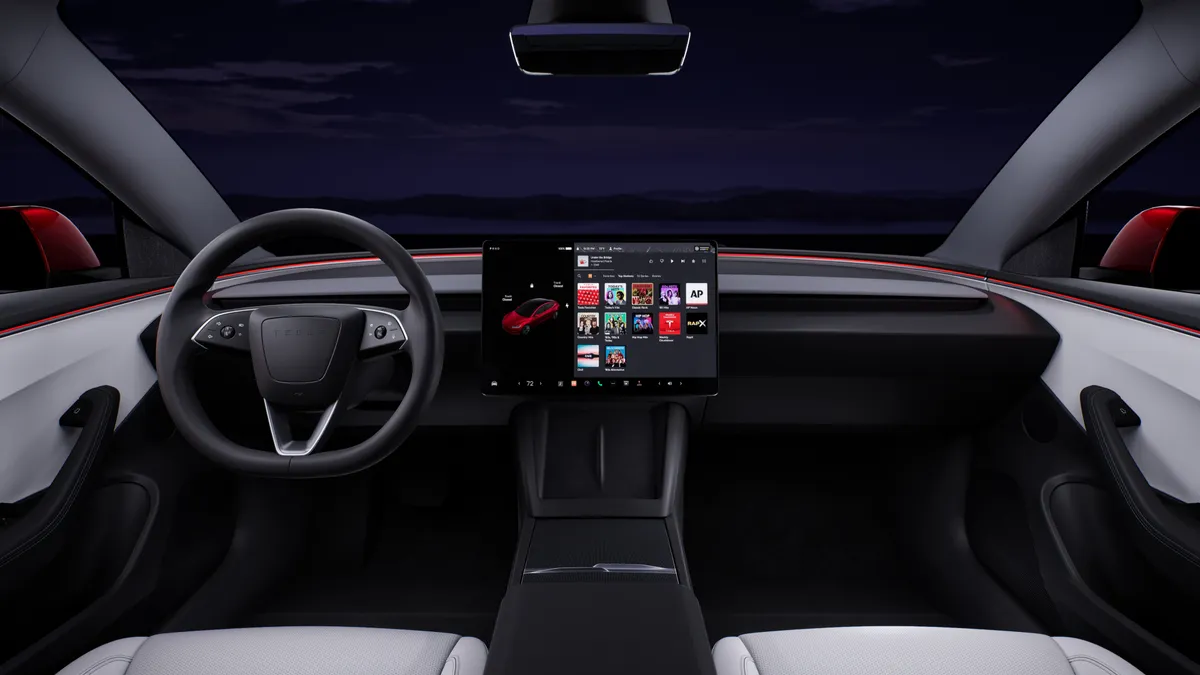
The Netherlands becomes the first European nation to approve Tesla’s Full Self Driving Supervised on public roads, albeit for use only as a human-monitored, adaptive cruise control system.
While approving the system for use, the Netherlands Vehicle Authority (RDW) stressed in its April 10 statement that Tesla’s FSD system “is not self-driving” but “a driver-controlled assistance system.”
The authority said it has reached the decision to approve Tesla’s system after 18 months of extensive testing on both dedicated test tracks and public roads. Its approval allows the system to be used as a support for the driver, who must always be in control in traffic environments.
Using a driver monitoring system ensures the driver’s eyes remain on the road and their hands are visible and ready to take control of the vehicle at a moment’s notice. “Hands, therefore, do not have to be on the steering wheel but must be able to take over immediately if necessary,” RDW’s statement said.
However, this means the driver must be paying attention at all times and not be distracted by other tasks, such as reading a newspaper, when FSD is engaged, added the RDW.
It also pointed out that Tesla’s FSD Supervised system for Europe is not the same as the one in the U.S. “Europe use different software versions than vehicles in the U.S.,” it said, adding, “This means that the FSD Supervised version in the U.S. is not comparable to the FSD Supervised version in the EU.”
The RDW points out that BMW’s and Ford’s BlueCruise hands-free systems have already been approved for use in some European markets where local regulations allow.
For now, Tesla’s system is only approved for the Netherlands, whose approval will be submitted to the European Commission where a majority of EU member states would have to vote in favor of it being rolled out across the economic bloc.
Analyst response
It is important to take into account the differences between the software used in the U.S. and that being marketed in Europe, said Yousif Al-Ani, principal ADAS engineer with U.K. vehicle technology assessor Thatcham Research.
However, Thatcham has experience with testing Tesla’s FSD system in the U.S. and recognizes its ability to handle long periods of driving with the potential to lull drivers into a false sense of security, said Al-Ani in an emailed response to WardsAuto.
“The risk comes when an intervention is needed: coming back into the loop after long periods of reduced engagement is difficult, and the system can create a false sense of security,” he added.
The RDW’s decision relies on a type approval exemption mechanism that can be applied to many European markets, as in the case of BMW’s and Ford’s systems, he said.
“However, this does not change the fundamentals; the driver remains legally responsible at all times for the safe operation of the vehicle,” added Al-Ani.