NOVI, MI – Volkswagen Group investing nearly $6 billion in Rivian, and subsequently announcing the U.S. start-up’s software will power future vehicles across VW’s ten automotive brands, should have been a wakeup call to other legacy automakers to gut-check whether their cultures are conducive to competing in the software space against China, say supplier officials
“Maybe not culture, but there is a mindset (among legacy automakers) that is much different than what we find at Chinese automakers,” says ZF North America President Ramiro Gutierrez.
Speaking here at the recent AutoTech 2025, he and other supplier executives paint a picture of Chinese automakers being hyper-focused on end-customer experience while western automakers are more apt to be struggling with fiefdoms and silos that impede product planning and cycle speed.
“If you have a steering system, a braking system and suspension system, all of them are by-wire through software, you can create a complete and different customer experience in China, Europe and the U.S,” says Gutierrez. “But the approach of many legacy customers is ‘No, I want my steering system. and my braking system, and my suspension system – and they cannot be the same as this other guy’s.” In China, he says, the same systems can be sold to ten automakers because they realize standardization will get them to market faster, and differentiating those systems provides no added value to the end user.
An example, Gutierrez notes, of legacy automakers playing catch-up to China: U.S. automakers only now are embracing extended-range battery-electric vehicles as a strategy for selling BEVs, while the technology has been going into Chinese vehicles since 2010.
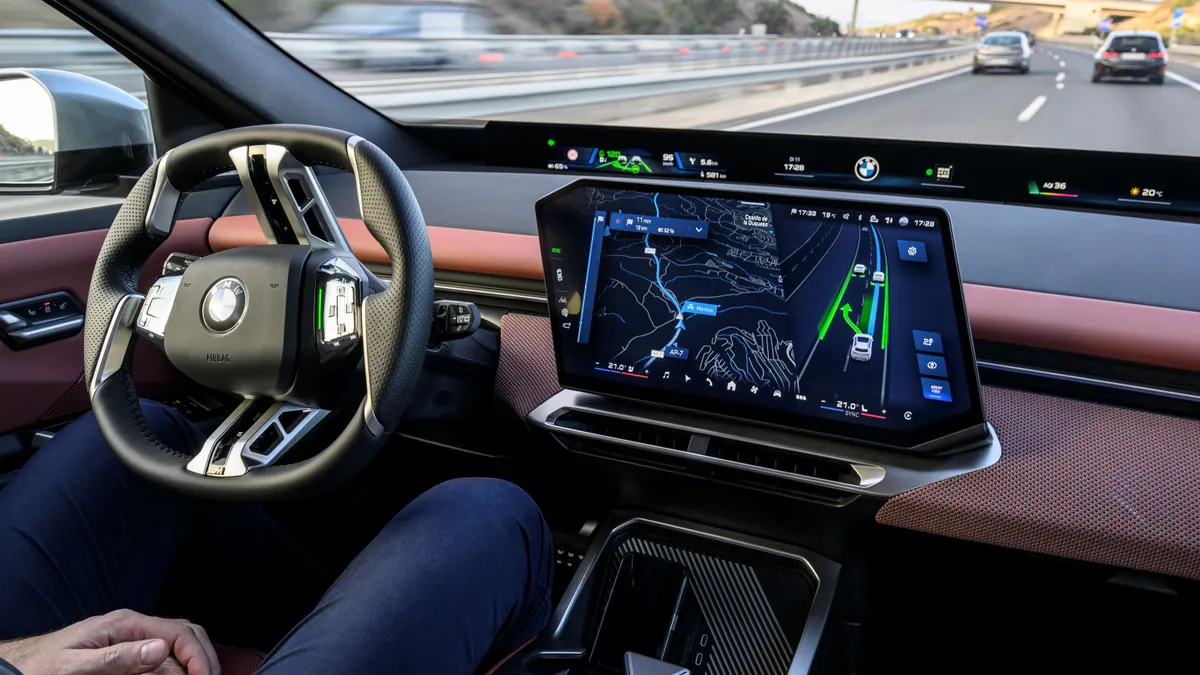
There is a perception among many western auto executives that China is not engineering for safety and that they do things on the cheap all the time, says Joe Capuano, head of technology and regional president of Bosch Mobility Americas. “(But) China is actually doing an amazing job with safety, and it isn’t just crash safety and the driving stack,” he says, adding, “They have the most streamlined cockpit experiences controllable with voice and gesture and it works in a way that does not distract me from driving. They have gone fast on the AI cockpit and that definitely impacts safety.”
Tier 1 suppliers that have been working with Chinese automakers can be a catalyst to helping OEM’s navigate the change. “The supply chain should actually be a change agent for the traditional automakers,” says Norm Marks, global vice president, automotive industry at NVIDIA.
ZF’s Gutierrez says his company often finds itself just in the discussion stages with legacy automakers on systems that have already been developed and validated in China. “There is a lot of organizational changes that need to happen [at legacy automakers] in order to make progress on speed,” he says.
“The relationship between OEM and Tier 1 was traditionally linear in the past. Now, it’s really co-dependent,” says Maitê Alves Bezerra, principal analyst-software defined vehicles at Omdia Automotive/Wards Intelligence.
The flexibility of a well-developed SDV architecture will dramatically change development and certification times. A supplier that developed a navigation system for a Chinese automaker found that when it exported to Europe, customers did not like the same user experience as the Chinese. The supplier was able to pivot and had a European-centric system in the cars in four months because they had flexible software defined platform to work with that made changing it out easy and fast.
The supplier executives note when it comes to the development of software-defined-vehicles (SDVs), western automakers have been slower to adopt them. Chinese automaker BYD, for example, has committed to making all its vehicles SDVs. It partners with NVIDIA and utilizes the company’s DRIVE Orin centralized compute platform across its New Energy Vehicles (NEV) lineup.
There are new software platforms that will help speed up cycle times, but only if they are embraced by legacy OEMs. NVIDIA, for example, has HALO aimed at enabling Level 2+ to Level 4 autonomous driving, key to integrating systems within SDVs. It fuses data from cameras, LiDAR, radar and ultrasonic sensors, while enabling the vehicle to recognize lanes, vehicles, pedestrians, traffic signs, etc. This platform builds on 15 years of engineering inputs and experience. GM and Hyundai have recently announced commitments to NVIDIA’s platform.
Legacy auto companies are so named because they have a longer, broader set of business challenges, not the least of which is managing internal-combustion-engine (ICE) and hybrid vehicles that still produce most of the profits among those companies. And with regulations that greatly impact product cycles being changed all the time, when and how much to accelerate technology and new systems that don’t produce profits in their early years is a headache for every automaker and supplier.
But nobody loses when attention is paid to changing organizational mindsets to focus on customer experience rather than “not-invented here.”