

Renault Group announced its first new business strategy in five years, pledging to match China’s two-year vehicle production cycle and to launch a software-defined-vehicle (SDV) platform for C-segment electric vehicles.
In its March 10 release, the French auto group unveiled its ‘futuREady’ business plan aimed at preparing the company for the future built on what it terms intelligent technologies in both cockpit and chassis, new battery chemistries, in-wheel motors, power electronics, software and electronic architecture.
In fact, the automaker claimed it will be the first manufacturer to launch a genuine SDV in Europe as early as later this year.
The strategy replaces the “Renaulution” plan launched in 2021 that is credited with turning a loss-making company into an automotive powerhouse in Europe under the governance of former CEO Luca de Meo.
Now, Renault said it will launch 36 new models up until 2030, aiming to sell more than 2 million vehicles annually, half of them outside of Europe where all its products will be battery-electric vehicles and 50% BEV products in its other global markets.
In terms of product the focus is on bringing SDV technology to its core compact-vehicle C-segment market and the company said its first priority is to prepare these next generations of BEVs with its new RGEV medium 2.0 electric platform.
This features an 800-volt electric architecture expected to deliver ultra-fast charging in as little as 10 minutes by 2030. The modular platform will also accommodate a wide range of models from the B+ to D segments providing sedan, SUV and even MPV body styles.
A- to B-segment vehicles will stick with 400V technology, with an expected charging time of 20 minutes by 2030.
BEVs will use battery packs with a maximum fill rate of 70%, a cell-to-body design, 20% fewer parts and compatibility with pouch, prismatic and blade cells.
Renault expects a BEV range of up to 750 km (466 miles) on Europe’s WLTP rating and up to 1,400 km with a gasoline range extender claiming emissions of under 25g of CO₂/km.
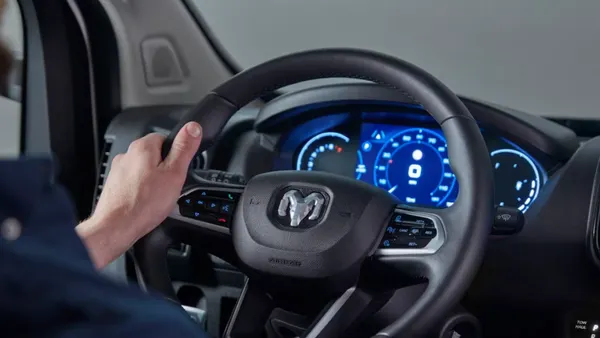
Centralized SDV architecture will allow 90% of vehicle functions to be updated by firmware-over-the-air (FOTA), claiming half the time required for implementation. It will also be the first carOS co-developed with partner Google, based on Android.
Renault said its next step will be for the SDV to evolve towards the artificial intelligence-defined vehicle (AIDV), able to control infotainment, ADAS and the chassis, paving the way for the intelligent car.
This new platform will be developed primarily in France and cut costs by 40% compared with the current generation of BEVs.
Two types of battery-pack chemistries will be employed with “high energy density” chemistry for high-power or very long-range models alongside “affordable” chemistry for small cars and standard-range versions.
The group also hopes to develop a third-generation rare-earth-free electric drive motor, developed in-house. This electrically excited synchronous motor (EESM) claims an efficiency of 93% on highways and 25% more power.
However, Renault said it will continue developing its E-Tech hybrid powertrain technology beyond 2030 with new versions serving smaller vehicles under 150 hp.
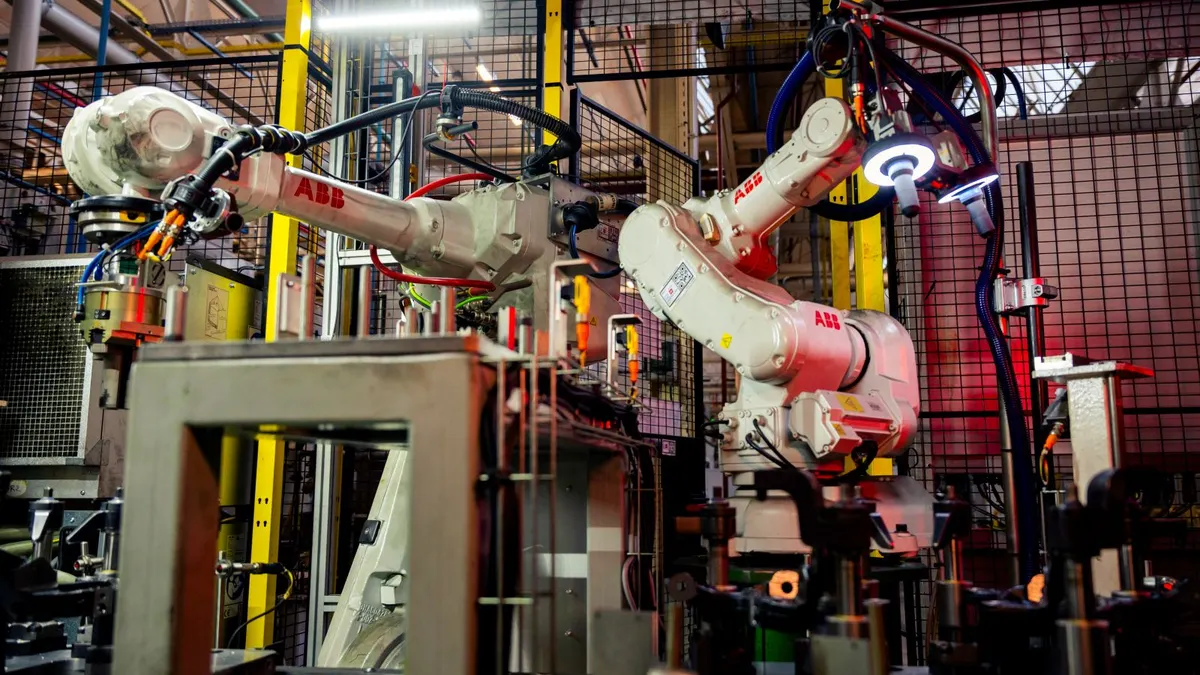
To match China’s speed-to-market of new vehicles, Renault said it will maximize the use of data from its industrial metaverse, the digital twin of all its plants, allowing it to monitor all stages of production and potential production incidents in real time.
It also plans to deploy AI to supervise production stages enabling full traceability, a significantly faster response to alerts raised by the sales network and the capacity to update its vehicles remotely. Renault expects to reduce incidents by half from the first year of use and cut the number of customer complaints by a factor of three over five years.
Financially, the group aims to achieve operating margins of between 5% and 7% of revenue and an automotive free cash flow superior or equal to 1.5 billion euros ($1.7 billion) per year on average.
“Since my appointment as CEO last July, we have been working with the whole team worldwide to develop a plan that will set the group on the path to robust and sustainable performance, whatever the challenges ahead,” said Renault boss François Provost in the statement. “Together, through futuREady, we will show that we are here for the long term and we will become the benchmark for the European automotive industry on the global stage.”