Joining a growing trend, innovative New York dealer Brian Benstock adds mobile service delivery at the three metro New York dealerships he operates, in a deal with Curbee, a software provider that already works with other dealer groups and OEMs launching service delivery.
In a June 3 interview with WardsAuto, Benstock was blunt about what’s really driving growth in mobile service: “There’s a whole subset of customers who don’t want to go to your store,” he said.
Los Angeles-based Curbee had almost 300 dealerships signed up as of January 2026, up from only about 25 a year earlier, Curbee CEO Amit Chandarana said in a separate phone interview.
Meanwhile, Curbee’s OEM relationships include participating in a growing number of factory-prescribed service delivery programs, including dealerships for General Motors and Hyundai, he said. Chandarana says Benstock’s dealerships are Curbee’s first Honda and Acura stores.
Chandarana said roughly 37% of dealership repair orders can be completed outside a traditional service bay by a mobile technician at the customer’s home or office.
Curbee provides only the software to manage service delivery. That includes routing and sorting out which jobs can be done remotely. It’s up to dealers to obtain and upfit service delivery vehicles.
In New York, Benstock said he intends to start slowly and add more service delivery vehicles only as demand grows. He wouldn’t specify how many delivery vehicles there would be at launch.
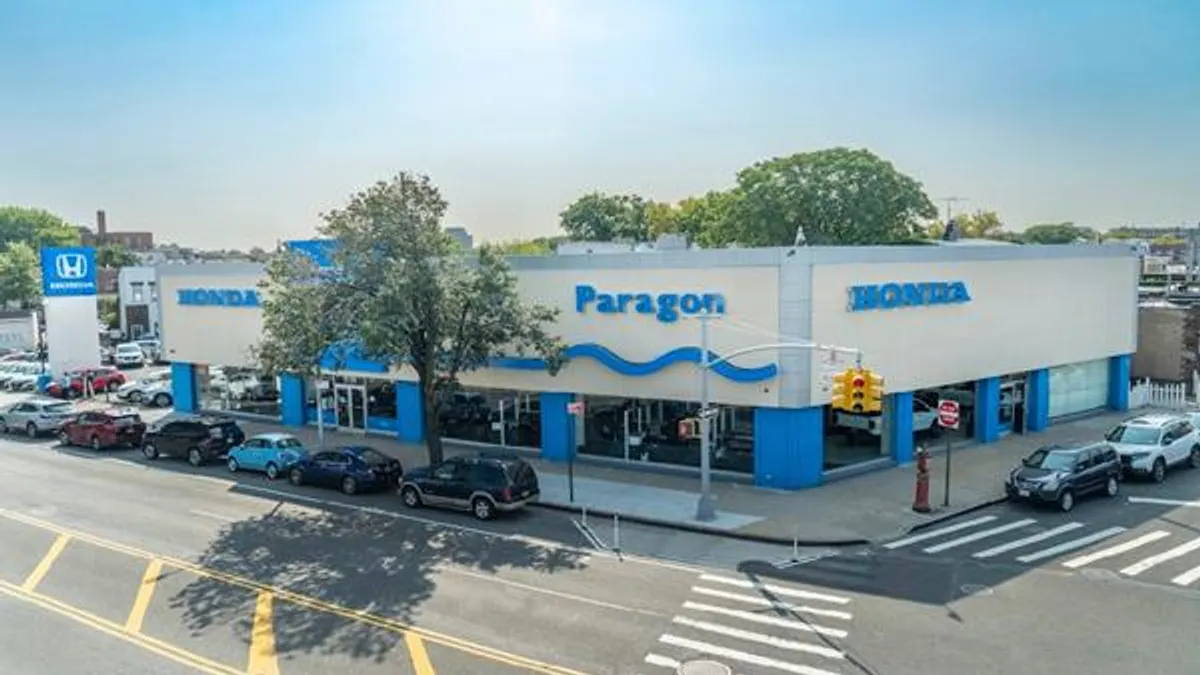
Benstock is the longtime partner, general manager and vice president of Paragon Honda in Woodside, in the densely populated New York City borough of Queens. He’s also general manager and vice president of Paragon Acura across the street.
Since 2023, Benstock has also been dealer principal of White Plains Honda in White Plains, New York, just north of New York City. All three dealerships are set to participate in mobile service delivery starting this summer, probably in July, Benstock said.
Besides customer convenience, mobile service delivery also offers potential behind-the-scenes business advantages to dealerships, he said.
Firstly, mobile service delivery frees up service-bay capacity at the dealership, Benstock said. “Every 10 repair orders that get performed off-site free up 10 repair orders’ worth of capacity that don’t go to the service bays,” he said.
Secondly, mobile-service customers are much more likely to approve recommended work that turns up in a multi-point inspection, versus customers who are waiting on-site at the dealership, just wanting to get their cars back and hit the road, Benstock said.
“When they hear there’s more work, they say they’ll be back — but they take it someplace else. Someplace more convenient. So, we do the diagnostics, and somebody else gets paid. With service delivery? We’re the ones who get paid,” he said.
Benstock has a track record as an innovator. Starting almost a decade ago, he was an early mover in high-volume pickup and delivery of service customers’ vehicles, well before the COVID-19 pandemic.
“Since we started in 2017, we have picked up and delivered over 200,000 cars. That represents over $60 million in gross profit,” he said in the interview.
Mobile service delivery is a logical next step, Benstock said.
“Mobile service is not just a convenience play,” he said. “It is a capacity strategy.”