

Premium car model sales are keeping Mercedes-Benz looking to a positive future as its net operating profits took a hit from restructuring costs including employee job cuts.
The automaker said it plans to build on its healthy sales of top-tier premium products with 40 new models planned to launch by 2027.
However, its Q3 financial results for 2025 recorded a net operating fall of about 30.8% to €1.19 billion ($1.38 billion) for the quarter compared to €1.72 billion for the same period in 2024 most of it owing to restructuring costs including worker layoffs amounting to €876 million for the period.
“We are managing a highly dynamic business environment, from tariffs and political disruptions to intense competition in China to heterogenous BEV adoption around the world,” said Chief Executive Ola Kaellenius, addressing an online webcast presentation to investors.
However, he remains confident that the company’s full year performance predictions are still on course.
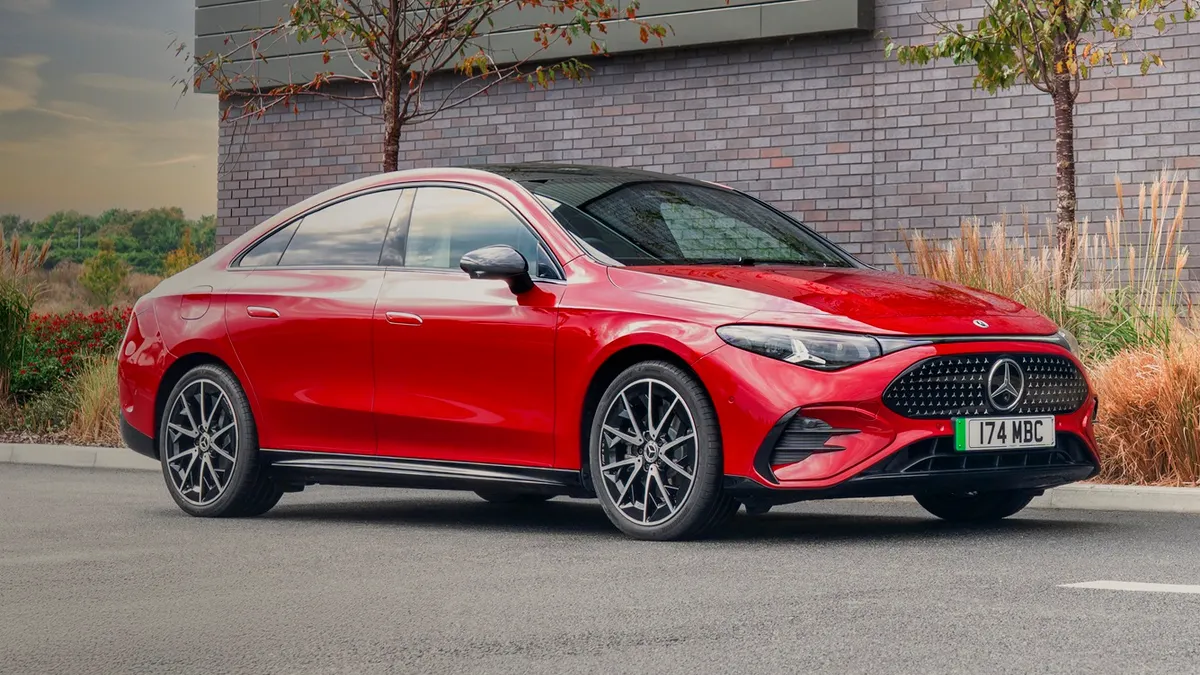
Kaellenius pointed to product highlights including the recent launch in Europe of the battery electric vehicle (BEV) Mercedes CLA as “our biggest ever launch program” for what he says is the brand’s first software defined car (SDV) and the first Mercedes to run on its bespoke software operating system, MB.OS.
He said the model, and its sibling CLA Shooting Brake station wagon, will soon be ready for global rollout and will later be joined by both plug-in hybrid (PHEV) and internal combustion engine (ICE) versions.
Its new products launches will have a major focus on top-segment vehicles, said Kaellenius, because “this is where Mercedes comes from and what we do best and what also fuels our financial firepower,” he added.
Entry-level models will continue to be offered to consumers in a range of powertrains covering BEV, PHEV and ICE, said Kaellenius.
Kaellenius also highlighted the importance of the recent long-distance test drive of the electric AMG Concept GT XX using technologies including axial-flux motors and directly cooled battery packs, which will debut in new Mercedes EV models beginning next year.
CFO Harald Wilhelm pointed out the key financial aspects in a webcast to investors saying that all three Mercedes-Benz business units, Mercedes Cars, Mercedes Vans and Mercedes Mobility, achieved EBIT margins in line with expectations.
Overall, the adjusted Group EBIT reached €2.1 billion ($2.4 billion) in the third quarter dropping from €2.5 billion in the same period for 2024 blamed mainly on lower sales volume, increased expenses because of U.S. tariffs and negative effects of foreign exchange rates.
Mercedes-Benz Cars sold 441,453 globally cars in the third quarter, influenced by the market environment in China, tariff policies and stock management that impacted group sales in the U.S. market.
Yet, year-to-date September vehicle deliveries increased by 6% in the U.S. market while Q3 sales in Europe increased by 2%.
Globally, the brand top-segment vehicle accounted for 15.4% of overall sales in Q3 driven by the S-Class and GLS, G-Class and Mercedes-AMG. Even in the middle of a vehicle price-war in China, the brand saw its top-segment sales increased by 13% retaining its leading market share in the segment priced at 1 million RMB ($140,877) and above.
Total BEV sales increased by 22% to 51,200 units compared to Q2, driven in part by the first deliveries of the new electric CLA in Europe.