

A delay in negotiating improved import tariffs between the Japanese and U.S. governments hit Mazda’s financial results for the first half of full-year ending March 2026, booking an operating loss of 53.9 billion yen ($351 million) for the period, the automaker reported Nov. 7.
However, the automaker said it will not be revising its full-year forecast with an expected 7.8 billion yen operating loss, a modest drop of 2% compared to 2025.
During an investors’ presentation, the company said it can achieve an anticipated second-half break-even performance.
And in common with comments from other global automakers, Mazda’s President and CEO Masahiro Moro highlighted the varied pace of electric vehicle adoption in a company statement.
“We are seeing global revisions to the timetable for the transition to electrified vehicles,” said Moro. “Through flexible revisions to its approach based on changes in the market, Mazda seeks to heighten both brand value and corporate value. We are also moving forward with research on and the verification of CO2 capture technologies as well as technologies for the production of carbon-neutral fuel from microalgae.”
Mazda told investors that U.S. tariff expense this year, with a blend of 27.5% and 15% on exports from Japan, and 25% on exports from Mexico, hit profits to the tune of 97.1 billion yen, in the automaker’s biggest foreign market.
However, a decision to reduce vehicle wholesale volumes for the first half of the year by 8%, to 555,000 units, helped to limit the loss on profit to 54.9 billion yen.
Global sales for the full-year 2026 are expected to be 1.3 million units with net sales revenues of 4.9 trillion yen.
In total, Mazda sales in the U.S. for the first half of the fiscal year were down 2% from the previous year, while its sales incentives remained generally below the industry average.
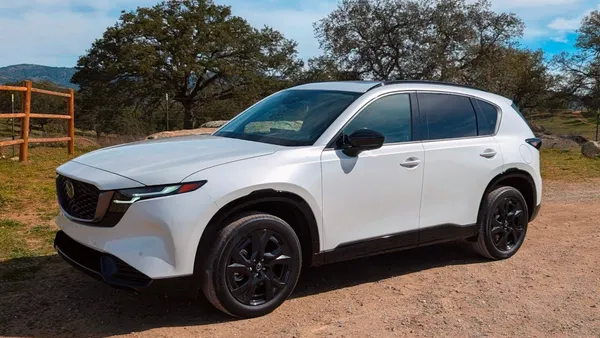
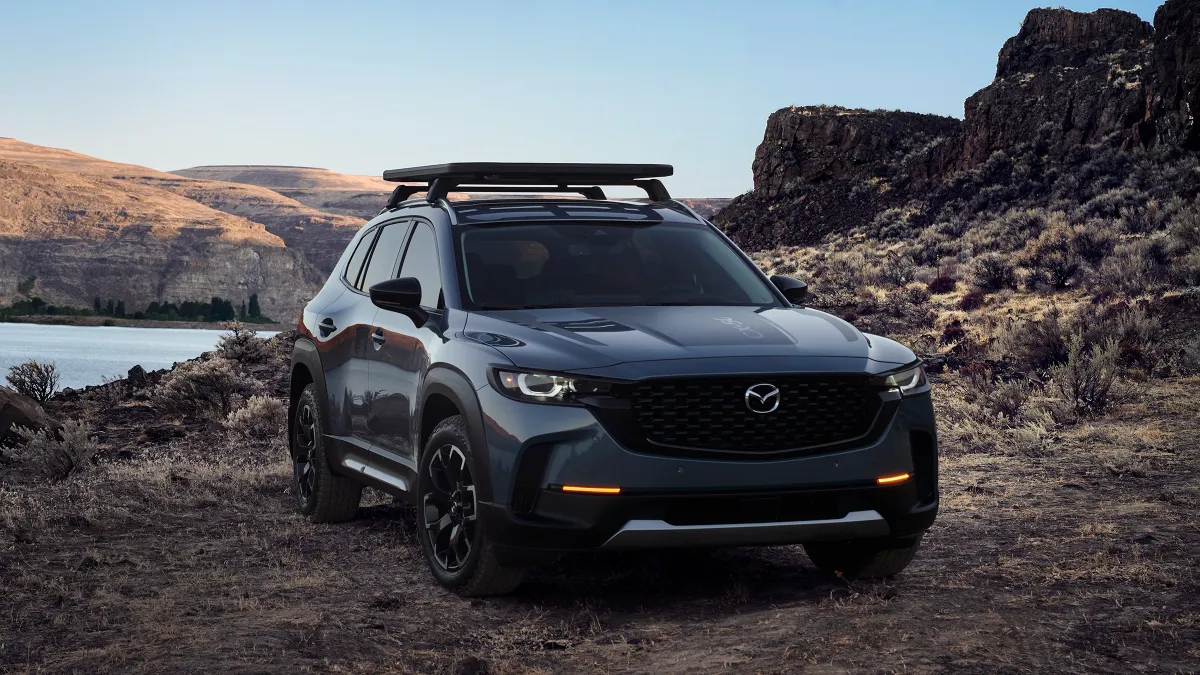
Looking forward, Mazda said it will maximize the use of the Mazda Toyota Manufacturing facility in Alabama, growing CX-50 sales including its hybrid model.