

Dive Brief:
-
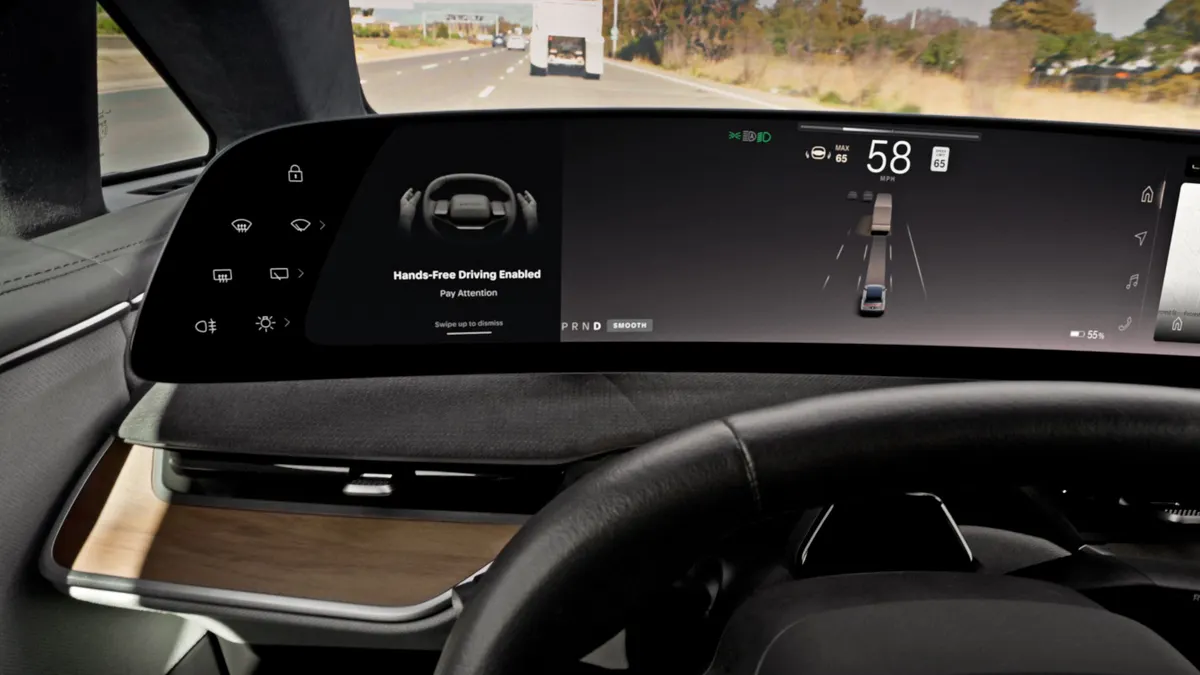
Lucid is adding hands-free driving functionality — with driver attention still required — on versions of its Gravity electric SUV equipped with its $6,750 DreamDrive 2 Pro package, which includes additional hardware and sensors. The rollout is part of Lucid’s UX 3.6 software update, now available as an over-the-air download.
-
Called Hands-Free Drive Assist, the feature is only available on “compatible highways,” according to a Lucid release. The automaker confirmed to WardsAuto that includes approximately 125,000 miles of roadways across the U.S. and Canada.
-
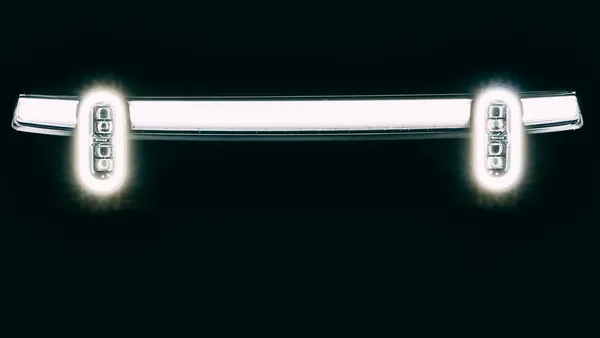
With the update, Lucid is also introducing smarter energy management features, plus better route functionality, with more comprehensive charging-station results and Google Maps Places insights for plotting destinations. The Gravity’s Adaptive Driving Beam headlamps are also now capable of reshaping the high beam around other vehicles automatically.
Dive Insight:
The rollout of Hands-Free Drive Assist on the Gravity starts to realize the potential of the electric SUV’s optional DreamDrive 2 Pro package, which gives the EV a similar set of features rolled out last summer to Lucid Air sedans with DreamDrive Pro.
According to Lucid, the feature will initiate overtaking of slower vehicles, returning to the original lane automatically, or drivers can request a lane change with the turn signal. Lucid says that drivers will be able to choose from Conservative and Assertive driving styles, with the latter offering “a more active approach to overtaking slower vehicles.”
In the Gravity, the automaker says the package includes “future-capable ADAS hardware for driving and parking with one of the most comprehensive sensor suites available,” and it notes plans to roll out an enhanced automated parking feature and green-light alert in future updates to DreamDrive 2 Pro vehicles.
As with the Air with DreamDrive Pro, it adds lidar sensing as part of a 32-sensor array, “to easily navigate traffic and travel with confidence,” according to Lucid.
The hands-free driving functionality could ease the stress of the commute or the weekend road trip. For comparison to Lucid’s 125,000 miles of U.S.- and Canadian-compatible roads, GM’s Super Cruise now works on over 600,000 miles and Ford’s BlueCruise works on about 130,000 miles.
While that’s an incremental step, it’s an important bridge toward what Lucid sees as a future revenue stream and a key to financial viability. At its Investor Day in March, Lucid said it plans to enable autonomous driving as a monthly subscription in its vehicles starting in 2027. It also previewed a two-seat electric robotaxi concept as a potential advancement of a strategic relationship with Uber Technologies, recently scaled up to include a $500 million investment from the ride-hailing company. The partnership aims for up to 35,000 Gravity SUVs purpose-built for Uber’s ride-hailing network with Nuro’s SAE Level 4 autonomous vehicle tech.
Lucid, in a February update to investors, had laid out plans to leverage autonomy with SAE Level 3 functionality targeted for 2028 and L4 for 2029, both employing its upcoming midsize platform.