Dive Brief:
- Rivian has provided an overview of its new Dynamic Adventure Lighting system, which debuted on 2025 second-generation R1T and R1S models running updated software, the EV maker announced in a Sept. 30 blog post.
- Digital matrix headlights operate similarly to digital projectors. Instead of a single light source using a conventional bulb, these solid-state headlight modules can utilize up to 25,000 micro-LEDs depending on the OEM design, each of which can be individually controlled using software to precisely direct light beams toward specific areas of the road ahead to improve a driver’s vision at night.
- The micro-LEDs inside Rivian’s headlights with digital matrix hardware are each controlled using vehicle sensors and software to dynamically adjust the brightness and light distribution in real time, including shifting the light pattern and glare away from approaching vehicles in adjacent lanes.
Dive Insight:
Although digital matrix headlights have been available since 2013 on luxury vehicles sold in Europe, it wasn't until February 2022 that the National Highway Traffic Safety Administration approved them for use on U.S. roads after adoption of a rule amending Federal Motor Vehicle Safety Standards. Prior to the NHTSA final rule, FMVSS required that automakers include dedicated high- and low-beam lamps on all vehicles sold in the U.S.
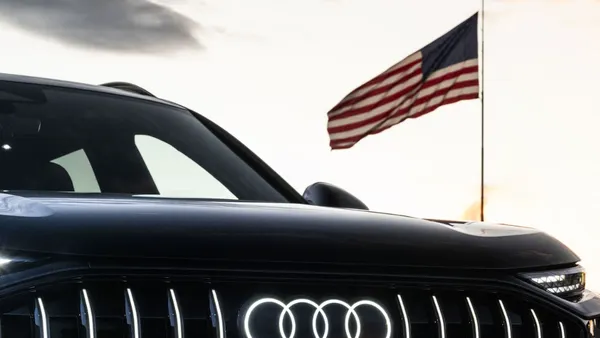
Still, many mainstream automakers have yet to offer digital matrix headlights. Rivian’s Dynamic Adventure Lighting were the first matrix headlights activated in the U.S. when they debuted last year, according to its blog post. However in May, luxury brand Audi announced that its Digital Matrix LED headlights will be available to U.S. customers for the first time on the 2027 Audi Q9 SUV when it goes on sale later this year.
Rivian credits its in-house-developed hardware and software and vertically integrated system, which helped it bring the advanced lighting system to its U.S vehicles ahead of other OEMs. The new software to unlock the feature was introduced for second-generation R1 and R2 models built with headlamp assemblies equipped with digital matrix hardware. That hardware, however, is not available for Rivian’s first-generation R1S and R1T.
Key features of Rivian’s Dynamic Adventure Lighting system
Adaptive Drive Beam: In R1 and R2 vehicles equipped with digital matrix headlamp assemblies, the light beam instantly adjusts the vehicle’s light pattern and brightness in real-time to avoid shining directly into oncoming vehicles and temporarily blinding other drivers, while still illuminating the darkest parts of the road.
Dynamic Low Beam Leveling: This function stabilizes the beams of each headlight and keeps the beam level while driving over uneven terrain or bumpy roads causes conventional headlamp beams to angle upward or downward which can reduce driver visibility. The feature also works under hard acceleration, which can slightly lift the front end of a vehicle.
Dynamic Steering Lights: This feature uses software to direct the headlight beams in the direction the vehicle is turning, helping the driver to better see more of the road ahead when navigating though winding roads or around corners.
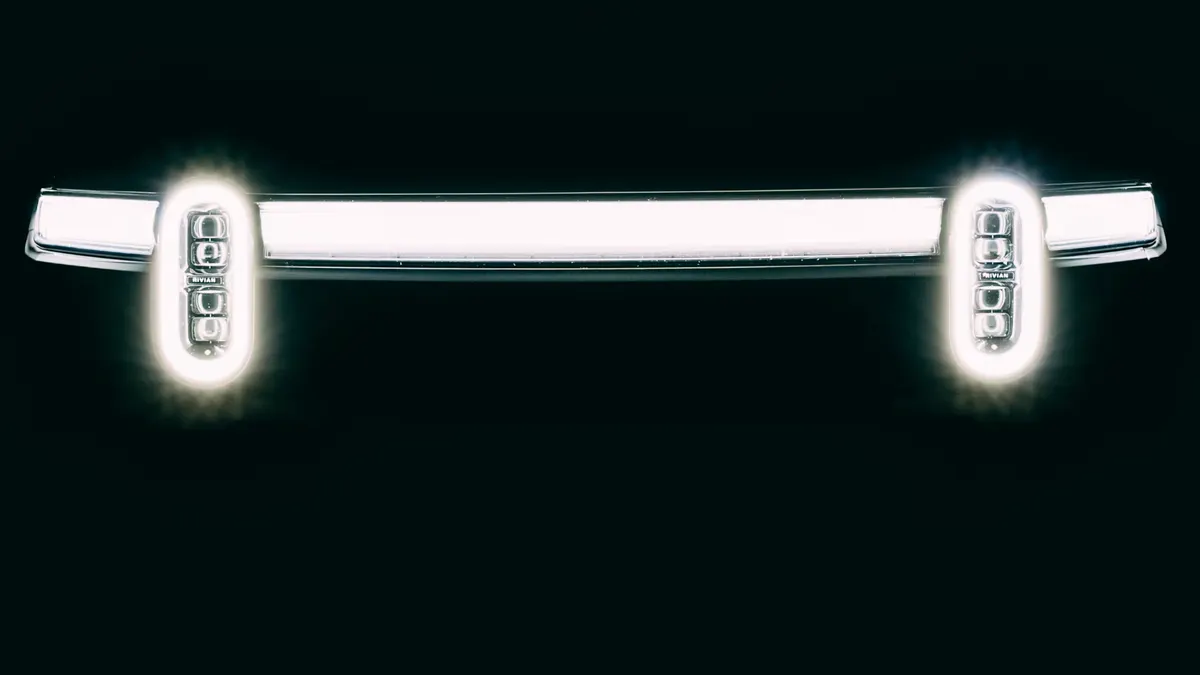
Segmented Lighting Bar: Gen 2 R1 vehicles have fully controllable LED segments integrated into the front and rear light bars, which can change color and express vehicle functionality to other drivers. A dynamic green progress bar shows when the vehicle is plugged in for charging, but it also provides a visualization to alert passing traffic if the vehicle’s roadside lighting is activated.
Rivian said it will continue to roll out future OTA software updates to improve the performance and functions of its Dynamic Adventure Lighting system.