Dive Brief:
- Ford Motor Co. has recalled nearly 117,000 vehicles for electric engine block heaters that could crack and develop a coolant leak, which can cause a short circuit when plugged in, according to the National Highway Traffic Safety Administration.
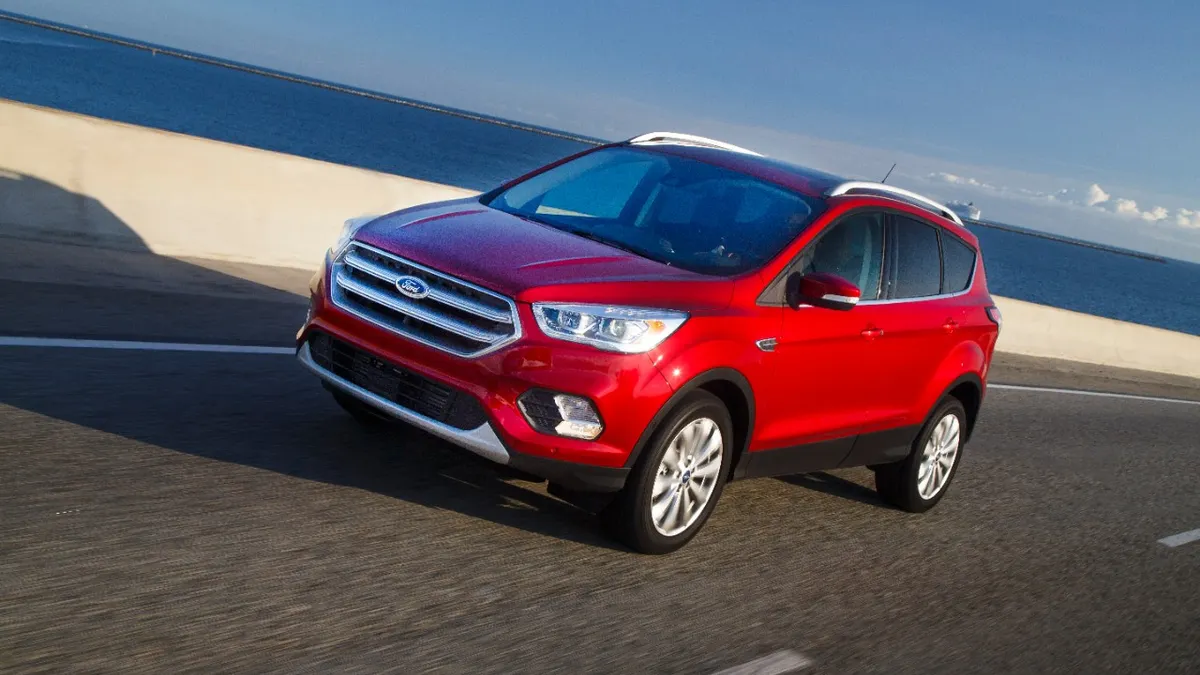
- The recalled models include the 2013-2018 Focus, 2015-2016 Lincoln MKC and 2013-2019 Escape SUVs equipped with 2.0 liter engines. Around 1% of the recall population is estimated to have the defect.
- Ford and Lincoln dealers will replace affected engine block heaters at no charge. Interim notification letters are expected to be sent beginning Feb. 9, advising customers not to plug in the engine heater until the updated part is available. Remedy notification letters are expected to be sent starting April 13.
Dive Insight:
The suspect engine block heaters were sold as an aftermarket accessory and are designed to heat the coolant to warm the engine prior to starting in cold climates. A short circuit can increase the risk of a fire, according to the recall report. The risk is increased when the block heater is plugged into a 110-volt electrical outlet without a functional circuit breaker or ground fault circuit interrupter, per the report.
Warning signs may include visible coolant leaks under the vehicle, reduced cabin heat, engine overheating, an illuminated low coolant indicator light and odor or smoke coming from the block heater.
A year ago on Jan. 16, 2025, an issue describing the potential for engine block heater fires across multiple vehicle lines and model years was brought to Ford’s Critical Concern Review Group for further investigation.
Between February and May 2025, Ford’s supplier technical assistance and engineering offices reviewed both supplier and manufacturing quality control records and determined that the engine block heaters in question met all of Ford’s design and manufacturing requirements.
The block heaters were sourced from Minnesota-based Tier 1 supplier, Phillips and Temro Industries.
However, in July 2025, Ford analyzed detailed images of three failed block heaters obtained from 2014-2017 Escape models equipped with 2.0 liter engines that were damaged by fires. Its investigators found cracks around the heater element base, which could allow coolant to leak into the electrical cord connector and cause a short circuit.
In August 2025, Ford’s Critical Concern Review Group used CT scanners — which can detect problems invisible to the naked eye — on the three failed block heaters it reviewed in July. The automaker’s CCRG discovered what’s described as “internal solder voids” in the recall report, in addition to the previously established solder joint cracks.
Between September and December 2025, Ford’s engineers also conducted numerous tests to determine the root cause of the solder cracks and voids, but could not definitively identify a source. While investigators continued to search for the root cause of the defect, the recall report suggests that the packaging of the block heater element, its specific installation angle and general coolant leakage may together increase the risk of overheating.
Based on its findings, Ford’s Field Review Committee approved the recall on Jan. 8, 2026.
As of Dec. 3, 2025, Ford is aware of 12 reports alleging fires in Escape vehicles potentially caused by defective engine block heaters. But the automaker is not aware of any accidents or injuries related to the problem.
Ford also issued two smaller recalls covering 2,400 Focus and Explorer models for the same issue, as well as 2,600 engine block heaters that were sold over the counter as accessories, according to the NHTSA.
The automaker also issued previous recalls for faulty engine block heaters. In 2018, Ford recalled more than 400,000 F-Series pickups due to risk of fire from defective engine block heater wiring.
In June 2025, Ford recalled more than 6,700 Bronco Sport, Maverick, Escape and Lincoln Nautilus and Corsair vehicles for engine block heaters, which were also sourced from Phillips and Temro Industries.