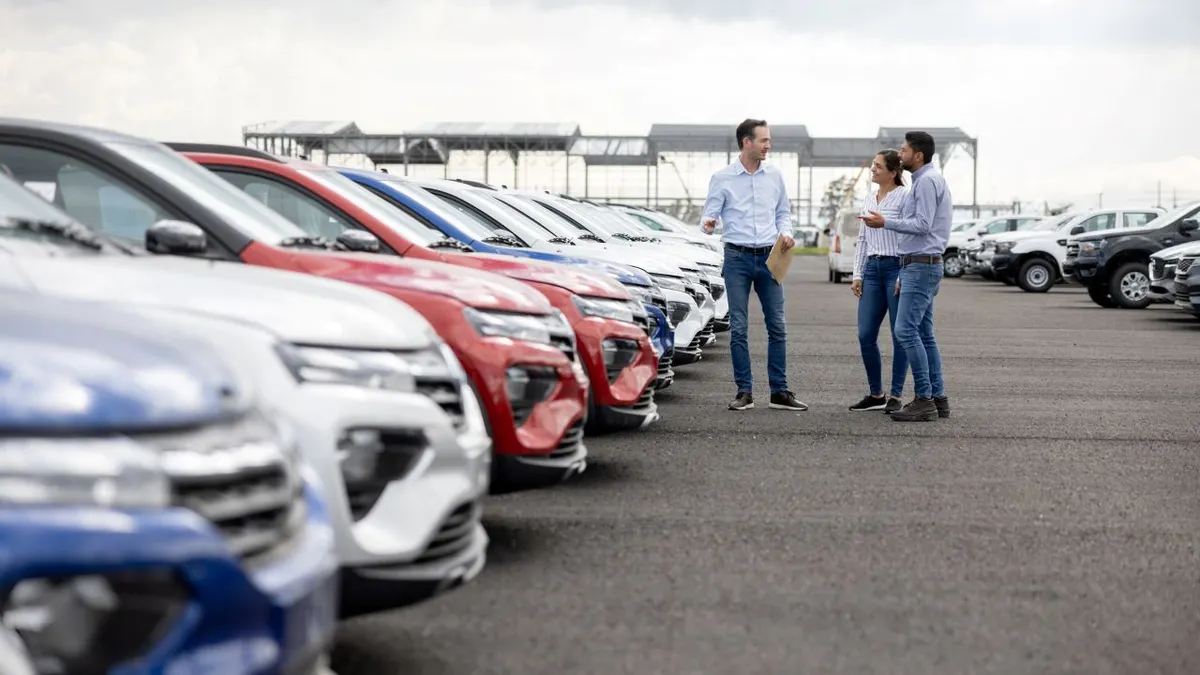
Megadealer group AutoNation has reduced its inventory of electric vehicles, which suffer profit margins that CEO Mike Manley called “absolutely terrible” during a Q3 earnings call on Oct 23.
The company’s focus is now on a potential seasonal year-end increase in luxury car sales and consumer incentives.
“For the fourth quarter, we expect the mix of new unit sales to improve, including less battery electric vehicles and a higher percentage of premium luxury, reflecting seasonal strength during the holiday season,” AutoNation CFO Tom Szlosek said during the earnings call.
Overall, AutoNation reported net income of $215.1 million in the third quarter, an increase of 16% vs. the same period last year. On a same-store basis, revenue was up 6% to $6.9 billion, while total same-store gross profit reached $1.2 billion, up 4%.
Too much BEV stock hit gross profit
EV sales jumped higher in Q3 for AutoNation and for the industry in general, as consumers rushed to beat the expiration of the $7,500 federal tax credit. AutoNation’s BEV sales were up 40% in Q3, accounting for 10% of its new-vehicle sales in the quarter, according to Manley.
However, with the need to clear dealer lots, profit margins on EVs “have been terrible for some time,” Manley said. That helped drag down AutoNation’s average gross profit per new vehicle of all drive types to $2,290 for the quarter, down 18.8% from a year ago. Year over year net income was also down 6% to $477 million.
Now, without the tax break and the pull-ahead effect of all those third-quarter EVs sales, demand is expected to fall in Q4. In anticipation, AutoNation ended the third quarter with just 1,550 BEVs in stock, less than a 20-day supply at its current sales rate. The company’s EV inventory is down 55% compared to the end of 2024, Manley said.
Aiming to self-source used cars
Based in Fort Lauderdale, Fla., AutoNation had 243 new-car dealerships in the U.S. market as of Dec. 31, 2024, plus 24 AutoNation USA used-only stores.
Like other publicly traded, new-vehicle chains, AutoNation said it is trying to avoid rising acquisition costs for used-car inventory by self-sourcing as many used vehicles as possible instead of buying them at auctions.
“Overall, industry supply of used vehicles remains tight. We continue to be competitive in securing our vehicle supply from our retail operations, including trade-ins, ‘We Buy Your Car’ services, loaner conversions, and lease returns. We source more than 90% of our vehicles from these channels,” Szlosek said in the conference call.
Year-end incentives are also likely for luxury brands, with the annual Lexus “December to Remember” promotion typically kicking off the holiday sales season, starting around Thanksgiving.