Dive Brief:
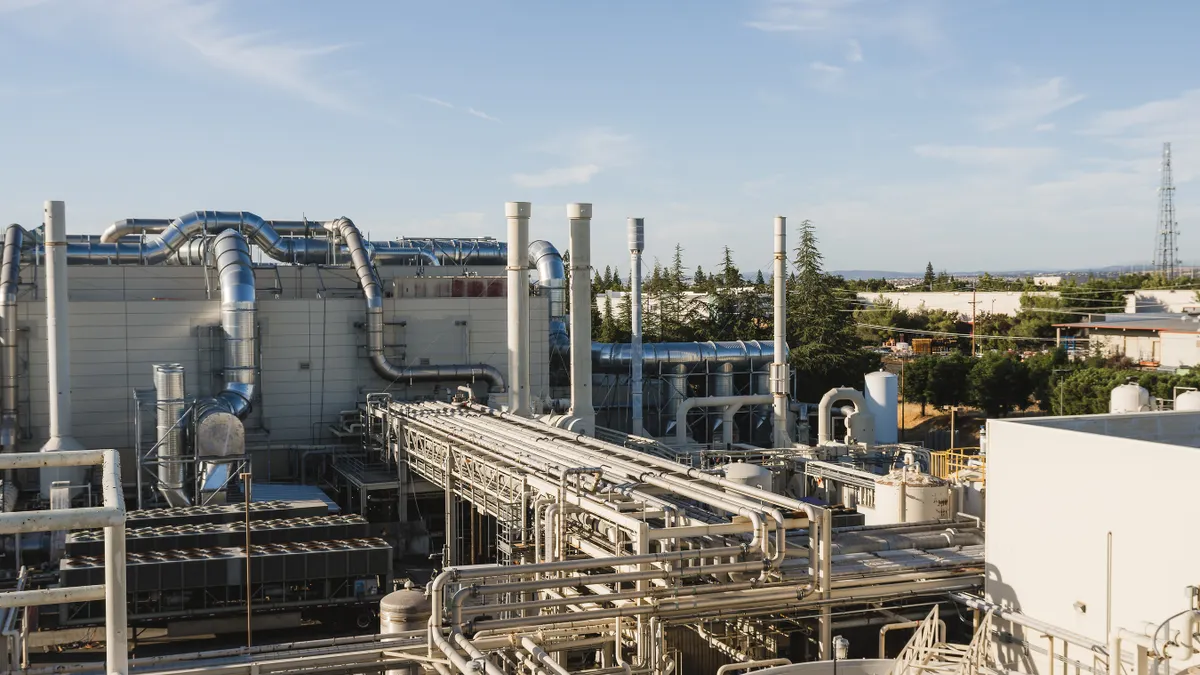
- Automotive supplier Bosch announced a definitive agreement with the Trump Administration for up to $225 million in direct funding from the Department of Commerce's CHIPS Program Office to convert its Roseville, California, wafer fab facility for the production of silicon carbide semiconductors, per a press release.
- The $225 million direct funding agreement is part of up to a $2 billion commitment by Bosch to start commercial manufacturing of SiC chips in the U.S., which are in high demand for electric vehicles, data centers and other industrial applications. The company aims to be a leading global manufacturer of SiC chips for electromobility.
- "The start of sample production and our agreement with the Department of Commerce is a milestone in providing our local customers with what they have requested — localized U.S.-based manufacturing," said Paul Thomas, president and CEO of Bosch in North America, in a statement.
Dive Insight:
The Roseville facility has been manufacturing semiconductors for the past 40 years. After acquiring the Roseville wafer fab site in August 2023, Bosch began transforming the facility to produce SiC semiconductors while maintaining the employment of its existing U.S.-based workforce with specific semiconductor experience, per the release.
Bosch is further investing in its employees at Roseville through training initiatives and collaboration within the Bosch production network, per the release. The company aims to produce the first commercial SiC chips on 200-millimeter wafers this year.
"We are focused on growth and investment in the United States in order to increase the share of our global portfolio that is represented by North America and the U.S. specifically," Thomas said in a statement. "We are appreciative of the support of the Administration as we look to accelerate our growth here."
The CHIPS and Science Act, signed into law in August 2022, provides the Dept. of Commerce with $52.7 billion to strengthen and revitalize semiconductor research, development and manufacturing in the U.S., while supporting U.S. jobs.
The CHIPS Research and Development Office is also investing $13.2 billion to create a more robust R&D ecosystem in the U.S. and for workforce development, while the CHIPS Program Office is providing roughly $39 billion in incentives for investment in facilities and equipment in the U.S., like the one in Roseville.
Among the upgrades Bosch made to the Roseville facility was the development of a new cleanroom space and the installation of a high-tech manufacturing line for production of SiC chips in order to accelerate time-to-market.
"The production of silicon carbide chips in the United States helps to support supply chain resiliency and capitalizes on the expertise of U.S. manufacturing associates to bring this technology to the U.S. market in a timely manner,” said Thomas in a statement.
For mobility applications, SiC chips can handle higher voltages, temperature changes and fast switching more efficiently, which helps to deliver longer range and more efficient recharging for both battery-electric and plug-in hybrid vehicles.
In April, Bosch announced its third-generation SiC chips and that it began supplying samples to global automakers. The company said the new SiC chips deliver 20% higher performance, which can increase the overall efficiency of EV powertrains.
In total, Bosch intends to invest up to $7.5 billion in its U.S. operations through 2031 to bolster domestic manufacturing of semiconductors in the U.S.
Since the company began production of the first SiC chips in 2021, Bosch said it delivered more than 60 million to customers worldwide, per its April press release.