Elevated gas prices and the elimination of tax incentives for battery-electric vehicles have consumers searching for vehicles with propulsion systems that are both affordable and fuel efficient.
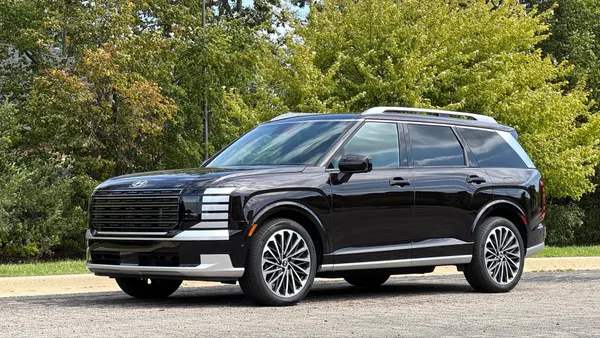
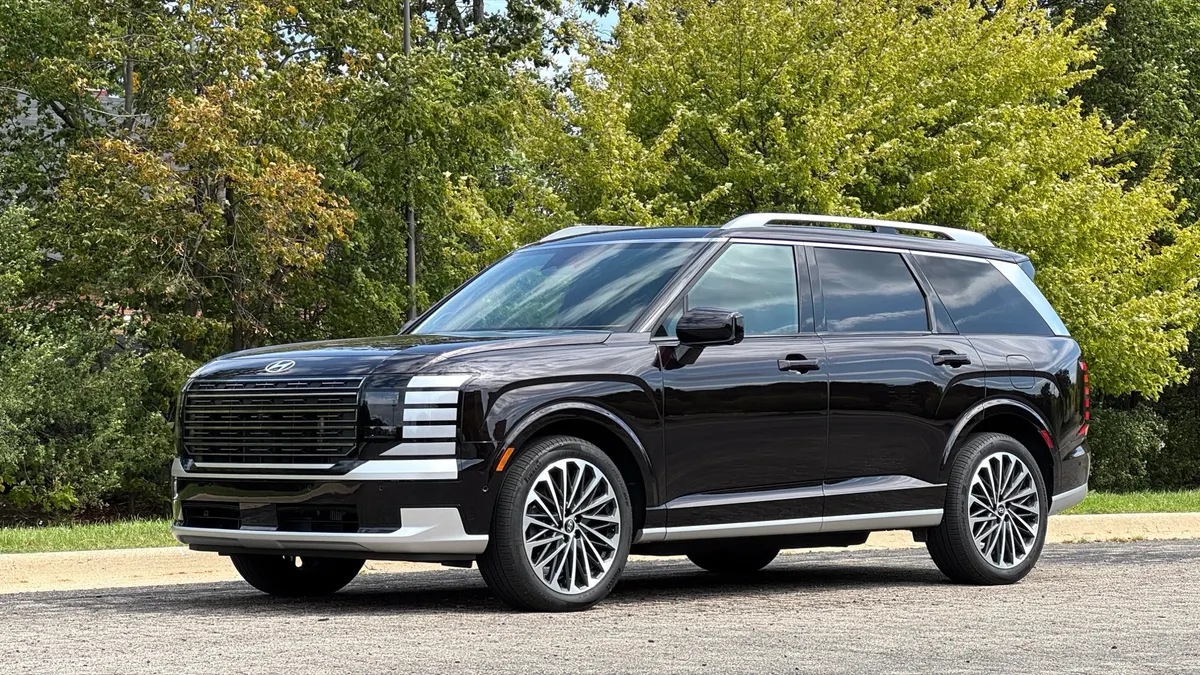
This is especially important to buyers of midsize 3-row SUVs that seat seven or eight passengers and occasionally tow things. And because it delivers performance and fuel efficiency so well, the Hyundai Palisade Hybrid is a recipient of a 2026 Wards 10 Best Engines & Propulsion Systems award.
Combining advanced electric and internal combustion propulsion technologies can indeed work miracles. Hyundai powertrain engineers say they set out to develop their new hybrid system with three main goals: efficiency improvement, emissions reduction to meet more stringent emission regulations, and improved power and performance.
Efficiency improvements
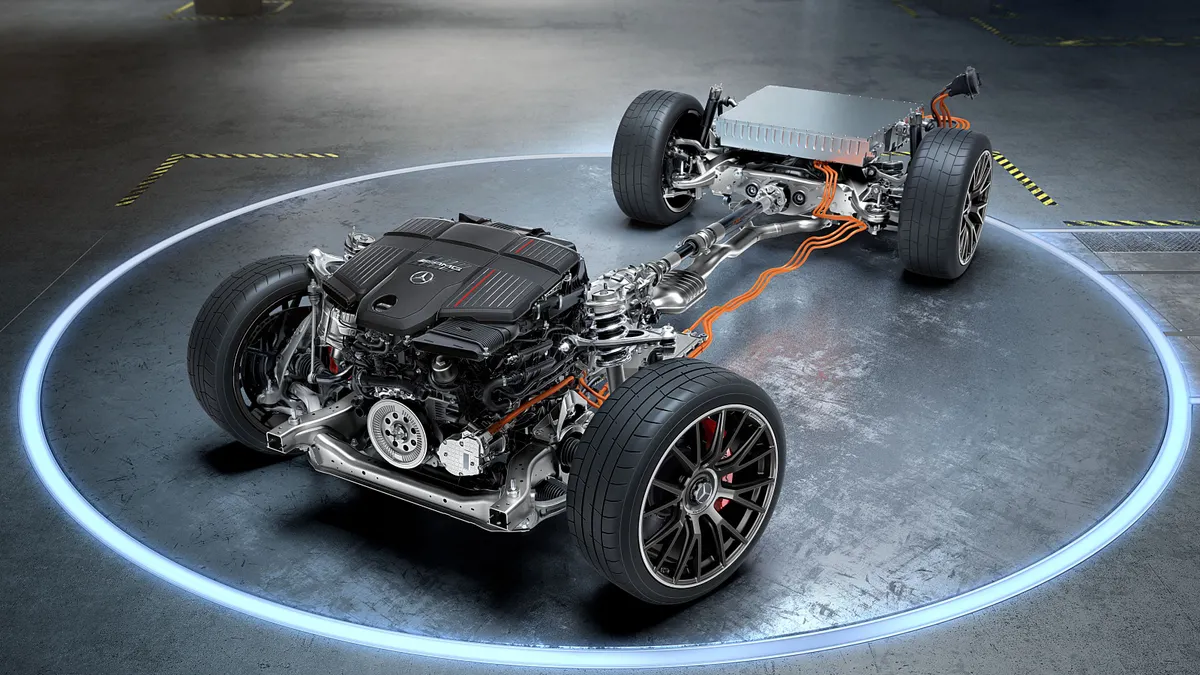
The system uses an all-new 2.5-liter turbocharged inline 4-cylinder gasoline engine, revised specifically for hybrid applications. Engineers transitioned to an Atkinson cycle and increased the compression ratio from 10.5:1 in the standard turbo to 12.0:1 for the hybrid. This changes how the engine manages airflow, pressure and thermal efficiency.
In another move to improve efficiency, accessory components like the alternator and air-conditioning compressor were removed from the engine side as they now are managed by electric motors.
Power and performance
Dual electric motors integrated with the 6-speed automatic play a crucial role. They deliver immediate “torque filling” that eliminates the power hesitation typical of combustion engines before the turbocharger builds full boost. This translates to a 1.5-second quicker 0–60 mph dash, from 6.6 seconds instead of 8.1 seconds, making it easy for the big, 5,000-pound SUV to pass and merge effortlessly.
"On the interstate, sometimes the engine ran at 2,600 rpm and sometimes 0 rpm as the electric motor did all the work, but I only knew that from reading the instrument cluster,” said juror Robin Warner. “I barely heard any difference. The Palisade offers a quiet cabin, yet the engine runs smoothly and quietly. Quite impressed.”
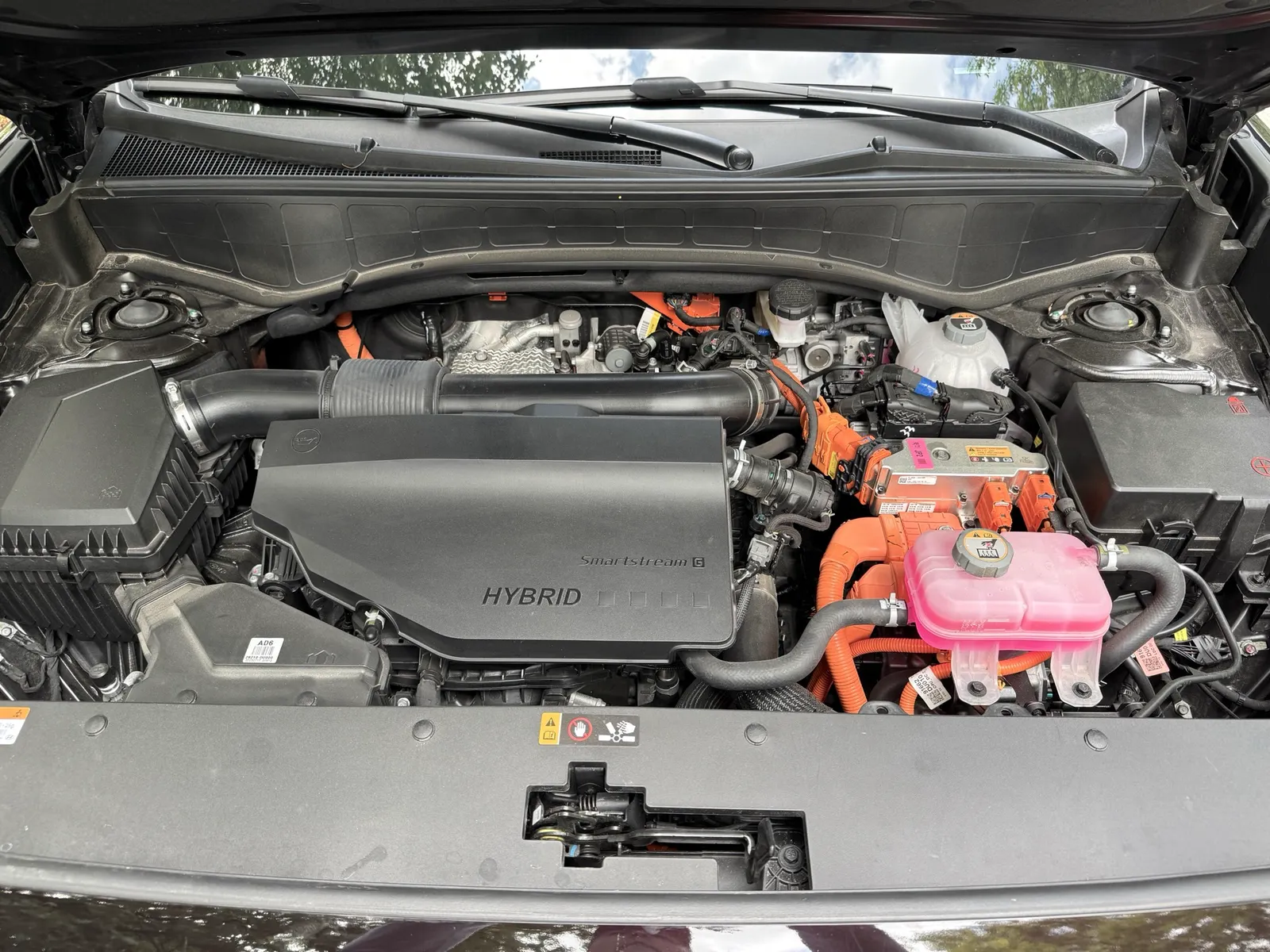
Two electric motors work in concert with gasoline engine
The engine makes 258 hp and 260 lb-ft alone. Electric motors make up to 72 hp and 195 lb-ft, with a combined output of 329 hp and 339 lb-ft. One electric motor handles primary drive duties while the second acts as a generator to recapture energy during deceleration and braking.
The differences between the hybrid and ICE versions of the Palisade are stunning. The new Palisade Hybrid propulsion system delivers more power, faster acceleration and vastly superior fuel efficiency compared with the current V-6 engine available in the Palisade. To sum:
- Total hybrid system power: 329 hp vs. 287 hp for V-6
- Total system torque: 339 lb-ft vs. 260 lb-ft for V-6
- Acceleration: 0-60 mph: 6.6 seconds hybrid vs. 8.1 seconds for V-6
- EPA Fuel economy (FWD) 34 mpg combined vs. 21 mpg combined for V-6
- EPA Fuel economy (AWD) 30 mpg combined vs. 20 mpg combined for V-6
The only true advantage the V-6 version has is a 5,000-pound maximum towing capacity vs. the hybrid’s 4,000-pound maximum.
“The efficiency engineered into this system — undoubtedly because it was approached as a holistic system, not optimized elements — is exceedingly impressive,” said juror Gary Vasilash.
6-speed automatic transmission plays crucial role
A 1.65-kWh lithium-ion battery pack and 6-speed automatic transmission also play crucial roles in the hybrid’s performance. Using a traditional automatic transmission is an impressive addition because typical CVTs can produce engine drone under heavy loads and have a rubber-band-like feel that many drivers do not like.
The 6-speed automatic gives a traditional feel when merging or passing.
“Drove 121 miles in the Palisade Hybrid and averaged 26.3 mpg,” said juror Robin Warner. “Considering the size, weight, and drag area of the Palisade, that's mighty fine fuel economy; especially when considering my heavy right foot.”
“Such a smooth, refined powertrain, with plenty of power to motivate this big three-row utility vehicle,” said juror Bob Gritzinger. “It’s particularly impressive how often the tachometer drops to zero rpm, even at freeway speeds, assuring excellent fuel economy regardless of speed. And when the engine kicks back in, the restart is seamless and inaudible with the ICE jumping instantly to 2,000 rpm.”
“It’s an impressive all-around system,” summed Gritzinger.