
According to McKinsey, warranty bills hit around $58 billion globally in 2024, nearly doubling their 2012 figure. For some OEMs, warranty bills are above 4% of revenue, rivaling annual spending on R&D.
The service bay is where a quality problem first becomes visible to the OEM, and where the cost lands: OEMs pay for warranty costs.
Why software-heavy vehicles outrun the service bay
Conventional service processes rely heavily on diagnostic trouble codes (DTCs), which cover only a subset of failure scenarios and can be notoriously unreliable. Undiscovered problems often have no code at all and thus may be undetected or difficult to pinpoint.
The gap widens as vehicles rely more on software. A symptom in one system can stem from a cause in one or more other systems, and diagnoses take longer as a result.
The result is misdiagnoses and unnecessary replacement of hardware modules are that not defective. Those modules come back with a no-trouble-found report, followed by repeat visits, escalation to senior engineers and more warranty cost for the OEM.
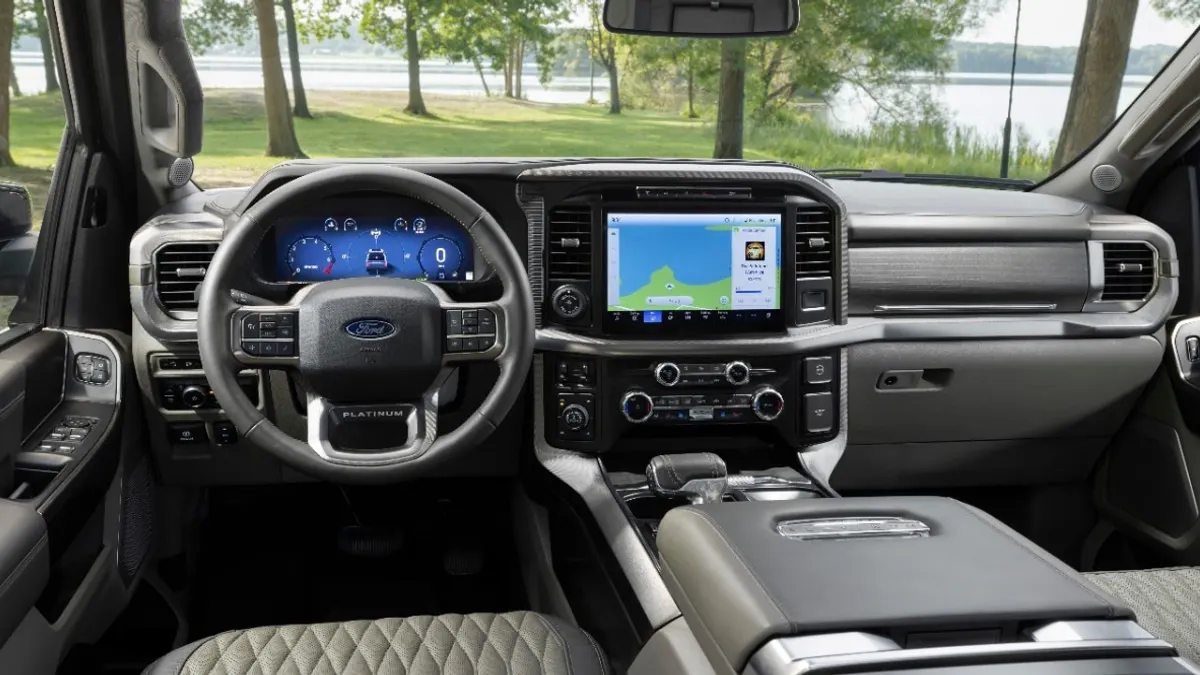
A IVI module/head unit with a black screen could have many different causes, and none may generate a code. Technicians will often recommend a replacement though there is nothing wrong with the unit itself, and replacing it is expensive.
"Vehicles today are as much software as hardware, and it's unrealistic to expect every technician to be a software diagnostics expert," says Alexandre Corjon, senior vice president of engineering at Sonatus®.
OEMs can bridge the gap by bringing their engineering knowledge to technicians in the service bay. Sonatus's Fastlane™ Insight combines vehicle data with repair procedures, past investigations, and engineering documentation to identify likely root causes and recommend corrective actions, including what to avoid.
Technicians have traditionally filed a case for review by OEM engineers who are often flooded with requests. Fastlane Insight offers the technician a clear, actionable answer right away without waiting in the queue.
"Fastlane Insight draws on the data the OEM already has to put the expertise of an OEM engineer in every service bay," Corjon says. As an example, for Chrysler’s 2024 recall of around a million Ram 1500 pickups , estimates the per-vehicle cost of getting to the right diagnosis could fall by about 86%, largely by avoiding unnecessary hardware replacement.
What OEMs control, and what stays protected
OEMs decide which roles can use Fastlane Insight, and how much it shows. Proprietary data such as technical manuals and service records stays protected. Fastlane Insight works with public or private cloud providers and with the data sources OEMs already have, including diagnostic tools in the service center. Vehicles without advanced embedded software can also benefit.
From one repair to the whole fleet
A fault found in the service bay can matter beyond a single vehicle: it may be the first sign of a fleet-wide problem. Today, each car's fault is usually repaired on its own, but when cases from multiple dealers are documented and analyzed at the OEM level, that first repair becomes an early warning. Fastlane Insight detects failure patterns across vehicles, including cases that look different on arrival and surfaces emerging quality issues earlier. That helps scope the vehicles that may be affected, which supports a faster, less costly recall response.
Scoping a quality issue is especially important at scale. For example, GM learned this when of power tailgates on Silverado and Sierra HD pickups grew from 323,000 to 702,000. It initially expanded to 570,434 before the company added another 131,231 vehicles. Any OEM can face a recall that grows, which is why early detection and resolution can significantly reduce the cost of the recall.
Every repair makes the next one smarter
What service technicians learn in the field flows back to engineering, improving diagnostics and software for vehicles already on the road. It also feeds validation, the focus of the first article in this series.
This creates a payoff for all stakeholders. The OEM has the opportunity to reduce its warranty costs, while the dealer can make their technicians more efficient in the service bay. Finally, the driver is more likely to get a successful fix on the first visit.
Learn more about AI for smart diagnostics in after-sales service
About Sonatus
Sonatus® delivers cloud-to-edge AI for smart vehicles. Its Fastlane™ Platform enables OEMs and suppliers to achieve faster time-to-production, lower lifecycle costs and continuously improve their vehicles — from engineering and development through production and service. Founded in 2018, Sonatus is backed by investors in the automotive, semiconductor and venture capital sectors and its technology is deployed in more than 9 million vehicles globally. Sonatus is headquartered in the heart of Silicon Valley (Sunnyvale, Calif.), with regional headquarters in Dublin and offices in Bangalore, Detroit, Frankfurt, Kraków, Paris, Pune, Seoul, Shanghai, Taipei and Tokyo. For more information, visit www.sonatus.com.
Sonatus, Fastlane and the Sonatus logo are trademarks of Sonatus, Inc. that are registered or pending in the United States and in other countries. © 2026 Sonatus, Inc.