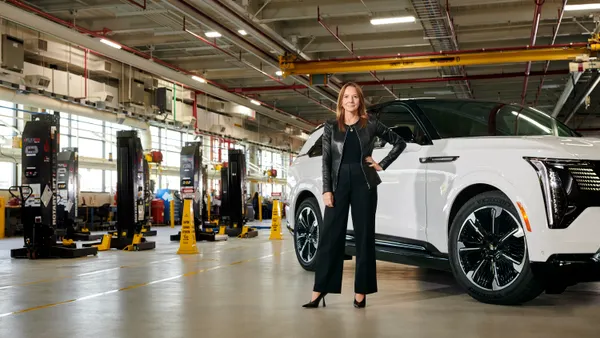
At CES, Zeekr Europe and software engineering partner Intellias unveiled their battery-electric-vehicle navigation solution that impressed industry observers not through the product alone, but through three distinctive achievements: Zeekr's strategic adaptation to European market preferences, the deep integration of customer feedback throughout the development process and the remarkable four-month development timeline.
This collaboration exemplifies how Chinese automotive innovation is reshaping the European landscape, introducing development velocities previously unseen in a market traditionally characterized by methodical, cautious implementation cycles. Intellias demonstrated exceptional agility by embracing this accelerated timeline and delivering results that meet exacting standards, potentially establishing a new benchmark for development speed in Europe.
The partnership marks a pivotal moment in Zeekr's European expansion strategy. As a premium Chinese electric mobility brand, Zeekr is introducing its "customer-defined vehicles (CDVs)" philosophy to European consumers, which contrasts sharply with the technology-driven innovation focus of European OEMs.
European-Tailored Navigation: Responding to Regional Preferences
Like many Chinese OEMs, Zeekr initially exported vehicles from China to Europe without significant modifications. However, speaking with Wards Intelligence, Giovanni Lanfranchi, CEO at ZEEKR Technology Europe, recounted how users found the original navigation system problematic because it reflected Chinese design sensibilities.
Zeekr's response was decisive – partnering with Intellias to create a Europe-specific solution, which was delivered in under four months, establishing a new paradigm for rapid development in the European automotive sector.
"Chinese companies have wise management and understand you need localization centers where you're expanding to, because user preferences differ significantly," observes Oleksandr Odukha, SVP Delivery, Head of Segment Mobility at Intellias. This recognition is what prompted Zeekr to establish European development centers and partner with organizations like Intellias that understand both markets, facilitating cross-cultural knowledge exchange and innovation.
The key adaptations include:
- Streamlined, minimalist interface design that contrasts with data-rich Chinese versions
- Enhanced map accuracy with real-time updates reflecting current conditions
- Regionally relevant points of interest specifically curated for European drivers
- Seamless integration with European charging infrastructure networks
"In China, customer preference is 'the more the better' – they like to have lots of details and numbers," explains Lanfranchi. "In Europe, it's 'the less the better' – more minimalist and precise. That's the beauty of the platformization approach, where the core stack can be reused but customized based on customer needs."
Zeekr is also investing significantly in energy management solutions, which are a critical element of the electric-vehicle ownership experience. The company is developing comprehensive systems that address range anxiety and enhance charging convenience.
"Energy management is an important use case we are addressing," Lanfranchi notes. "We're innovating to provide multi-day trip planning with preheating capabilities and charging-station integration." These advancements include digital wallet integration at charging locations and additional energy-focused features that significantly improve the ownership experience, particularly for extended journeys.
While Zeekr makes the journey sound simple, Intellias, with extensive experience supporting diverse OEMs, points out that Chinese automotive brands expanding into Europe face complex challenges beyond technology adaptation.
"Certification is a major challenge," explains Odukha. "The higher you go in autonomy levels, the more safety and security checks need to be done and proven. Having certification in one country is one thing, but across multiple European countries is much more difficult."
Cultural differences in development philosophies and different work-life balance creates additional complexity. Chinese companies typically prioritize speed and efficiency, requiring careful calibration to balance rapid innovation with European expectations for safety, security and quality.
Customer Co-Creation and Zeekr's Development Methodology
During its CES 2025 press presentation, Zeekr demonstrated sophisticated understanding of software-defined vehicles while emphasizing that technology must deliver tangible value—reinforcing its commitment to customer co-creation.
This pragmatic approach distinguishes Zeekr in markets where competitors often discuss SDVs through the lenses of technology-centric pipelines rather than solutions to customer needs, such as in Europe and North America.
This customer-centric development model has become mainstream among disruptor OEMs developing SDV technology in China, including brands such as NIO and Li Auto.
Unlike traditional automotive development cycles, Zeekr has embraced an approach that places customer feedback at the center of its product development lifecycle.
"Customer co-creation is a fundamental guiding principle for everything we do," explains Lanfranchi. "This isn't just about listening to customers – it's about bringing them inside the product development lifecycle as an integral component."
This philosophy manifests through multiple channels, including:
- Immersive design thinking sessions that capture customer aspirations and objectives
- Transparent development processes enabling customer participation in feature design
- Democratic feature prioritization through community voting mechanisms
- Ambassador programs that foster customer communities, driving innovation
Supplier Relationships
Zeekr's customer-centric approach extends beyond the end user, also transforming traditional supplier relationships. Rather than maintaining conventional buyer-seller dynamics, the company has established strategic partnerships based on shared principles and collaborative development.
"This is transformative," explains Lanfranchi. "We share our scorecard, customer feedback and insights with partners like Intellias. This co-creation involves the partner as well." This transparent approach allows suppliers to better understand user needs and contribute more meaningfully to the development process, creating a virtuous cycle of innovation and improvement.
The navigation solution marks the beginning of Zeekr's European technology roadmap. Both companies have stated that the next development priority is adapting Zeekr's intelligent driving software to meet European preferences.
Value-Driven Investment Strategy
While many established OEMs view increased Bill of Materials (BOM) costs as obstacles to SDV implementation, Zeekr employs a more comprehensive approach to technology investment decisions.
"Cost is an element, but it's not the only element in the equation," Lanfranchi explains. "All these capabilities require significant AI, inference and computing power in the car. The real trick is finding the optimized point that balances cost with customer value."
This philosophy manifests in practical decisions, such as selecting map providers that deliver superior accuracy and freshness despite higher costs, recognizing these elements as essential to delivering premium experiences.
Integration of Cockpit and ADAS Systems
While the automaker makes advancements in Europe, Zeekr's global headquarters has announced plans to integrate intelligent cockpit systems with Advanced Driver Assistance Systems (ADAS) on NVIDIA's Thor computing platform.
According to Lanfranchi, this integration delivers multiple benefits, including:
- Reduced cognitive demands on drivers
- Enhanced immersive experiences for all vehicle occupants
- Seamless visual and operational consistency across vehicle systems
- Advanced navigation capabilities, including sophisticated lane guidance
"The boundary between ADAS and intelligent cockpit solutions will become thinner and thinner," predicts Lanfranchi. "This integration opens great opportunities because we can provide more immersive experiences while ensuring what drivers see is consistent across systems."
Reshaping Automotive Innovation
The strategic alliance between Intellias and Zeekr exemplifies how targeted collaboration between specialized software developers and visionary automotive manufacturers can dramatically accelerate industry innovation.
As the automotive landscape evolves, traditional linear supply chains are giving way to sophisticated platform-based ecosystems. This fundamental shift is transforming the industry from conventional product lifecycles to dynamic circular models. In this new paradigm, vehicle sales mark the beginning – not the conclusion – of meaningful relationships between OEMs and suppliers, as well as OEMs and their customers.
This evolution signifies more than just a shift in business operations; it represents a complete reimagining of how value is created and delivered across the automotive ecosystem. Embracing these collaborative models is essential for industry players to position themselves at the forefront of automotive innovation and to be prepared for the challenges and opportunities in tomorrow's mobility landscape.
This article is based on interviews conducted by a Wards Intelligence analyst with ZEEKR and Intellias representatives, supplemented by follow-up discussions to gather additional insights.