Editor’s note: This is a reported column, in which Joseph Szczesny periodically explores labor topics affecting the automotive industry for WardsAuto.
With the ratification of a four-year contract, 3,200 workers at Volkswagen of America’s plant in Chattanooga, Tennessee are card-carrying UAW members. And now, the union expects to use this long-fought victory as a springboard to bolster recruitment efforts among the 25,000 non-union workers in the United States.
In February, UAW president Shawn Fain told delegates at the union’s annual political conference in Washington D.C. that the end of the nearly two years of negotiations with VW provides momentum to the union’s efforts to organize other workers, particularly in the South.
“VW workers are leading the way for the entire labor movement and non-union autoworkers everywhere,” said Fain in a UAW press release issued later in February, after the VW contract was ratified. “Welcome to the UAW family.”
In May of 2024, just a month after VW workers voted to join the UAW, the union lost an organizing vote at the Mercedes-Benz Alabama plant. But the UAW has not given up in Tuscaloosa or the momentum from VW workers’ unionization, and under U.S. labor law it can soon try again this spring after the required two-year hiatus.
The union in January had published what it described as a white paper about the conduct of the Mercedes-Benz management at the Mercedes-Benz plant near Tuscaloosa, Alabama, accusing them of taking “low-road behavior.”
After reviewing the paper in March, a Mercedes-Benz spokesperson told WardsAuto that the company follows the same labor policy in the U.S. and Europe.
“Neither Mercedes-Benz U.S. International (MBUSI) nor members of the management board of Mercedes-Benz Group AG have interfered with or retaliated against any Team Member in their right to pursue union representation or made any adverse employment decision based on union affiliation,” the automaker said in an emailed statement. “We strongly refute the allegations of racism made against MBUSI.”
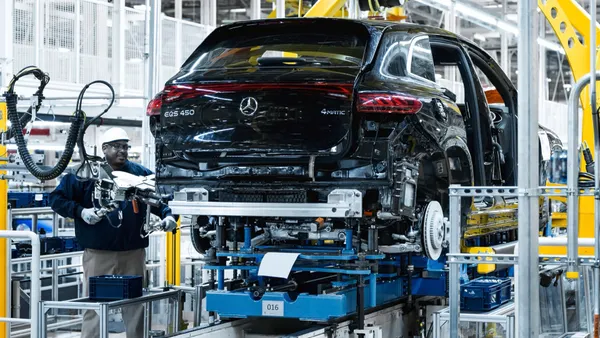
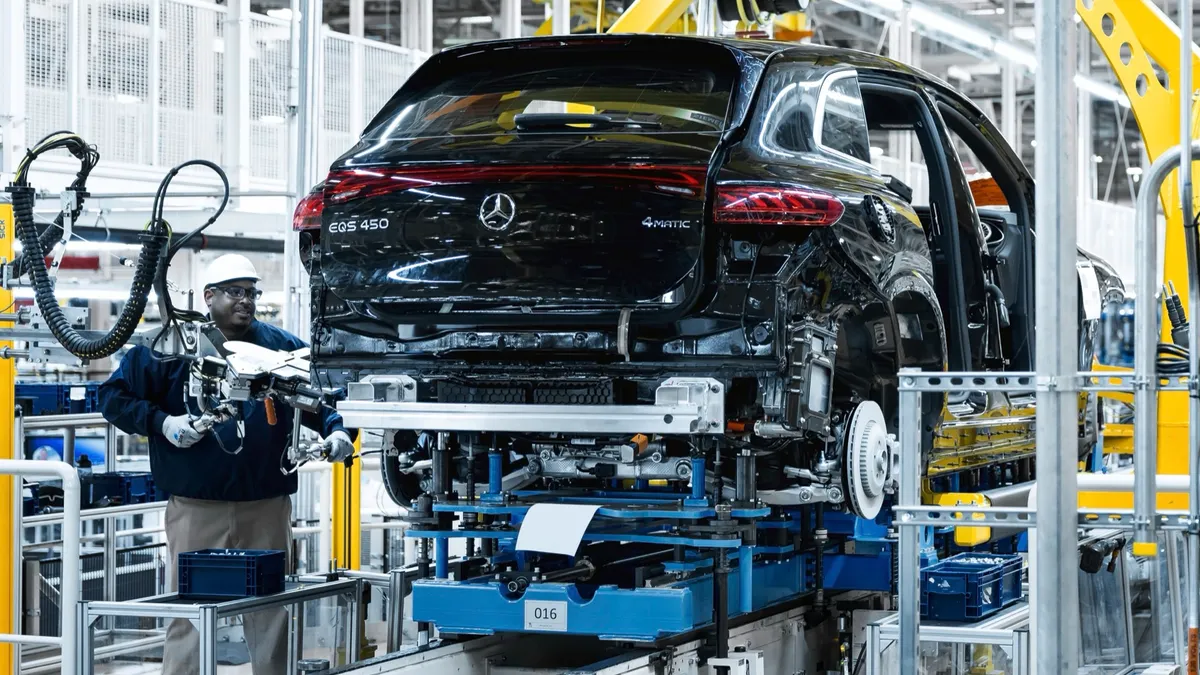
MBUSI says that the Alabama facilities, which assemble the GLE and GLS gasoline SUV families as well as the EQS and EQE electric SUV families, employ approximately 6,100. On March 31, Mercedes-Benz announced intended investments of more than $7 billion into U.S. operations by 2030, of which the Tuscaloosa plant will get about $4 billion.
Art Wheaton, director of Labor Studies at the Cornell School of Industrial and Labor Relations, noted in an email to Wards that approval of the VW contract by union members in Chattanooga could give the union the momentum it needs to organize at other locations.
Another factor makes it somewhat easier for the UAW in reviving an organizing drive at the Mercedes-Benz plant in Tuscaloosa, Alabama. A March settlement with the National Labor Relations Board included, according to Bloomberg, a vow to post notice about union organizing rights and not to threaten the closure or relocation of the facility to a non-union location.
About the 2024 allegations, the Mercedes-Benz statement also included: “Following investigation by the NLRB, the vast majority of the UAW allegations were withdrawn or dismissed. We resolved matters with the NLRB with no admission of violations, despite the UAW’s objections to the NLRB settlement. We look forward to working directly with our Team Members on measures to ensure we remain an employer of choice and provide a safe and supportive work environment. We want to continue to build on and enhance the success this plant has achieved over almost 30 years to continue providing superior vehicles for the world while also focusing on our people.”
In a video posted to multiple social media platforms, Fain noted that workers won a 20% raise in the tentative contract. That’s on top of the 11% pay bump VW workers got in the fall of 2023, after the UAW’s “stand-up” strike, in which the union demonstrated it could unify members across the Detroit automakers.
Overall, Volkswagen’s hourly workers will have gotten a $10-per-hour raise and health care costs will be lower in 2030 than in 2024, Fain said. Production workers covered by the agreement will also receive a $7-per-hour wage bump over the four-year contract, plus an annual cost-of-living increase.
“Volkswagen workers now have a real voice on the job and rights that are backed up with the power of their union,” Fain said in the video. “Most of all, they will have joined a movement of autoworkers and working-class people who are ready to stick together and keep making history.”
After failing twice, the UAW efforts to organize workers in Chattanooga finally succeeded during an election supervised by the National Labor Relations Board in April 2024. This was a breakthrough in UAW’s long-standing efforts to organize non-union auto plants in the South, which stretch back nearly four decades to the union defeat at Nissan in the summer of 1989.
“I hope that the other plants here in the South are watching,” said bargaining committee member Yolanda Peoples, to Labor Notes. “We just achieved something that everyone thought that we were not able to do. We now have our seat at the table, and it’s going to be life-changing for a lot of people in our plant.”