

Despite launching an initiative in Europe to launch nine new battery-electric vehicles in the next two years, Toyota doubles-down on its multi-energy powertrain strategy in Brussels this week.
While its line-up displayed this week includes the upgraded Lexus RV and promises a new Toyota bZ4X later this year company executives use several interviews to underline its commitment to alternatives to BEVs including hybrid, hydrogen and carbon-neutral fuels for internal combustion engines.
Executives also expressed doubts over plans by some European automakers to produce cheap BEVs, such as announcements by Volkswagen, Renault, Citroën and Dacia, being able to make a profit from the models with such small margins.
They made the comments at Toyota’s annual product strategy event in Brussels in front of 350 global media representatives.
Company executives highlighted the success it has achieved with its ‘multi-pathway’ product strategy it says has helped Toyota a record European sales result of 1.217 million vehicles in 2024.
Simon Humphries, chief branding officer and board member of Toyota Motor Corporation, says: “It’s about all customers feeling they are empowered to make the right choice for themselves. Providing choice and opportunity is at the heart of ever-better cars and everything we do and that includes the path to sustainability.”
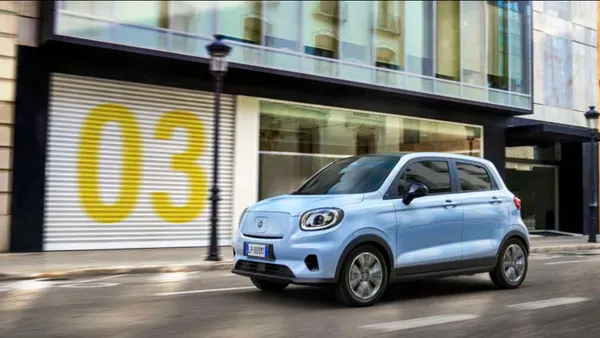
However, the idea of a sub-€20,000 ($21,737) being suggested by some European brands is seen as impractical by the Japanese automaker group.
Toyota Europe CEO Yoshihiro Nakata, says in an interview reported by Automotive News Europe: “Given the current cost of batteries, I am suspicious that producing in Europe could be profitable at that price point.”
The company’s marketing and product development chief, Andrea Carlucci, adds “…convenience, affordability and usability are not quite there for these kinds of vehicles” lacking a range that dovetails with the existing charging infrastructure.
Toyota Europe chief corporate officer, Matthew Harrison, says A-segment cars would be the “most troublesome segment” to electrify “because accessibility and cost are critical to that buyer.”
Meanwhile, the automaker promises additional BEV models also including a Toyota C-HR+ expands built on the dedicated e-TNGA platform and available as a front or all-wheel drive.
Also, on the recently announced Urban Cruiser, Toyota is introducing three new BEVs Europe in the B, C and D-SUV segments to bring its BEV offering in continental markets to 14 by end of 2026.
At the same time, Toyota continues to explore the potential of hydrogen and carbon-neutral fuels which it has been running in its racing cars with 100% renewable biofuels and e-fuels used in including the GR010, GR Yaris Rally 1 and GR Supra GT4.
It sees these fuels as a practical solution for carbon neutrality for new and existing vehicle fleets as a key part of the journey to 100% CO2 reduction.