Toyota will introduce an all-new battery-electric CUV in 2026, the C-HR, with standard all-wheel drive and an estimated range of 290 miles (467 km).
The vehicle resurrects the C-HR name Toyota used on a now-discontinued internal-combustion-engine small CUV sold in the U.S. from 2016-2022.
The new model, when it launches, will be the Toyota brand’s second BEV in its 2026 U.S. lineup thus far, along with the bZ BEV (formerly bZ4X).
The C-HR, like the bZ, is built on Toyota’s e-TNGA platform and powered by a 74.7-kWh battery pack, with electric motors housed in the front and rear axles. This propulsion system produces 338 hp and is said to achieve 0-60 mph (0–97 km/h) in 5 seconds. The AWD bZ has the same battery pack but achieves up to 306 miles (492 km) of range.
The coupe-ish CUV will come equipped with a North American Charging System (NACS) port and is capable of charging on Level 1 (120V) and Level 2 (240V) AC power sources.
There are certainly similarities to the bZ, with a low center of gravity thanks to an underfloor-mounted battery pack surrounded by a cross-framing structure, which Toyota says improves overall vehicle rigidity. The suspension, says Toyota, has been uniquely tuned for sporty handling, with specialized spring and damper settings and the stiffer antiroll bars.
Interior
Inside the C-HR, there are standard steering wheel-mounted paddle shifters that control regenerative braking power. When activated, four different levels of regen braking power can be selected to convert kinetic energy to electric energy, adding charge to the traction battery as one drives.
Offered in two trims, SE and XSE, there is a standard 14-in. (36-cm) touchscreen that runs the Toyota Audio Multimedia system, fully digital gauge cluster, dual wireless chargers in the center console and the Toyota Safety Sense 3.0 system. There are two wireless smartphone chargers and rear cabin USB-C ports. There’s up to 25.4-cu.-ft. (0.72 cu.-m) of rear cargo space behind the rear seats.
Outside
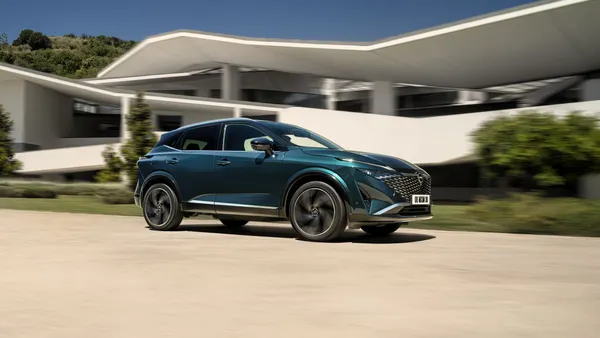
The CH-R has a coupe silhouette formed in part by Toyota’s hammerhead snout and a shape flowing rearward to its angular rear, but with compact crossover proportions. Overall length is 177.9 ins. (4,521 mm) with a wheelbase of 108.3 ins. (2,750 mm).
Key standard equipment includes a power liftgate, low-profile roof rails and rain-sensing wipers. Buyers can choose between 18-in. or 20-in. wheels.
Safety Tech
The C-HR features Toyota Safety Sense 3.0 that includes such features as a pre-collision system with pedestrian detection, dynamic radar cruise control and lane departure alert with steering assist. A blindspot monitor with rear cross-traffic alert is also standard.
All Toyota C-HR models are equipped with a 6-speaker audio system, with a 9-speaker JBL Premium Audio system also available.
Developed from a compact BEV concept Toyota first presented in 2022, the new C-HR BEV is the 20th electrified model to be added to the Toyota lineup globally that includes BEVs, hybrids and fuel-cell vehicles.
The 2026 C-HR BEV is expected to arrive at Toyota dealerships nationwide in 2026.