Dive Brief:
- Subaru reported an operating loss of 36.4 billion yen ($233 million) for the quarter ending Dec. 31, 2025, as it felt the effects of several policy changes in the U.S., its biggest market, according to an earnings presentation.
- Tariffs altogether cost approximately 21 billion yen, while Subaru pointed to a 28 billion-yen loss due to “the impairment of environmental regulation credits held,” and an 11 billion-yen cost attributed solely to the depreciation of the Japanese yen.
- Beyond this quarter in particular, Subaru now calculates tariffs will have a full-year net negative impact on operating profits of 229 billion yen — 44 billion more than previously forecast. Total environmental regulation-related costs are also forecasted to increase by 31 billion yen.
Dive Insight:
Subaru wrote off the U.S. regulatory credits devalued by Trump administration policy and the tariff-related effects of importing many of its vehicles and parts from Japan — but has already made plans to adjust its production and pricing mix for longer-term resilience.
The automaker said that despite the lower sales figures and appreciation of the yen, revenue has increased. That’s come in the form of improvements in the product/pricing mix and in lower sales incentives, which Subaru said have decreased in the U.S. by about $50 versus last year, to $1,950 per vehicle.
It noted that excluding the effects of tariffs, regulatory changes and currency valuation, operating profit would have been approximately 24.0 billion yen.
The U.S. remains Subaru’s strongest market, by far, with about 479,000 sales over the first nine months in the fiscal year. That included some of the approximately 257,000 vehicles produced in the U.S., a figure that is down 7,000 versus the same quarter last year.
Looking ahead, Subaru anticipates sales will remain down slightly versus last year, to 920,000 units for the 2026 fiscal year ending March 31. About 727,000 of those sales—nearly 80%—are forecast for North America.
The automaker also reported that after construction at its Yajima Plant, production of battery-electric vehicles there has started on schedule. Production of the Subaru Trailseeker electric SUV, which was co-developed with Toyota, officially began this month.
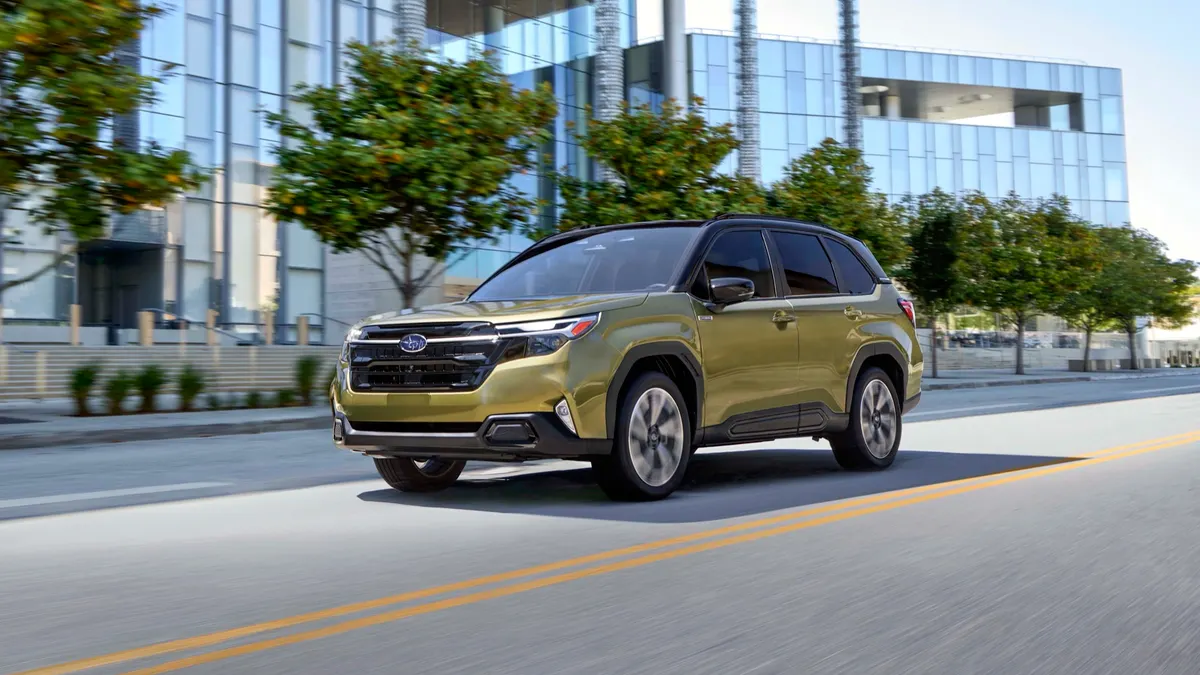
Several other significant manufacturing changes specific to North America may play a part in Subaru’s numbers over this quarter and beyond. Subaru moved production of the Forester to Indiana in the fall, and just last week it started U.S. production of the Forester Hybrid in Indiana. It also shifted production of the redesigned 2026 Subaru Outback to Japan. Subaru said in a May 2025 call with analysts, after the initial imposition of new tariffs, that dual production locations of the Forester will allow it “to build a production system that can respond flexibly to changes in the environment.”