

Stellantis’ joint venture with its Chinese battery-electric vehicle partner, Leapmotor, sees Spain, Europe's fastest growing economy, as its top choice for a vehicle assembly plant.
Leapmotor International currently imports products into the European Union marketed through the Stellantis dealer network and hopes to sidestep some of the EU’s import tariffs being imposed on unfair Chinese state-subsidized products, a Chinese embassy source tells Reuters.
The joint venture has been evaluating several potential European sites for production including Stellantis’ existing plants in Germany and Slovakia.
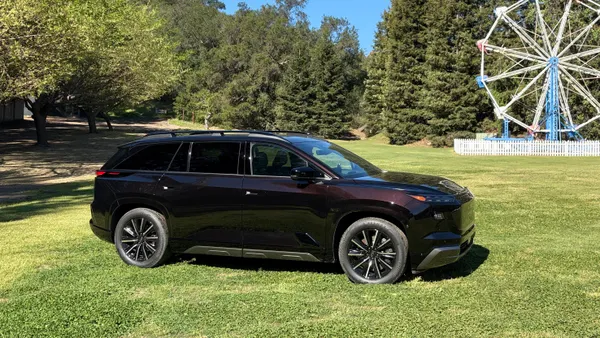
The news agency’s embassy source says the companies’ investment of $200 million into a plant to produce the new midsize Leapmotor B10 crossover is destined for a factory in Zaragoza, in Spain’s northeast region and that mass production could begin early 2026.
Built on Leapmotor’s in-house developed LEAP3.5 architecture, the B10 is available in two automated cruise control driving versions, both equipped with LiDAR technology, provided by Hesai, and complemented by camera and radar sensors.
Recognizing that a pure knock-down kit assembly plant, in line with China’s lawmakers’ instructions, using Chinese-made components may not avoid all EU tariffs, both companies are investigating sourcing parts from Spanish suppliers, the source adds.
Neither Stellantis nor Leapmotor would provide the news agency with a response to the claims.
The companies previously scrapped a plan to make the B10 in Poland after the Chinese government privately told automakers to halt big investments in European countries that supported imposing extra tariffs on Chinese-made BEVs.
Stellantis and Leapmotor then considered using a Stellantis factory in Eisenach, Germany, that produces Opel models, and its Trnava plant in Slovakia.
Spain’s relatively low labor costs and generous government subsidies for clean energy has already attracted battery makers, such as CATL and Envision Group-backed AESC, to establish production plants.