LAS VEGAS — Timing seemingly couldn’t be much worse for Sony Honda Mobility and the launch of its Afeela electric-vehicle brand.
Following U.S. policy changes that have triggered an end to federal tax breaks on electric-vehicle purchases and a pullback on infrastructure support, popularity of battery-powered vehicles in the U.S. is waning, with sales last year posting their lowest level of growth in 15 years, according to Omdia Automotive estimates.
The sudden reversal in fortune has automakers cutting back on EV and battery production, canceling new-vehicle launches, shifting product development into more viable directions and writing off billions in sunk investment over the past few years. General Motors is writing down $7.1 billion as it restructures away from EVs, while Ford has taken a whopping $19.5 billion accounting hit. Meanwhile, rising tariffs, increasing prices and an overall sluggish economy have darkened the outlook for new-vehicle sales overall in the U.S. as 2026 gets underway, with automakers and suppliers girding for what could be a tight squeeze on revenues and profitability.
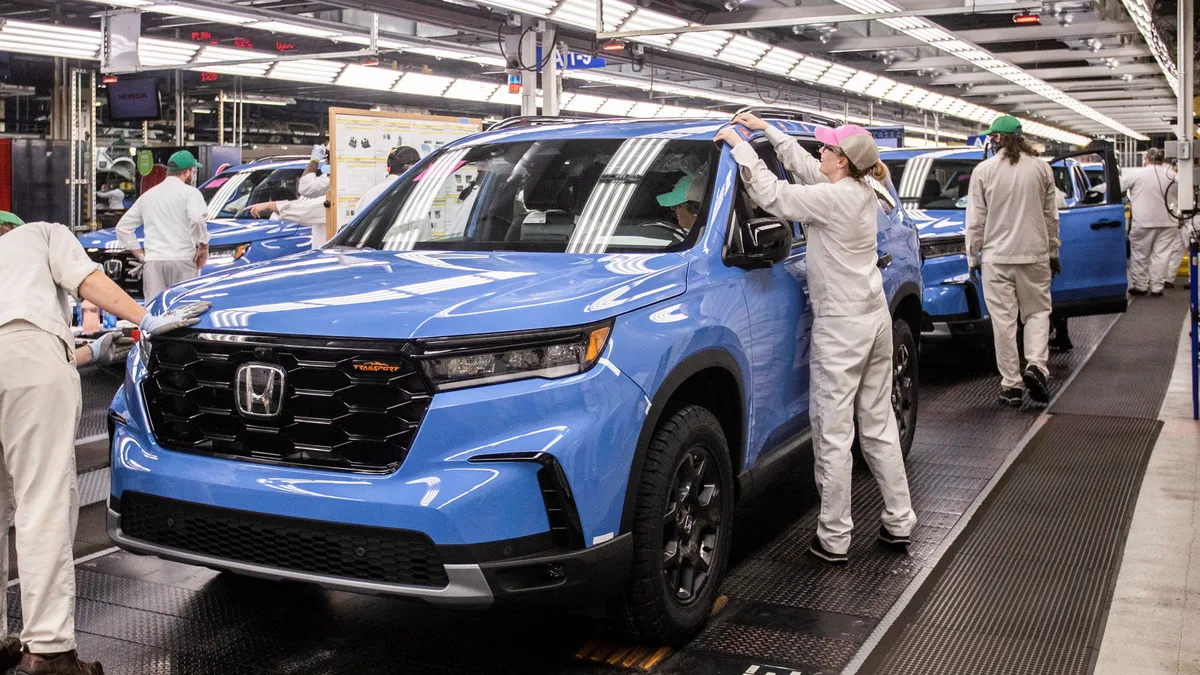
Into this environment steps Sony Honda Mobility. After three years of product development — and relying heavily on an ecosystem of critical technology partners — the company is about to release its first vehicle in the U.S. market: the all-electric Afeela 1 sedan. The vehicle is now in production at Honda of America Mfg.’s Liberty, Ohio, plant and deliveries of the vehicle are scheduled to begin in California in late 2026.
And in an interview, Shugo Yamaguchi, president and CEO of Sony Honda Mobility of America, appeared calm and confident about the nascent brand’s ability to turn a profit before the end of the decade.
“We are looking at the evolution of the market, the changes in the EV market and the market overall,” Yamaguchi, speaking through a translator, told WardsAuto. “We’re having conversations, we’re getting a lot of customer data and feedback.”
He contends the overall market dynamics haven’t dimmed chances for BEVs in California, where the brand’s direct-to-consumer sales are launching toward the end of this year.

“In terms of California, there’s not really a movement for people to go back to traditional gasoline vehicles,” Yamaguchi says. “And so we believe the BEV market is going to continue to be robust here.”
Even the end to U.S. tax incentives (a move California may try to offset) doesn’t really change the game plan for Sony Honda Mobility, he points out, because Afeela’s lofty base price of $89,900 already had disqualified the car.
“We haven’t changed our strategy as a result of the market situation,” Yamaguchi emphasized. “What we have done is … make updates to our design and improve functionality.”
Afeela’s competitive stance
Depending on your point of view, the Afeela 1 model is either cutting-edge or already has been trumped. Other automakers — particularly those in China — have greatly amped up levels of infotainment and driver-assistance content in their production vehicles since the first Afeela concepts were shown three years ago.
The truth is probably somewhere in between.
The Afeela 1 relies heavily on chip and solutions supplier Qualcomm’s highly advanced Digital Chassis software suite that powers the cockpit and provides Level 2-plus (eyes-on/hands-off) driving that is expected ultimately to reach Level 4 (eyes off/hands-off) capability.
The car’s interior features cabin-wide screens along the dash with flexible displays, an agentic-AI interface for spoken-word operation, rear-seat entertainment screens and theater-like surround-sound system. It’s a dazzling interior but no longer exclusive or necessarily leading-edge. For instance, Qualcomm said at CES it already has secured 10 new design wins for automated driving and cockpit applications based on its top-end Snapdragon Elite system-on-chip, a step above in performance from what powers Afeela.
More unique is Afeela 1’s strong connection to Sony’s entertainment and gaming technology — promising to allow the car’s occupants to seamlessly continue playing games begun earlier on their home or portable devices. Also critical is the Afeela’s open-platform design that is being counted on to foster continued innovation from third-party developers and help it keep pace, or even leap ahead, of the competition.
“Basically we’re saying that everything you can enjoy at your house and on your smartphone, that’s all in the vehicle,” Yamaguchi said. “We are making sure we are putting attention on [automated driving] so that we fulfill the needs in that area, but we also are making it an enjoyable experience for the passengers as well.”
Afeela’s core brand is about SDVs, not EVs
It’s unclear whether Afeela would consider offering vehicles with more conventional powertrains in the future if EVs fail to catch on with consumers. In discussions at CES, many industry insiders still believe U.S. EV sales will take off nearer the end of the decade, so staying the course is likely in the cards for Sony Honda Mobility.
But being a purveyor of electric vehicles isn’t necessarily core to the Afeela’s DNA, Yamaguchi said.
“More than creating an electric vehicle as our target, we are creating a software-defined vehicle,” he said. “How the software evolves is an important part of our brand, more than just an EV itself.”
In California, Afeela will have four showrooms to start and will service vehicles through a relationship with Crash Champions, with the partners in the process of selecting which shops will be included in the network and establishing criteria around customer service. Sony Honda Mobility also will sell the vehicles directly to consumers in Japan beginning in first-half 2027 and launch deliveries in its second U.S. market, Arizona, next year. The direction of expansion beyond that hasn’t been determined, and Yamaguchi said where Sony Honda Mobility goes next in the U.S. will be based on a number of criteria beyond the size of the local BEV market.
“One factor is whether we can receive a license to sell there [under state dealer-franchise laws] and whether we can create a solid operation for delivery,” he said. “So we have to look at this comprehensively … in order to ensure that we can provide all of this.”
Expanding outside the U.S. appears to be a longer-term prospect for now.
“That possibility exists for sure,” Yamaguchi said. “But our main focus is the U.S. market. After California, we’re going to Arizona and [will see] what’s going to happen after that. But first of all, we’re focusing on that absolute satisfaction from the customer base we have in those two states.”
Afeela’s second model
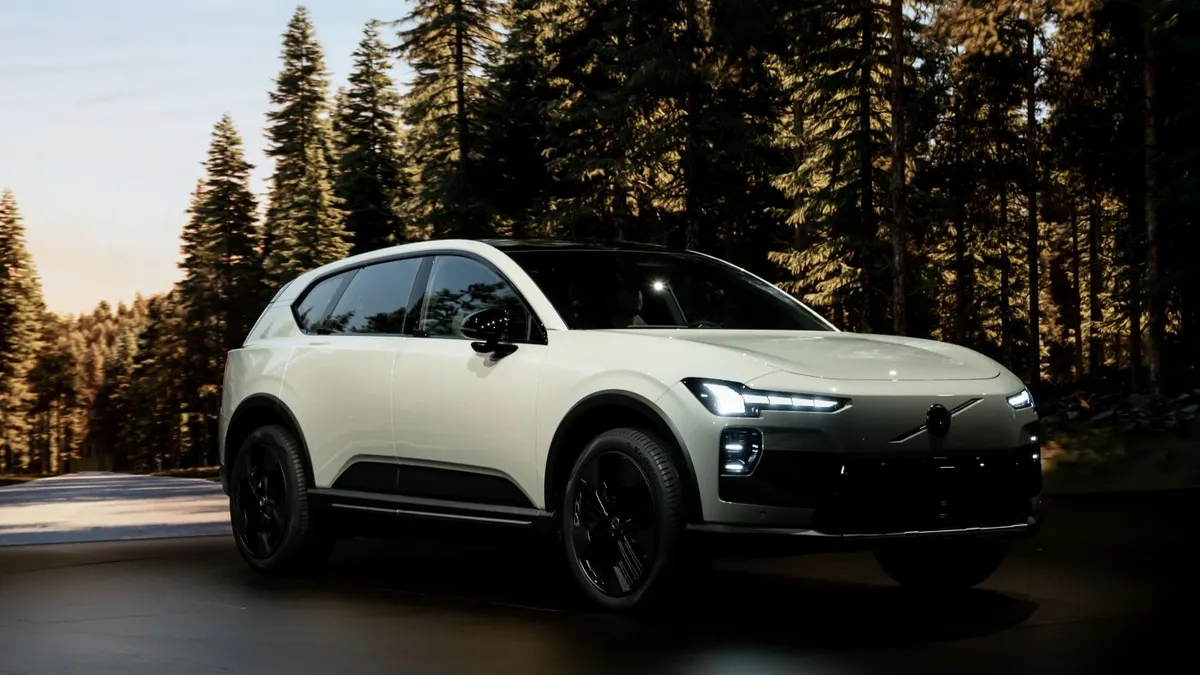
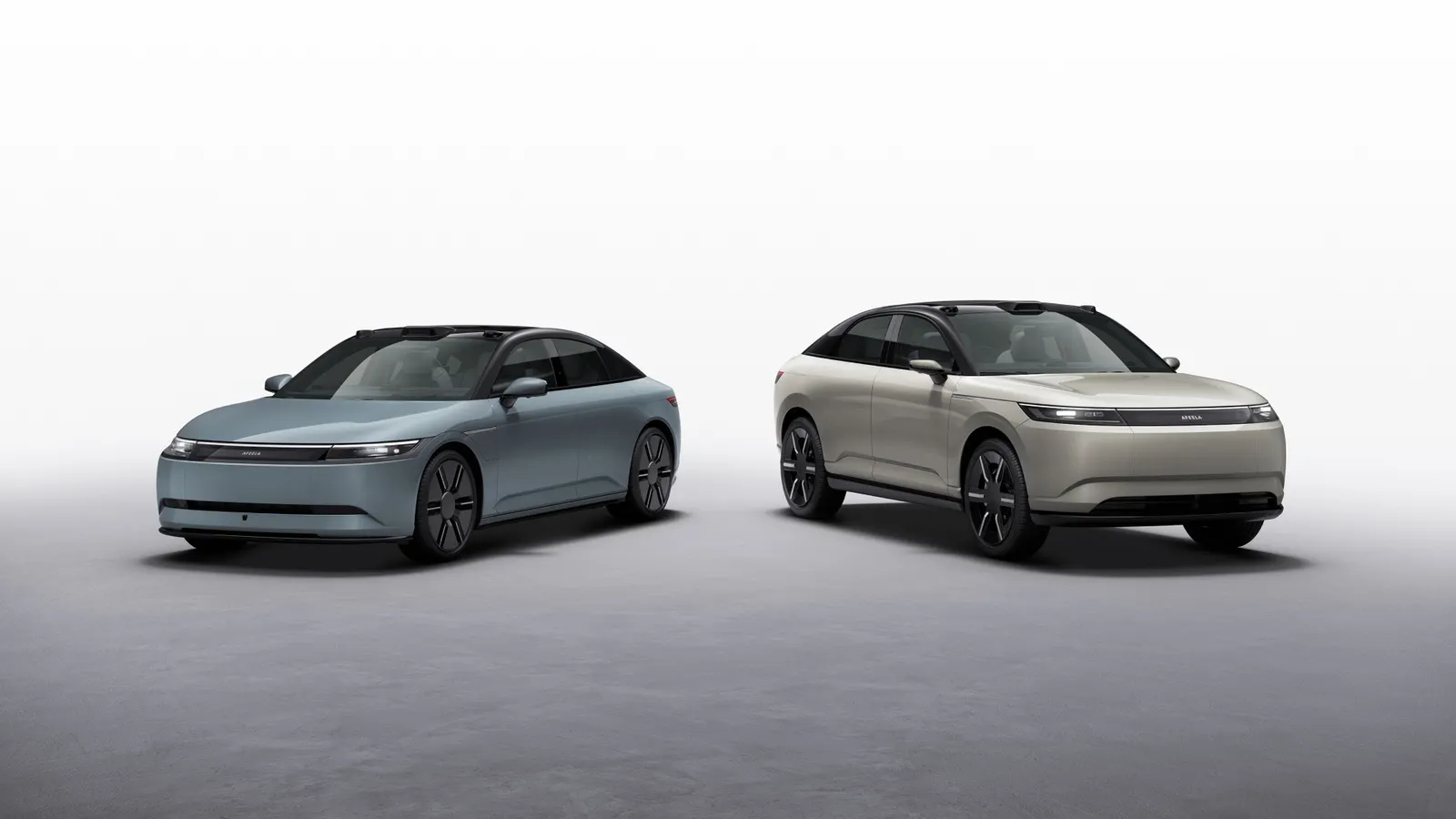
Details are nonexistent when it comes to the second model rolled out in prototype form here and targeted for sale as early as 2028. But from an appearance standpoint, the vehicle is more SUV-like than the Afeela 1, with higher road clearance and a more aggressive front fascia and profile, a potentially better fit with current U.S. market direction.
Certainly, Sony Honda Mobility will have to see some traction with Afeela 1 before it pulls the trigger on a second vehicle. But Yamaguchi isn’t putting a number on volumes that must be reached in order to green-light an expanded lineup.
“First of all, compared to our competitors, we don’t have a battery factory, we don’t have a vehicle factory,” he said. “So our break-even point is actually comparatively low [in terms] of fixed costs.
“Of course it would be nice to have volume,” he added. “But our focus is not on trying to get volume, it is on trying to get a satisfying experience to the few people that do purchase an Afeela. That’s one of the reasons why we’ve limited our start to first of all in California and later in Arizona, so we can make sure we can keep control over our operations and provide that high level of satisfaction before we do anything else.”
As for profitability, Sony Honda Mobility aims to be in the black within the next three years, Yamaguchi said.
“We do have some pretty big goals. And I’m not going to say we’re going to be able to reach them [all] in three or four years,” he said. But the first order of business is to build a base of satisfied buyers and to keep the Afeela 1’s content fresh.
“I’m expecting to see our network of [feature applications] co-creators and developers expand before my eyes while we’re moving along this process,” he said.