Editor's Note: The headline in this story has been changed to reflect that the plant is a joint venture between Nissan and Mercedes-Benz.
Nissan Motor Co.’s plan to quickly return to profitability is impacting operations as the company moves ahead with another plant closure.
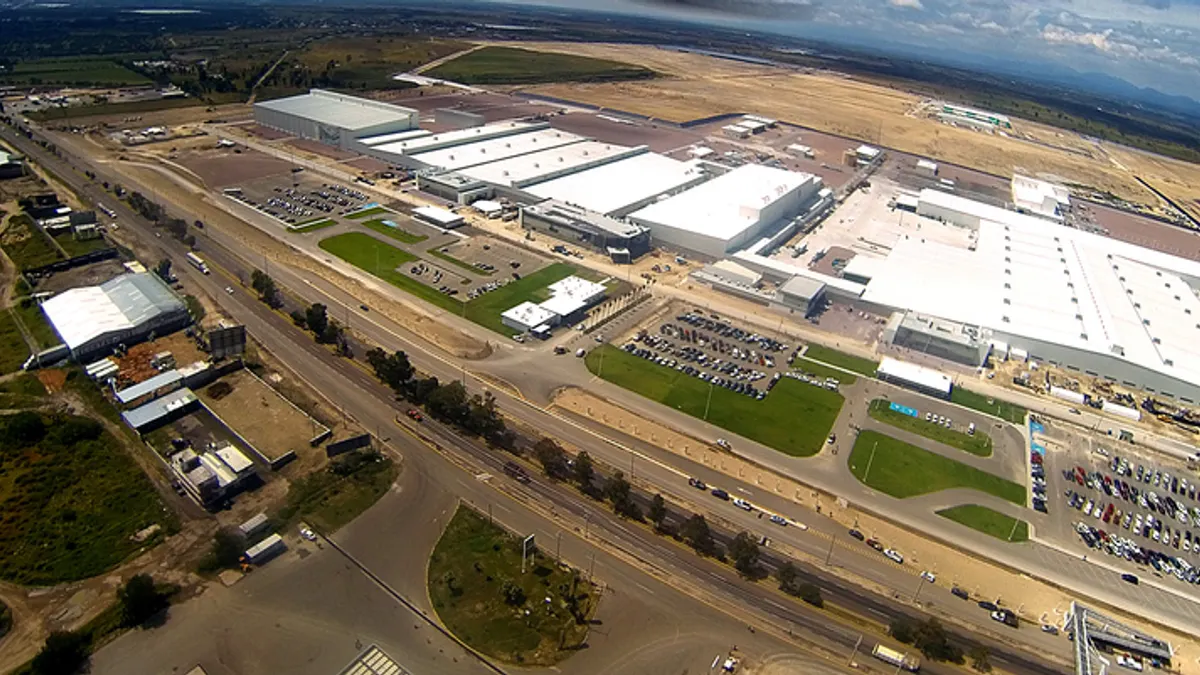
Brian Brockman, a U.S.-based spokesperson for Nissan, in an email to WardsAuto confirmed that the automaker plans to shutter an assembly plant in Aguascalientes, Mexico. The factory, which Nissan opened as a joint venture with Mercedes-Benz, began production in 2017.
Brockman did not disclose a detailed timeline for the Aguascalientes plant closure.
However, production of various models will continue until at least May 2026, per information shared by Nissan and Mercedes-Benz.
The Aguascalientes plant builds the QX50 and QX55 for Nissan’s luxury Infiniti brand. Brockman said the plant will end production of those vehicles in November.
“This decision is part of a previously announced plan and reflects broader strategic shifts within the company,” Brockman said. He said Nissan and Mercedes-Benz are evaluating future opportunities for the Aguascalientes plant.
A spokesperson for Mercedes-Benz in an email to WardsAuto also confirmed the Aguascalientes plant closure. Mercedes-Benz will end production of its GLB sport utility model at the plant in May 2026.
Nissan’s Aguascalientes plant is its second plant closure in Mexico announced this year. The automaker in July said it will shutter its CIVAC Plant in Cuernavaca in March 2026.
Its latest plant closure is part of the company's plan to boost profits by reducing its global production footprint from 17 to 10 plants and saving other costs.
The cost-savings initiatives have so far helped Nissan revise its Q2 outlook to reflect a 50 billion yen ($324 million) operating profit, per an Oct. 30 announcement. The automaker had initially projected a Q2 operating loss of $100 billion yen, marking a significant swing.
The automaker indicated lower costs related to emissions regulations and a deferral of planned expenses to the second half also contributed to the positive operating profit.
CFO Jeremie Papin said while the company’s first half-results reflect temporary benefits from cost-savings initiatives, Nissan anticipates an ongoing challenging competitive environment in the second half as well as supply chain risks and seasonal business conditions.
“Our priority remains disciplined execution, strong cash flow management, and safeguarding profitability as we navigate these headwinds,” Papin said.