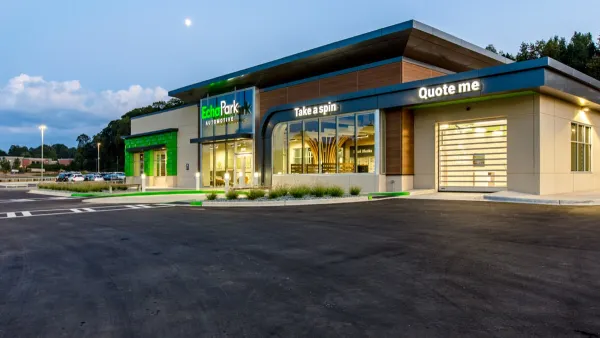
Summer may bring to mind relaxation, but for many car dealerships, this season now passing is anything but easy. Their operational challenges – and the customer frustrations that follow – are often reflected in online reviews.
Those reviews don’t just cost dealerships sales, they also can jeopardize manufacturer relations. That may mean no supplies of “in-demand” cars, low or no performance bonuses or incentives, eligibility for pilot programs and more. “Right now, we’re in negative-review season,” Matt Murray, founder and CEO of reputation management firm Widewail, tells WardsAuto.
Murray’s group works with about 5,000 dealer groups to review and manage negative customer reviews.
“It has to do with operational tempos,” Murray says of an uptick of negative seasonal reviews in the summer. “Dealerships get busier, and staff start taking vacations.”
The extra work can negatively impact a dealership’s staff, which may result in lower customer review scores.
What’s a dealer to do?
WardsAuto interviewed Murray about customer reviews, their impact and how to handle them. The following is an edited version of the conversation.
WardsAuto: How do you work with dealers?
Murray: Our platform connects to their DMS (dealer management system). We receive notification whenever there is a closed sale. We send the customer a text, seeking feedback. We help drive and answer reviews and report on performance.
We try to automate much of it. Every response is customized. Good reviews are pretty easy to respond to.
With negative reviews, we create what we think is a good response, then have the store look at it.
Sometimes they say, “Great.” Other times, they use what we call our “therapy couch,” where, through chat, they unload, saying things like, “This customer is full of it; they were late for their appointment.” They get that emotion out. Then we can tailor the response from there.
WardsAuto: Your latest voice-of-the-customer report indicates that tariffs are showing up in customer reviews. Why would someone mention tariffs in a review?
Murray: We saw a spike in April, but tariffs are not a big topic of discussion in reviews. There were 2.7 million Google reviews in the first half of 2025. (We saw) 900 of them mentioned tariffs. What we usually see is people almost bragging that they beat the tariffs by buying a car sooner than later. That’s the tone.
WardsAuto: Your latest report indicates salespeople still struggle with battery-electric-vehicle knowledge. What’s the problem there? EVs have been around for decades now.
Murray: We looked at the topics from EV customers and compared them to the issues of customers of vehicles with internal-combustion engines.
The EV customer was showing 76% more negativity than the ICE customer on the salesperson’s knowledge issue, and 73% more negativity (about) helpfulness than the ICE customer.
But EV customers showed 35% less negativity around the price of the vehicle, 15% more positivity regarding deals.
WardsAuto: Would a $7,500 tax credit come under the category of a deal?
Murray: Sure, it’s the customer feeling they got a deal. That credit ends Sept. 30. But the most important thing is that the sales experience for the EV customer was significantly more negative.
Our theory for that goes something like this: At a dealership that offers ICE, hybrid and EVs, the amount of information for each that a salesperson needs to understand about powertrains is enormous.
Fewer than one out of five cars is an EV. So, the salesperson might not know, say, differences in range of one particular vehicle compared to another. They are not going to know that. They don’t practice it enough.
But training, professionalism, knowledge and helpfulness are so important today. If I owned a dealership, my hiring strategy would be different than it was 15 years ago.
WardsAuto: How so?
Murray: I don’t need the great closer, I need the great facilitator. I need the product genius. I need an employee who makes it a seamless experience for customers and who is better educated than they ever have been.
WardsAuto: Do dealers in general get good reviews?
Murray: I ask people in businesses outside the auto world what type of reviews do they think dealers get. What do you suppose they say?
WardsAuto: I think they’d say the reviews are lower than they actually are.
Murray: We get a lot of 2.5- to 3.5-star responses from the outsiders. They are always shocked that the average score of a dealer in the U.S. is about 4.6 out of 5 stars. It’s hard to find dealers getting under 4 stars on Google.
WardsAuto: What best practices should dealers follow to get great reviews?
Murray: Start automatically asking all your customers for a review. The scores will go up.
There are five core topics that drive positive reviews and five that drive negative ones.
For positive reviews, they are (in descending order): staff, helpfulness, friendliness, knowledge, professionalism.
For negative reviews they are: communications, staff, car maintenance, wait times and management.
Every one of them has something to do with the traits or characteristics of your staff.