BERLIN – Mercedes-Benz reveals it is trialing artificial intelligence (AI)-enhanced robotic automation in its manufacturing, with the Digital Factory Campus at its Berlin-Marienfelde factory in Germany serving as a testbed for a broader rollout of the new production technology.
The move is part of a broader effort to streamline manufacturing efficiency across Mercedes-Benz’s European and US production network as part of cost-saving initiatives.
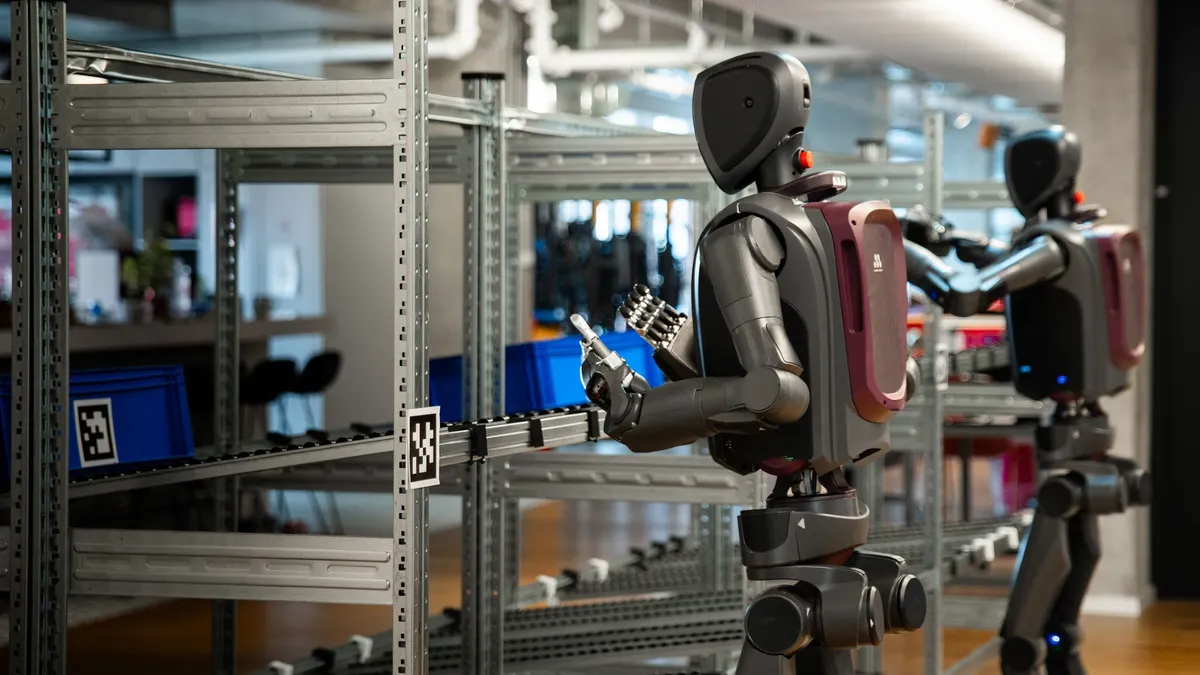
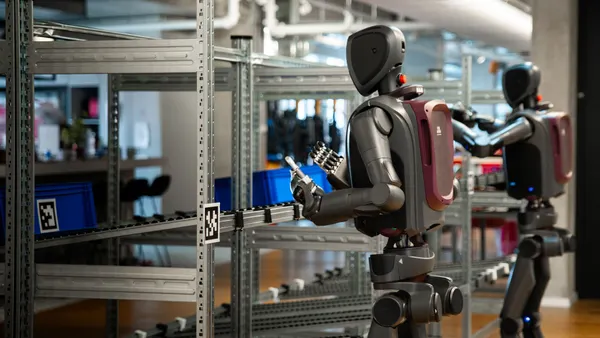
The Berlin-Marienfelde site, already serving as an incubation hub for Mercedes-Benz’s digitalization efforts, has been set up to pilot the new automation processes. These are backed by AI developments from Google’s DeepMind technology and include the deployment of humanoid robots developed by the US-based company Apptronik, called Apollo.
Apollo, conceived as a bipedal humanoid robot designed to mimic human actions, is being tested for logistics tasks, such as transporting components and assisting workers on the production line. Unlike traditional industrial robots, which are fixed in place and perform repetitive tasks, Apollo is capable of navigating factory floors and handling a variety of different, repetitive functions, speeding up manufacturing processes and mitigating physical stress on humans
Mercedes-Benz is initially deploying the robot in intra-logistics, moving materials between workstations to support human workers. It has also confirmed an investment of more than €100 million ($US109 million) in Apptronik, signaling a deeper partnership expected to expand into other areas of manufacturing automation.
Joerg Burzer, Mercedes-Benz board member responsible for production, quality, and supply chain management, confirmed the company has established an in-house team already working closely with Apptronik.
"It’s very transparent on each side. We started this over a year ago. We’re training tasks away from the workforce. We’re thinking hard about how we’re going to implement it. It’s important to choose the right tasks - repetitive and hazardous," he says.
The investment in Apptronik, which has worked closely with NASA since its founding in 2016, has allowed Mercedes-Benz to leverage the US company’s recently announced partnership with Google and its DeepMind technology. This includes two new AI models: Gemini Robotics and Gemini Robotics Extended Reasoning. Both models run on Gemini 2.0, which Google describes as its most capable artificial intelligence to date, going beyond text and image output into physical action and commands to control robots.
The AI-enhanced automation processes are being deployed in Mercedes-Benz’s quality control and production monitoring, where assistants analyze production anomalies, detect defects, and optimize workflows.
"AI takes over the tasks we enjoy less, giving us time to focus on value-adding activities. It’s a huge efficiency gain," said Burzer.
Together with these robotic advancements, Mercedes-Benz has also updated its digital production system with new AI-driven software tools, including a revised Chatbot Ecosystem.
Although Mercedes-Benz operates a global network of manufacturing sites, it says the initial focus for the introduction of AI and humanoid robotics will be centered around its European and US factories.
"We don’t have plans to introduce it to China," Burzer told WardsAuto when questioned on the geo-political implications of adopting the new production technology.
The Marienfelde site, founded in 1902, is the lead factory for the manufacture of Mercedes-Benz’s electric drivetrains. In addition to producing the eATS units for standard electric models, it is also set to play a key role in the production of axial-flux electric motors for upcoming Mercedes-AMG models.
Developed in partnership with Yasa - an English company acquired by Mercedes-Benz in 2021 - the compact axial-flux motors will be manufactured on a new line featuring 100 new production processes, 65 of which are new to Mercedes-Benz, while 35 are entirely new to the automotive industry, according to the German automaker.
Among 30 different patents Mercedes-Benz has filed for its new axial-flux motors are a new bonding process to attach magnets to the rotor and a bending process for the rectangular wire used in the stator.
Current pilot production activities for the axial-flux motor focus on two different-sized units, which are planned to be used in a new range of electric-powered Mercedes-AMG models - beginning with the new GT 4-Door Coupe, due out in 2026.