

It used to be, when one thought about what was under the hood of a family vehicle, the assessment: “competent-but-unexciting” sprang to mind. But that’s no longer the case in this age of full electrification.
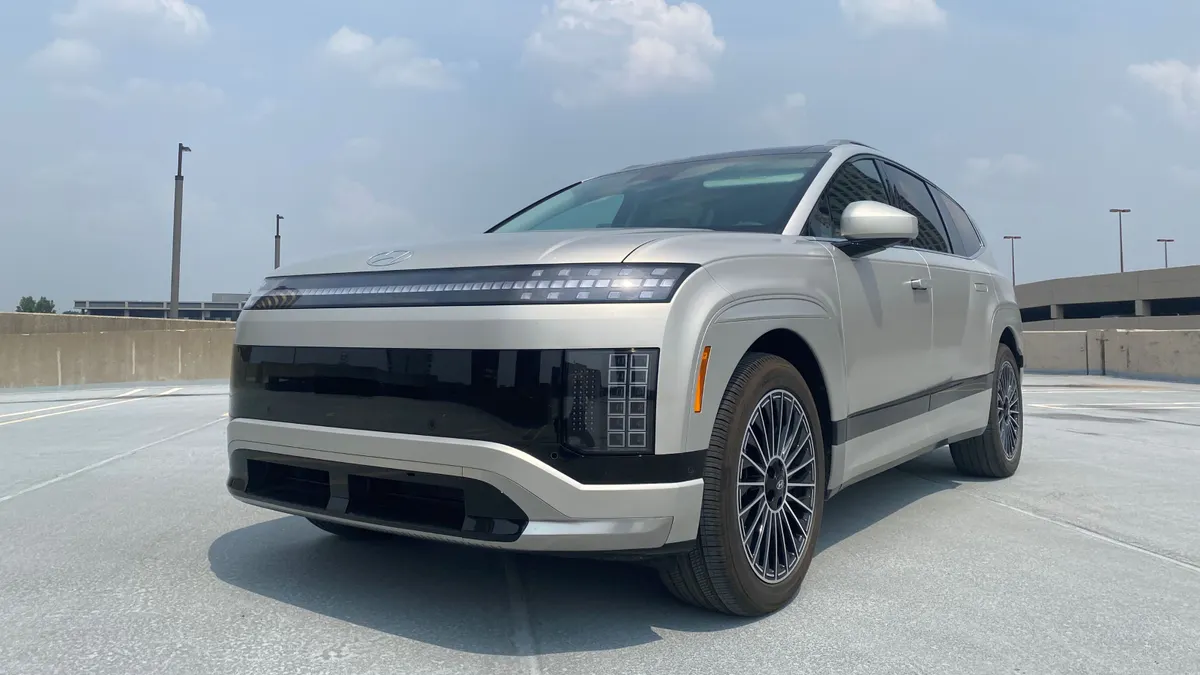
Exhibit A of this new phenomenon is the all-electric powertrain in the Hyundai Ioniq 9 3-row crossover, winner of a 2025 Wards 10 Best Engines & Propulsion Systems award. Yes, it’s a vehicle that can carry parents, kids and their stuff, but its dual motors pack the punch of internal-combustion engines that powered premium sport sedans a decade or so ago.
With its front and rear permanent-magnet AC synchronous motors, the all-wheel-drive Performance Calligraphy grade of the 2026 Ioniq 9 tested by our judges generates a hefty 422 hp and 516 lb.-ft. (700 Nm) of torque. That’s 47 horsepower, and a tremendous 183 lb.-ft. (248 Nm) more than what Hyundai’s 4.6L Tau V-8 — winner of a 2009 Wards 10 Best Engines award — made in the original Genesis luxury sport sedan.
In spite of its physical size and weight, Hyundai wanted the Ioniq 9 "to feel like it was pretty quick" and to be "a pretty effortless car to drive,” Andre Ravinowich, senior manager-product planning for Hyundai Motor North America, told Wards 10 Best judges in justifying the decision to maximize horsepower.
The CUV’s dual-motor propulsion system has a good pedigree, related to the 2025 Kia EV9 GT Line’s dual-motor system, a 2024 Wards 10 Best Engines & Propulsion Systems’ award winner and the propulsion system in the Hyundai Ioniq 5 N, another 2024 Wards 10 Best Engines & Propulsion Systems’ trophy taker. The Ioniq 9’s system, like the Ioniq 5 N’s, has the ability for the front motor to disconnect and the rear motor to be the sole source of propulsion to increase the efficient use of electrons.
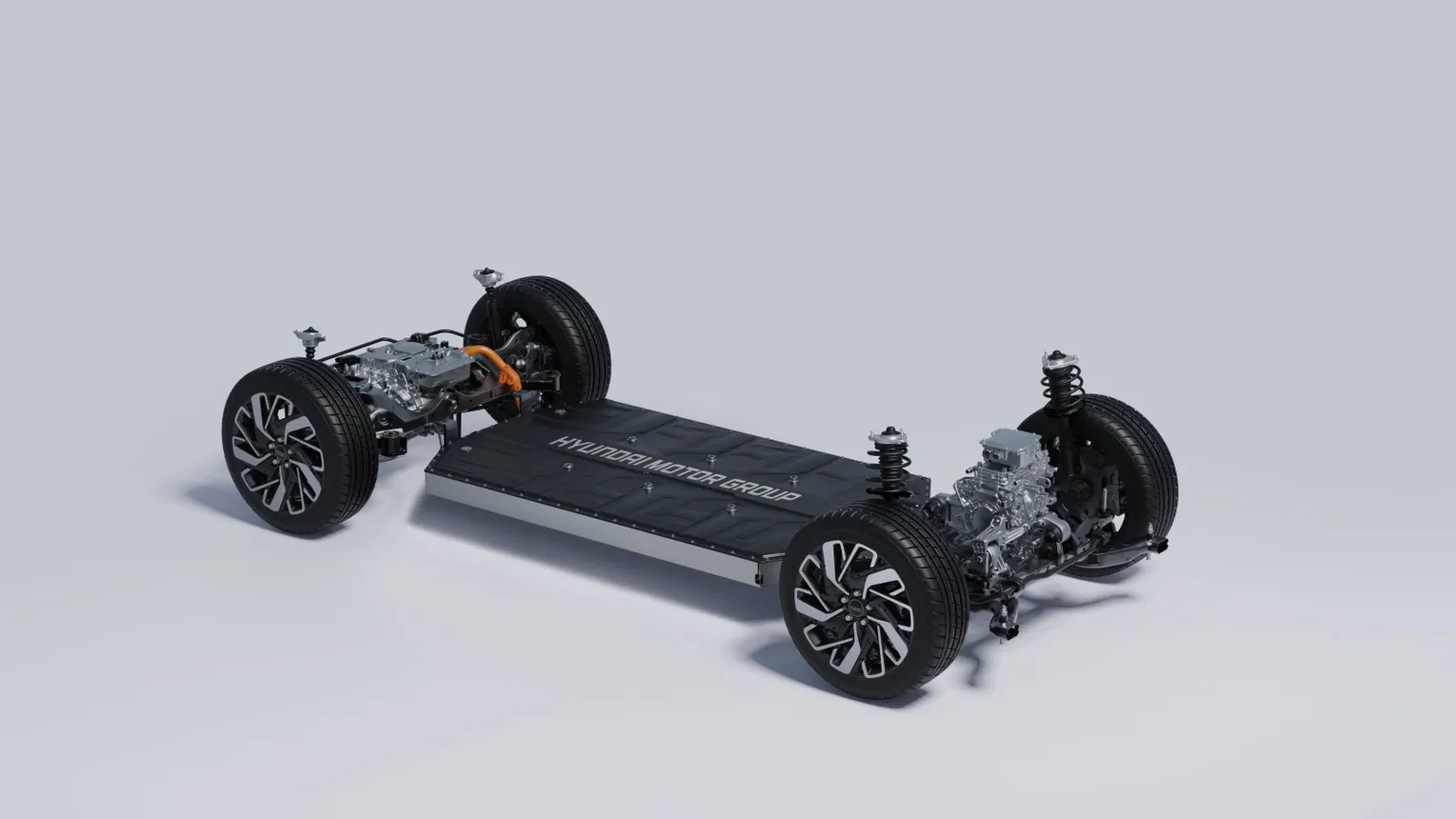
All these CUVs ride on parent Hyundai Motor’s E-GMP platform.
The propulsion system in the Hyundai 3-row CUV uses a larger, newer-generation 110.3-kWh lithium-ion battery pack compared with packs in other Hyundai-Kia battery-electric vehicles, with changed cell density and cell structure, enabling longer driving distances.
The propulsion system is commendable for giving our Ioniq 9 tester what 10 Best judge Gary Vasilash called “standout” range of 311 miles (501 km), plenty for most Americans’ weekly driving routes. Ravinowich said consumer survey data shows 300 miles (483 km) is becoming the litmus test for vehicle buyers to accept or reject a BEV, so Hyundai was unyielding in its goal to exceed the target.
Judge Dave Zoia notes: “It boasts a range that’s among the best of the BEVs we tested, and it ran true in our testing.” He also cited the propulsion system’s native NACS port and its capability to charge fully in 20 minutes on DC fast-chargers as reasons why it stood out on our scoresheets.
Thanks to the instant peak torque of the Hyundai electric motors, the Ioniq 9’s AWD Performance grade clocks a rapid 0-to-60-mph (97 km/h) time of 4.9 seconds. We came away impressed at the neck-snapping swiftness with which the dual motors propelled the 3-row CUV. Even with our lead-footed judges behind the wheel of our 6,000-lb. (2,722 kg) tester, we still managed to get great efficiency of 3.0 miles per kWh.
Wards 10 Best judges flogged our test vehicle hard, putting the propulsion system through the rigors of Detroit-area freeways, where flooring it at high speeds to overtake slower-moving vehicles is often a necessity. As one of our judges observed, it still has plenty of punch left beyond 85 mph (137 km/h) … meaning mom or dad can have a bit of fun on the way to kids’ soccer practice and maybe smoke the other parents, too.