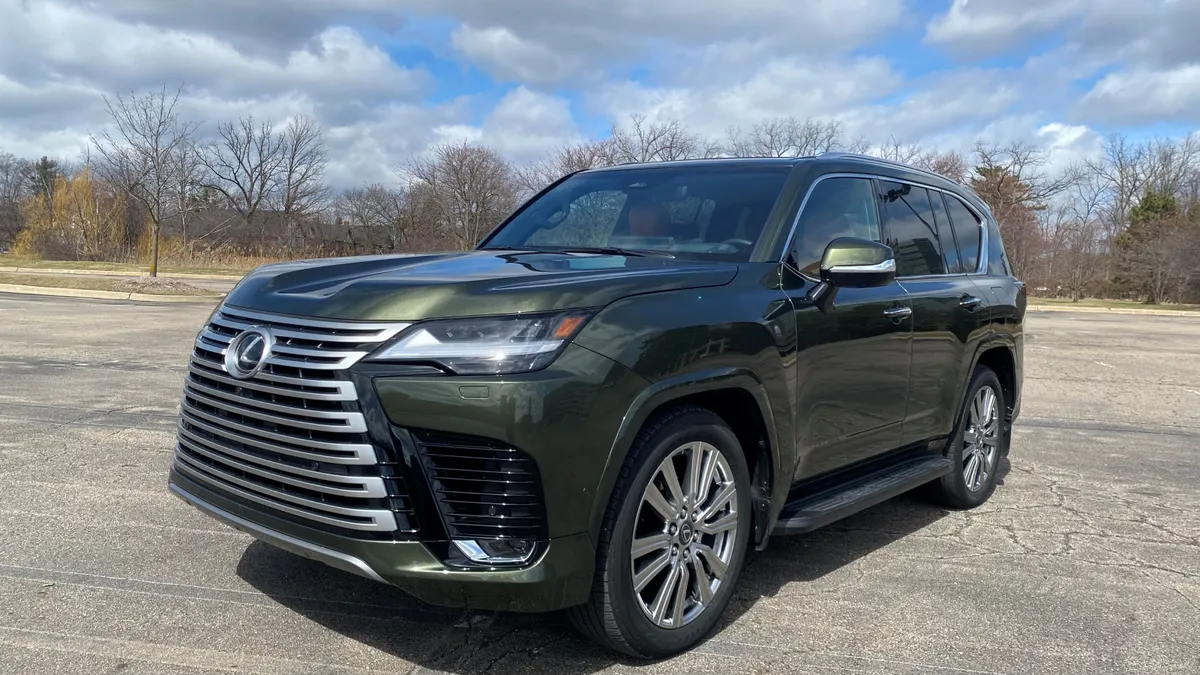
Lexus incorporates a hybrid powertrain into its flagship SUV, earning a Wards 10 Best Engines & Propulsion Systems award for engineering a luxury boulevard cruiser that’s equally capable of tackling tough off-roading.
Wards judges note our 2025 LX 700h Ultra Luxury test vehicle, carrying a $141,350 sticker price, doesn’t hold back on powertrain technology that enables effortless, linear acceleration we’ve come to expect from Toyota’s premium brand.
“This thing goes like a bat out of hell,” observes 10 Best judge Christie Schweinsberg, who admits sacrificing a mile-per-gallon of fuel economy to sample the LX’s prodigious punch. “You would not expect such strong momentum in a big, hulking vehicle.”
The LX’s powertrain employs Toyota’s 3.4L twin-turbo V-6, the V35A-FTS engine honored as a 2022 Wards 10 Best Engine & Propulsion Systems winner in the Toyota Tundra Hybrid. The Lexus uses premium fuel to achieve 457 hp compared with the Tundra Hybrid’s 437 hp; torque is the same for both at 583 lb.-ft. (790 Nm).
The engine uses both direct and port injection with the injector spray configured for optimum combustion, as well as twin parallel turbochargers with electric wastegates, “intelligent” variable valve timing with electric actuation on the intake side and a specific piston design.
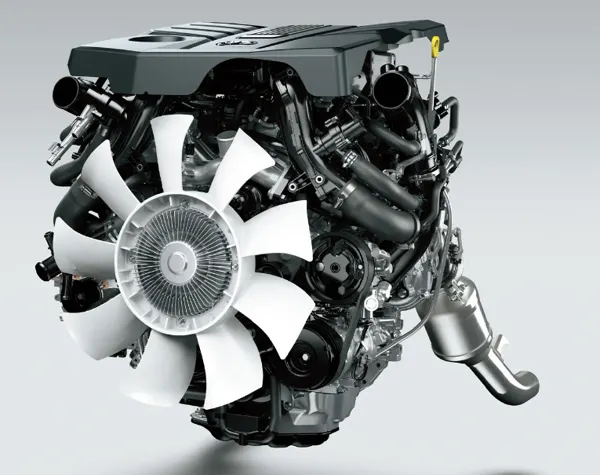
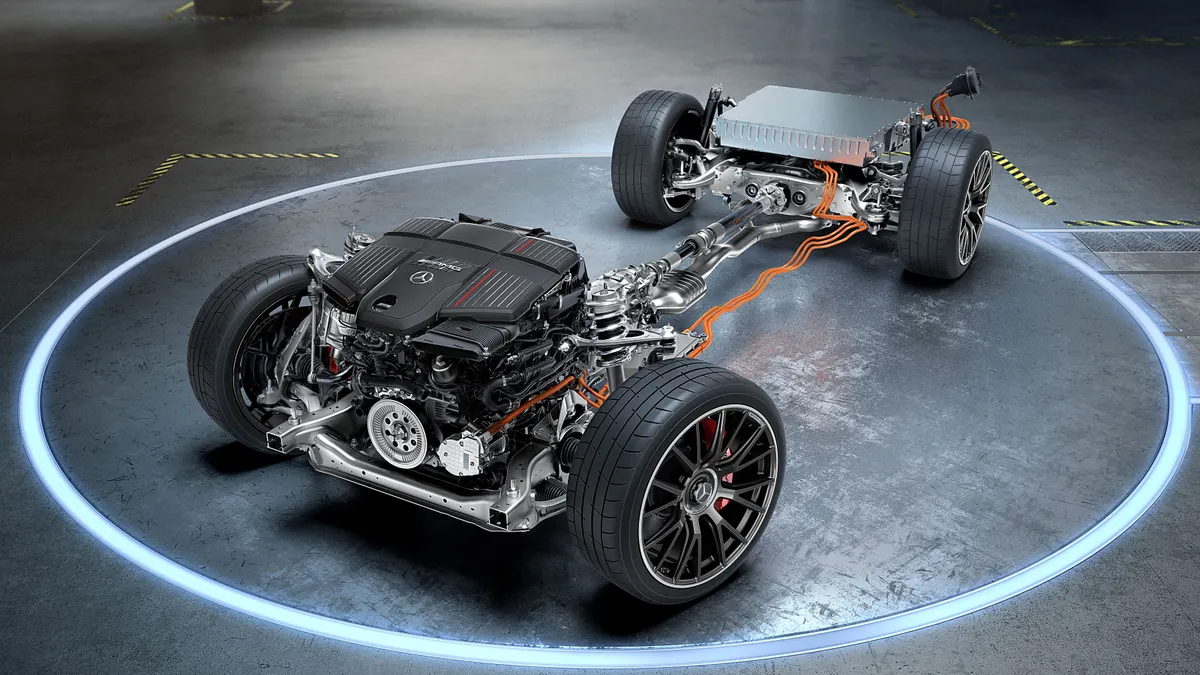
While most Toyota and Lexus hybrids have a series-parallel architecture, which means there are two motor-generators and an e-CVT, the LX 700h is a parallel hybrid, with one motor-generator placed between the engine and the 10-speed automatic transmission.
The electric motor is rated at 48 hp and 104 lb.-ft. (141 Nm) of torque. A 288V nickel-metal-hydride battery with a 1.87-kWh capacity completes the hybrid powertrain.
Taking into account the possibility that the SUV may encounter some water, the battery is housed in a tub located just behind the rear axle. This protects the battery during fording water up to 27.5 ins. (700 mm).
Should the hybrid system become inoperative, there is both a starter and an alternator, with the starter capable of starting the engine and the alternator powering the 12V auxiliary battery.
Engineers built in enough technology to assure serious off-road capability, should the need arise, along with a robust, 8,000-lb. (3,629-kg) towing maximum. All LX 700h models have a Torsen limited-slip locking center differential, and the Overtrail trim adds electronically controlled front and rear locking diffs.
“[The Overtrail] is basically a vehicle that will never get stuck anywhere on the planet,” says Tim Tracey, senior program manager – Powertrain, Toyota Motor North America.
But all of that capability notwithstanding, this still comes back to being a Lexus, which has to take brand loyalists’ desire for a smooth side into account. Yes, it may be able to power through off-road terrain, but for most owners the drive to the country club is the primary usage.
Thankfully it won’t make too much commotion in the latter setting. As judge Dave Zoia observes: “Its interaction between the electric motor and ICE is nearly imperceptible. If you’re not paying close attention, you’ll not feel the gasoline engine restarting as you move on from a stop sign.”