

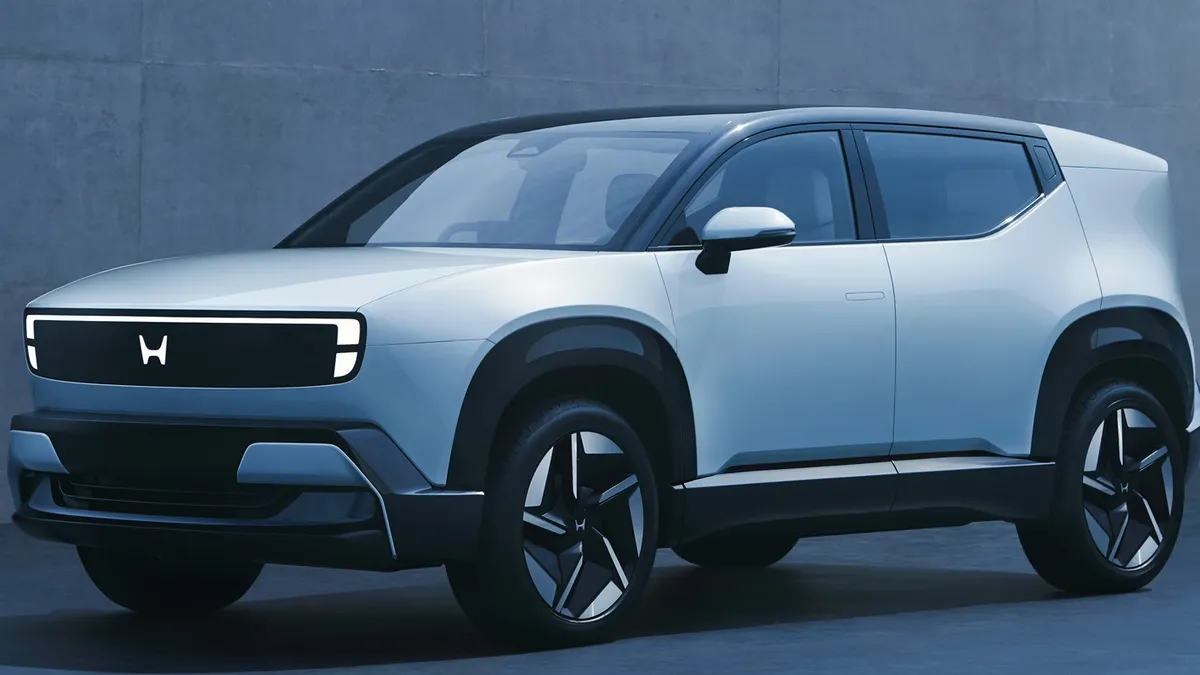
Honda Motor Co. cut its profit forecast for the year ending March 31, 2026 after posting a 24.8% drop in second-quarter operating profit blaming one-off expenses related to electric vehicles, semiconductor shortages and U.S. tariffs.
The company cut its operating profit forecast for 2026 by 21% to 550 billion yen ($3.65 billion) from 700 billion yen and has cut its 2030 global EV sales target from 30% to 20%, reflecting diminished expectations for EV growth, particularly in North America.
For the six months ended September 30, 2025, Honda posted sales revenue of 10.63 trillion yen ($70.9 billion), representing a modest 1.5% decrease compared to the same period last year.
However, operating profit for the period dropped by 41% to 438.1 billion yen, while profit before income taxes fell 28.9% to 527.4 billion yen.
The most significant development in Honda's financial results is the substantial write-down and restructuring costs associated with its revised electric vehicle strategy. The company recorded 237.3 billion yen in combined losses and expenses related to EV model cancellations and manufacturing reductions.
“Owing to the slowdown in the expansion of the electric vehicle market in regions such as North America and Europe, Honda has been experiencing impacts including lower EV sales units and higher sales incentives per unit than initially expected,” the company stated in its financial report.
Honda highlighted the U.S. government’s policy shift as a major factor in its strategic realignment, including "the abolition of tax incentives for EV purchases, the easing of emissions regulations, as well as the imposition of import tariffs." These changes have led Honda to expect even further slowdown in the U.S. EV market, which was previously anticipated to be a major growth driver.
Nonetheless, Honda remains committed to expanding its production capabilities in the U.S. “To further popularize BEVs, it is crucial to procure batteries through a value chain with minimal environmental impact,” Toshihiro Mibe, Honda's president and representative executive officer, said in company statement.
He said the company has decided to position its existing auto plants in Ohio as the Honda EV Hub, including the retooling of existing plants and the localized construction of a new joint venture EV battery facility with LG Energy Solution.
Honda’s CFO, Eiji Fujimura, said the company is on track to ship 3.34 million vehicles by the end of its fiscal year which is March 31, 2026. This reflects a reduction of “110,000 units in North American region due to the impact of the semiconductor shortages,” he said.
He told the investors call that the shortage resulted from the Chinese government’s dispute with the Dutch government over ownership of the Nexperia causing supply from the company to be halted.
“We work together with Tier One manufacturers to try to minimize the impact on the production,” said Fujimura.