Dive Brief:
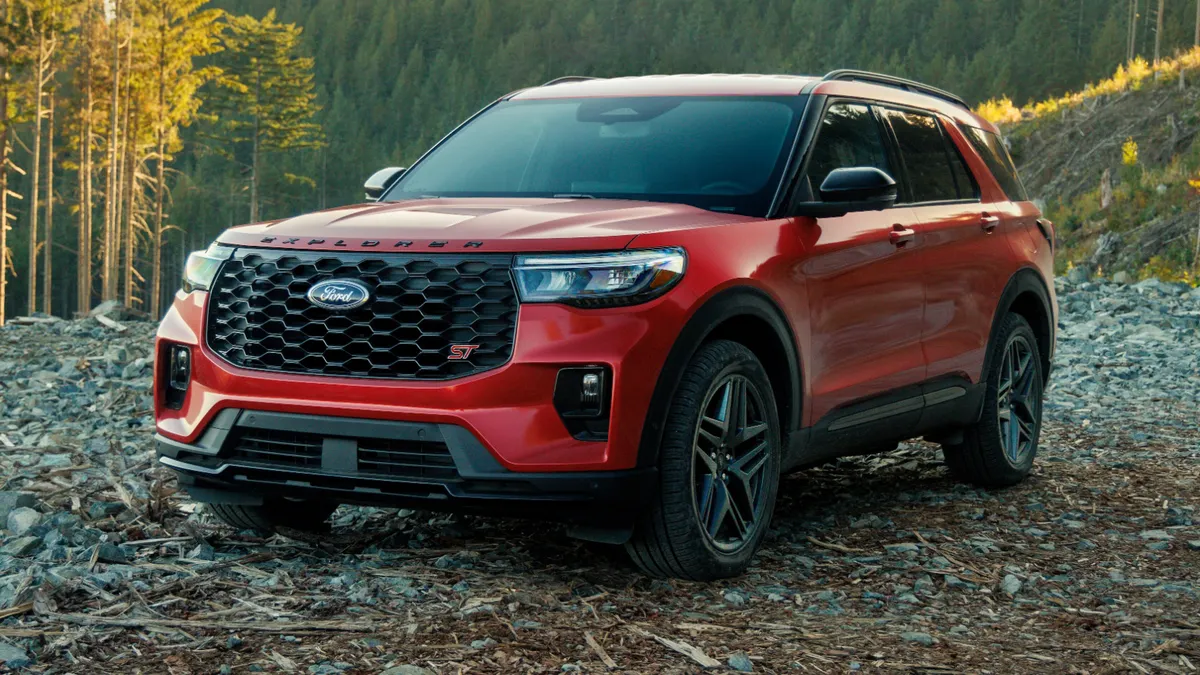
- Ford Motor Co. has recalled nearly 388,000 Explorer and Lincoln Aviator SUVs over second-row seat switches that can stick and cause seats to unexpectedly tip, slide or fold, expanding a June 2025 recall of nearly 305,000 vehicles for the same issue, according to the National Highway Traffic Safety Administration.
- The recall includes certain model year 2020-2026 Explorer and 2020-2027 Aviator SUVs produced between October 2018 and June 2026. All of the recalled vehicles are estimated to be affected.
- Dealers will replace the second-row seat switch bezel and housing with a revised, stronger design, free of charge. Interim owner notification letters are expected to be mailed beginning July 27, with final notification letters sent in January 2027, when remedy parts are expected to become available.
Dive Insight:
The second-row seat in these SUV models features an “easy-entry” switch to automatically fold the seat and slide it forward for easier third-row access. The switch may bind or stick in the down position if the trim bezel surrounding it becomes misaligned. This can cause the second-row seats to tip or slide unexpectedly, increasing the risk of injury to passengers, particularly in the event of a crash.
NHTSA’s Office of Defects Investigation notified Ford in April 2025 about two vehicle owner questionnaires it received alleging unexpected second-row seat movement in 2022 Aviator vehicles. Ford’s Critical Concern Review Group then opened an investigation into the issue, which eventually led to the company’s Field Review Committee approving the first recall in June 2025.
Ford initially determined that some switch bezels were incorrectly installed. The remedy for last year’s recall involved dealers inspecting and replacing the switch bezels as necessary. The company also instructed its supplier to ensure proper alignment of the switch bezel during production and to check for proper operation.
However, in April 2026, Ford reviewed field data of vehicles produced following the 2025 recall and identified five reports of second-row seats moving unexpectedly. The automaker’s CCRG then opened a new investigation into the issue.
The review group confirmed an earlier Ford analysis that found properly installed bezels should not interfere with seat operation. Still, the group identified four reports of unexpected second-row seat movement in vehicles that had received the 2025 recall remedy.
While the specific root cause of the issue remains under investigation, Ford’s analysis of returned parts and warranty claims suggests that bezels can become misaligned during normal customer use. Some of the warranty claims reported broken switch bezel tabs, per the recall report.
On July 7, Ford’s Field Review Committee approved a new recall for all vehicles previously recalled under the 2025 field action as well as those produced after the original recall in June 2025 through June 24, the date that Ford permanently removed the original switch bezel design from production.
The remedy switch bezels are designed with higher retention force than the original version.
As of June 16, Ford’s CCRG received 14 reports of unexpected second-row seat movement, six of which were for vehicles that received the previous recall remedy and eight involved vehicles that were not part of the original recall population in June 2025.
Ford is not aware of any accidents or injuries related to the issue.