Ford Motor Company has announced a series of changes to its global leadership team aimed at advancing the company’s Ford+ business strategy, per an Oct. 10 company press release.
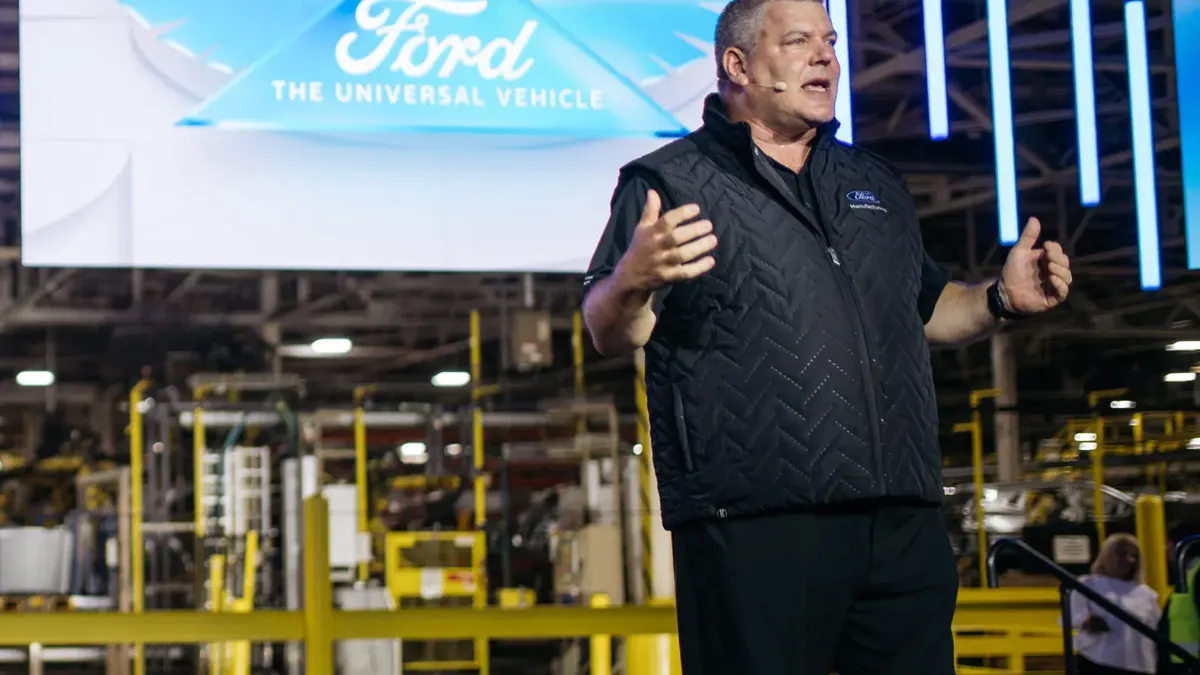
Ford appointed Bryce Currie as chief manufacturing officer, widening the scope of his previous work as vice president of manufacturing for Ford’s Americas region, where he was in charge of the more than 30 Ford manufacturing facilities in North and South America. His new role expands his responsibilities to cover Ford’s manufacturing footprint worldwide.
Currie joined Ford in 2023 after three years at industrial building company Johnson Controls, where he was global vice president of global products operations before being promoted to chief manufacturing officer, according to his LinkedIn profile. His work implementing lean manufacturing principles at the company led to a more than 25% reduction in variable conversion costs, per his LinkedIn.
Currie also spent time in leadership roles in global quality assurance and manufacturing engineering at GE Aviation, General Electric and TRW Automotive, now the ZF Group.
In addition to naming Currie as its new chief manufacturing officer, Ford has made Andrew Frick — currently president of Ford Blue and Model e — head of all of the company’s global retail business units by adding leadership of Lincoln Motor Company’s retail business to his current responsibilities. Frick’s new, expanded role streamlines the leadership of Ford’s distinct global retail business units under one executive.

Ford also named Sam Basile as vice president of advanced product development, cycle planning and programs and Jim Baumbick as president of Ford Europe.
"These global leadership appointments underscore our relentless commitment to building a truly world-class team across Ford, united by a singular focus: delivering product excellence and quality for our customers globally,” Jim Farley, Ford president and CEO, said in a statement.
The company introduced its Ford+ growth plan in 2021, positioning gasoline-powered vehicles, electric vehicles and commercial vehicles as separate business segments in order to make operations more efficient, while targeting sales toward customers with different needs.