

Electric vehicles should be as easy to repair as traditional internal combustion engine vehicles. That’s the view of the U.K.‘s leading vehicle assessment body, Thatcham Research, which announced its New Electric Vehicle Blueprint paper in a March 6 release.
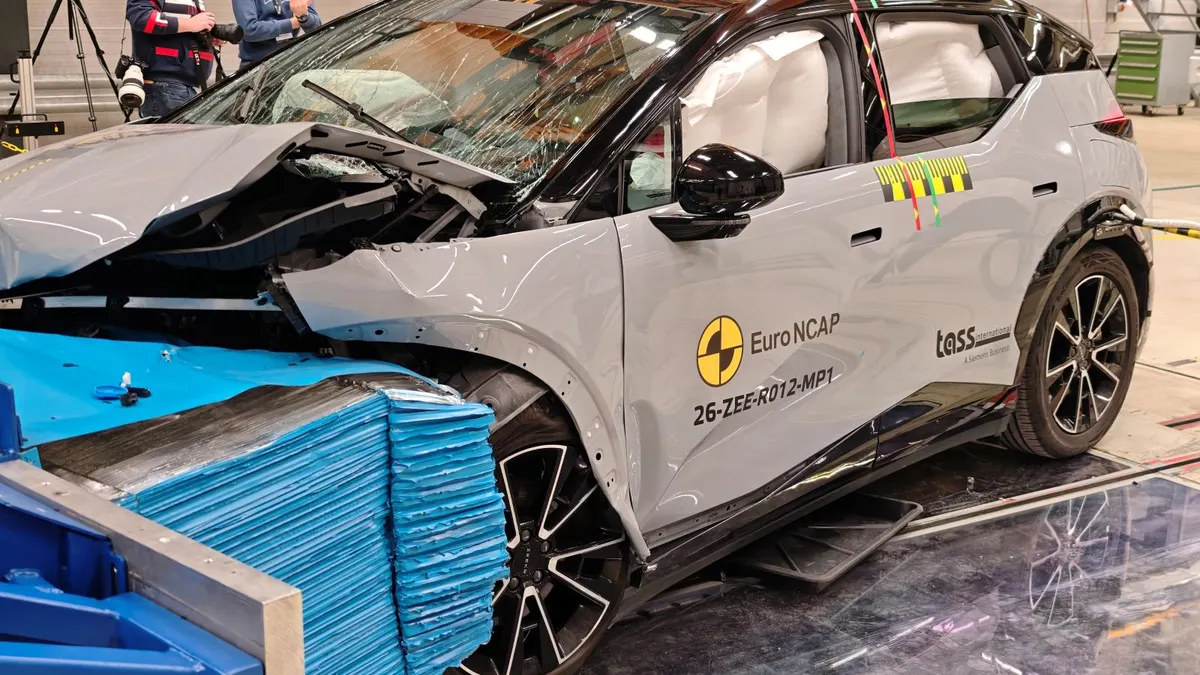
The aim of the research institute is to lower the escalating costs of insuring EVs because of unnecessary vehicle write-offs, often over relatively minor collision damage.
Thatcham is calling for car manufacturers to make EVs more repairable, sustainable and affordable. The organization claims that instead of replacing a battery, which represents about 40% of the car’s total value, it could be economically repaired.
A recent Thatcham Research survey, conducted in partnership with the Centre for Economics and Business Research (CEBR), suggested that battery-related issues remain the primary concern for roughly 45% of insurers and 42% of repair professionals.
Its blueprint calls on the automotive industry to adopt new standards for batteries and other key EV system components to improve service access to these components.
WardsAuto spoke with Dan Harrowell, principal engineer for advanced technologies at Thatcham Research, to find out more.
Battery pack redesign
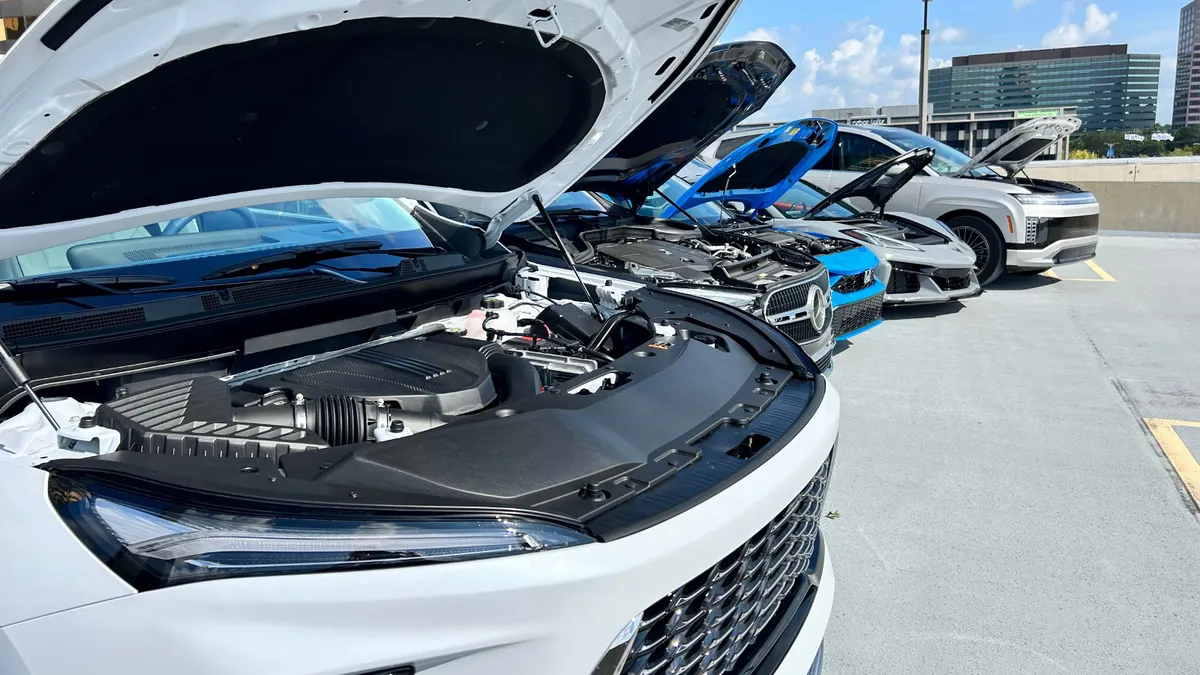
Most EV manufacturers build their vehicles with structural battery packs, integrated into the chassis structure and protected by a welded-in safety basket, said Harrowell.
“Most EVs have a battery slung under the vehicle, so you can remove the battery, and hence, that's why it's vulnerable,” he said. Yet, some automakers are attempting to reduce the weight of their EVs by using increasing levels of integration.
“And with more [EVs], the batteries are becoming all welded and glued in,” said Harrowell. “The more and more throwaway they've become, because you can't even remove parts of them.”
However, the European Union’s Battery Passport regulations do assess serviceability requirements. “So, for that reason, serviceability is a first step to repairability,” Harrowell said. “If we can service them, that's great for recycling, it's great for repair, it's great for remanufacture.”
Aftermarket EV repairs
Thatcham’s ultimate vision for EVs is that they should become as repairable as ICE vehicles and to see the growth of small-business repair shops, just as those that currently exist for traditionally powered vehicles, especially in the U.K.
“It's actually a really good opportunity for the country, because there's a gap here,” said Harrowell. “We can be leading in this framework of repairing, plus we're an island, so we don't want to be shipping things backwards and forwards.”
On top of that, the type of diagnostic work involved with EVs makes for a more attractive and cleaner work environment for young apprentices “compared to what it used to be, very dirty and oily, lots of oil,” said Harrowell.
However, there are challenges yet to be met because, at the moment, battery packs and other key components vary greatly between different EV manufacturers.
“Some battery designs are made not to be repaired, but some are designed to be repaired,” said Harrowell. He pointed to BMW’s approach to marketing battery parts in anticipation that its battery packs are repairable.
“So, they've got thought process (that) batteries are repairable, and we've trained all our staff to repair them,” he said.
Yet, it’s not just battery parts that are the problem, said Harrowell. While BMW does focus on these, other key EV components are easier to access in models from China-based EV maker BYD, which employs a modular system to improve serviceability, he explained.
EVs will also have to be designed with resettable emergency safety loops that can be reset without permanent damage or extensive component replacement, similar to a fuel cut-off switch in conventional ICE vehicles, Harrowell said.
Thatcham’s blueprint also calls for easy ways to assess battery damage available to all stakeholders, including independent repair shops and insurers, to prevent unnecessary write-offs.
Diagnosing high-voltage EV systems should also be standardized without the need for specialized and often expensive tools. While repair methods for battery casings and mounting brackets must provide access without disassembling entire battery packs. EVs should also use pyrotechnic circuit breakers designed for easy reset or replacement.
Battery packs, themselves, must be designed for safe disassembly where necessary, using removable fasteners rather than permanent adhesives. Lastly, critical components, like charge ports, should be positioned in less vulnerable locations and designed as standalone units to minimize repair complexity and costs.
Standard parts
While Thatcham does not want to see regulators tying the industry up with more red tape, standardization of some parts would be a good thing, Harrowell said.
“We just want to note that repairability and the opportunity for refurbished batteries is key to the industry,” he said. “We're trying to gain parity with the ICE vehicles around, and we want to keep them on the road for similar times.”
Collaboration with automakers over EV design is top of Thatcham’s wish list right now, and it is hoping more will discuss designs of future models at an early stage to help build in repairability, he said.
“Ultimately, our vehicle risk rating will identify which EVs are more easy to repair,” said Harrowell.
Analyst view
Thatcham’s Battery Blueprint fits with what consumers need, even if they don’t yet know it, and would address a patchwork of regulations being discussed between the U.S. Environmental Protection Agency and individual states, Adam Ragozzino, Omdia’s principal analyst for batteries and electric powertrains, said in an email response to WardsAuto.
“As automakers looked to cut costs and basically learn how to make EVs in real time, some of the savings seemed to shift costs to the service departments, consumers and recyclers,” he said.
Bringing parity between EVs and ICE is not enough to attract consumers to make the transition to electric powertrains, said Ragozzino. “Service, and increasingly insurance, are a big part of parity. Automakers need to design cars with the repairs that come later in mind,” he added.
He pointed to Stellantis’s move in 2023 to partner with the battery-swap company Ample as a way of giving EVs a longer lifecycle. “I thought that would not only help make batteries more serviceable but also act as a catalyst for automating battery removal at recycling time,” Ragozzino added.
Most consumers do not realize an EV’s battery pack is such a large part of the vehicle’s total value, so a complete write-off after a minor accident is not sustainable for either the consumer or insurer, Alexandre Parente, head of global analysis and reporting at Jato Dynamics, said in an email to WardsAuto. Thatcham’s blueprint makes a lot of sense, he said.
“That’s the kind of upstream design thinking that can dramatically improve affordability and environmental outcomes over a vehicle’s lifetime,” Parente said. However, he sounded a note of caution. “For this to work in practice, it will require alignment across the global automotive ecosystem, not just the U.K. or Europe.”
Different insurance, regulatory and salvage conditions exist around the world and may not align with Western expectations, Parente explained, citing China’s focus on speed to market and cost competitiveness fo EVs, where repairability may not be a central design consideration. “That isn’t a criticism, it simply reflects how their domestic market operates.”