

The U.S. National Highway Traffic Safety Administration (NHTSA) set the ball rolling with testing passenger car safety standards in 1979 with its New Car Assessment Program (NCAP), a model that Europe adopted and continues to develop.
Yet, while testing by Euro NCAP has driven down the number of fatal vehicle collisions on the Continent, U.S. figures remain stubbornly high despite the implementation of many more safety features in modern vehicles.
The reason may lie with the NHTSA’s role as a regulator whose decisions have to pass through the U.S. Congress, Dr. Michiel van Ratingen, Euro NCAP’s secretary general, said in an interview with WardsAuto.
“They are hamstrung by being a government regulatory body and have any decisions pass through Congress, with the ensuing political divisions along party lines,” said van Ratingen in an interview with WardsAuto after his presentation of Euro NCAP 2026 protocols to media outside Brussels.
“They are also forced to follow certain rules in terms of innovation of their protocols with the test procedure; nothing bad, I would say, but it becomes part of the political system, and that’s where things can go wrong,” he added.
Passive vehicle protection measures for vulnerable road users, such as crumple zones on car hoods to protect against head injuries, are areas where the U.S. has fallen behind, said Matthew Avery, Euro NCAP director of strategic development.
“Passive safety for vehicles in the U.S. is well below our standards, especially when it comes to passive pedestrian protection,” said Avery. “Unfortunately, until they can get a regime that wants to improve this, then their casualties will continue to go up, and they have gone up in the U.S.,” he added.
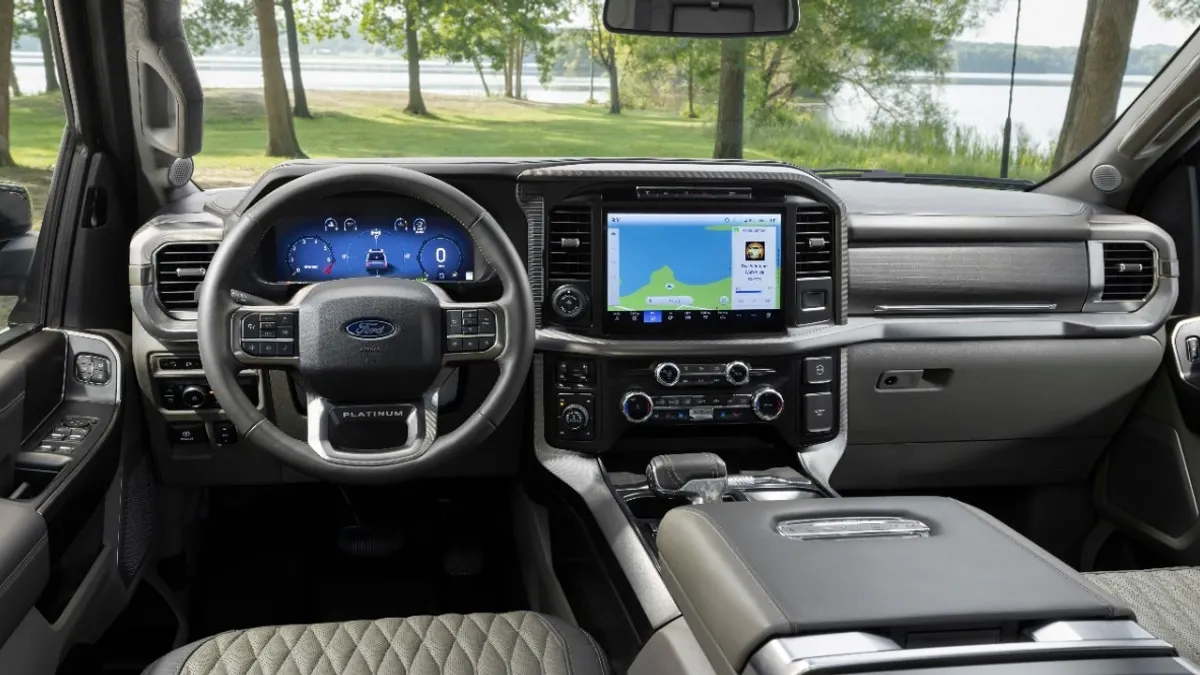
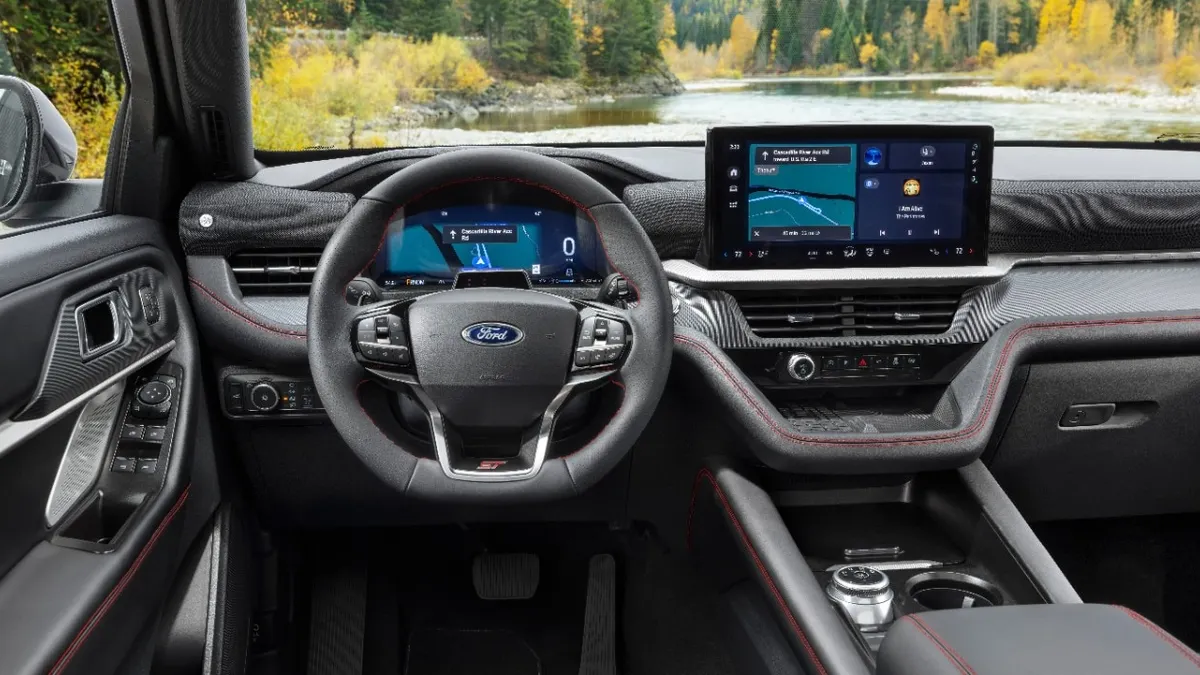
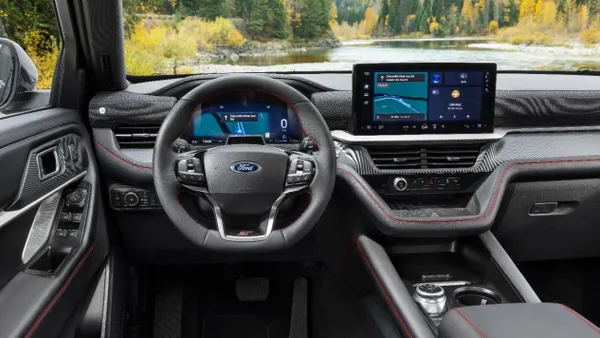
The four new areas that Euro NCAP will introduce to its testing from 2026 include a greater focus on physical buttons in the cabin, driver monitoring to ensure awareness in driving tasks, robust advanced driver assistance systems in all lighting and weather conditions, and testing of electric door handles that must be able to allow access to the occupants after an accident.
This feature becomes even more topical since China’s decision to mandate mechanical door latches in all vehicles sold in its market from Jan. 1, 2027 following several reports of trapped occupants after collisions when electric handles in battery-electric vehicles could not be opened.
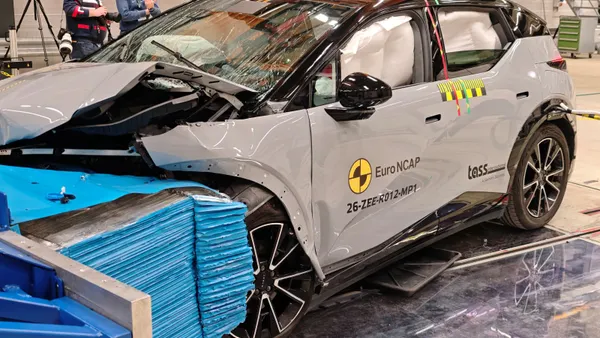
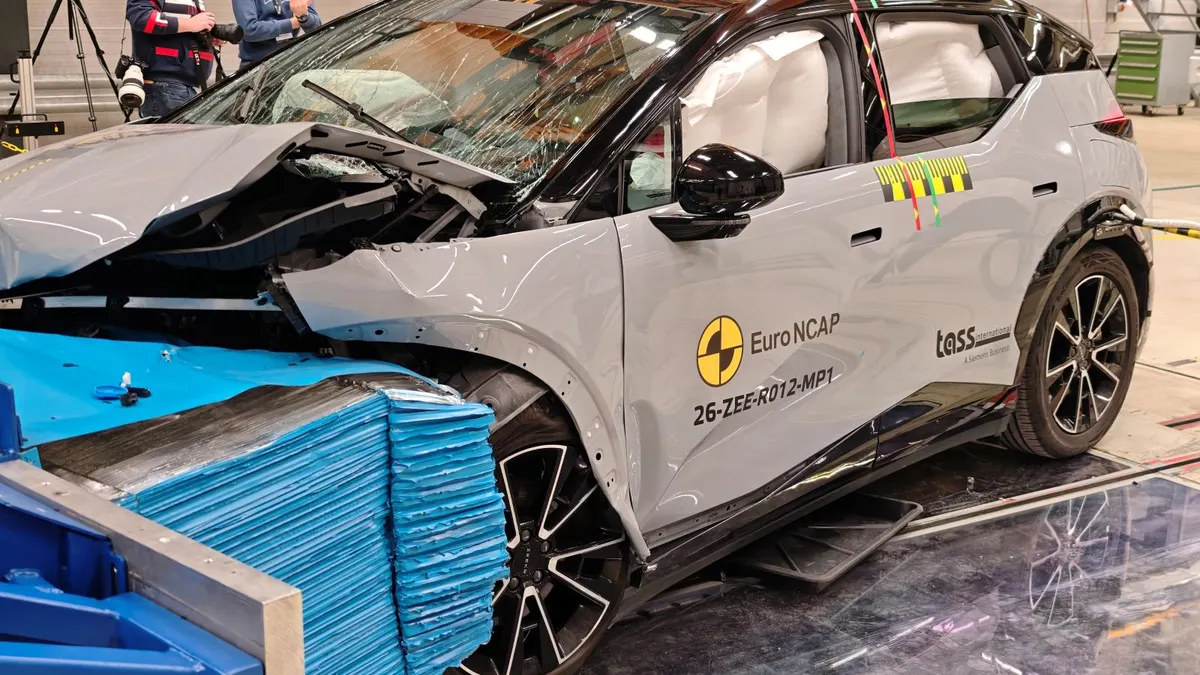
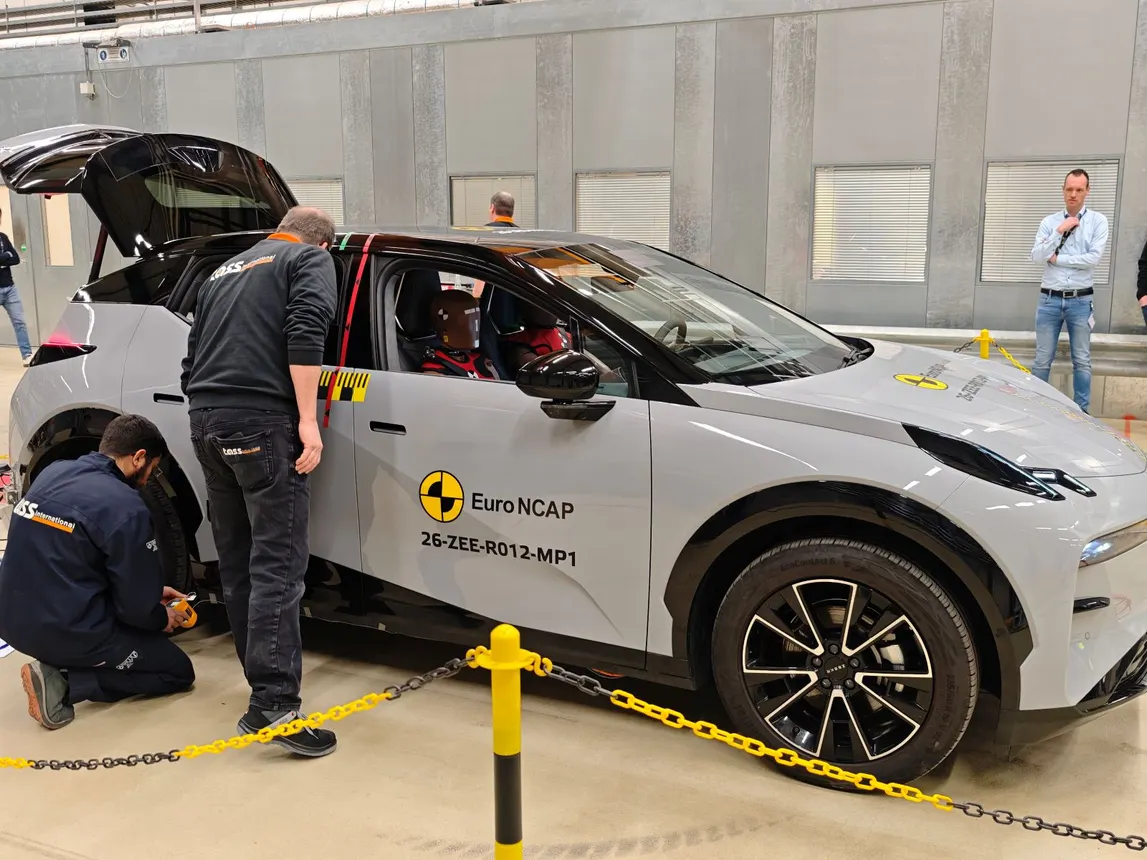
Media representatives were treated to a crash test of a new Zeekr X premium EV at the TNO/TASS indoor test facility in Helmond, Netherlands.
The test saw the car fired down a track to be met in a 50-50 head-on impact with a 1,500-kg (3,300-lb.) movable barrier representing a third-party vehicle at a combined speed of 100 km/h (62 mph). The barrier’s weight has been upped this year from 1,400 kg to better reflect the increasing weight of Europe’s fleet of vehicles driven by consumer demand for SUVs and EVs.
While the Zeekr was severely damaged, the sunken door handles allowed first responders to open all doors and access the occupants.
Those occupants, the ‘Thor’ family of dummies, included a new fifth-generation female dummy that is so advanced its list price exceeds 1.3 million euros ($1.5 million).
During the collision, lasting less than half a second, the dummies and the vehicle produced 300 channels of data that Euro NCAP will analyze and assess exactly how well the Zeekr X performed in terms of passenger safety.
This is just one of the tests the organization, with special attention, paid to EVs with the extra risk of thermal runaway from a damaged battery pack.
A side impact of a EV poses the biggest risk, Euro NCAP experts said, because it impacts the car’s battery pack integrated into the floor. In some tests, this pack can split open and electrify the entire vehicle.
Next, we were taken to live demonstrations of current and anticipated developments in vehicle safety at Ford’s largest European drive testing facility at the Lommel Proving Ground in Belgium.
Here, Renault showcased its automatic emergency braking (AEB) system on a Renault 5 E-Tech EV able to avoid a parked motorcyclist suddenly revealed after the vehicle in front pulls into a different lane. Other AEB displays involved a hidden child dummy behind a Ford Transit and a child walking out from behind parked vehicles into the path of a Ford Ranger plug-in hybrid.
One display yet to reach the roads saw Mobileye show its combination of driver monitoring with ADAS systems where the system follows the driver’s eyes to check that he had seen potential hazards before any intervention.
Looking to the future of autonomous driving vehicles, Euro NCAP technical director Richard Schram does not envision too much of a change in the testing of vehicle safety systems.
However, some tests will have to change, such as driver monitoring, said Schram. However, occupant recognition will be vital in a driverless vehicle and will still require passive safety systems, he added.
Crucially, the performance parameters of the vehicle’s autonomous driving functions will also have to be tested and judged compared to rival systems, he said.
Post-crash performance, too, would also feature with a driverless vehicle because “it will still happen,” said Schram. “You [passengers in the vehicle] might not ever cause a crash, but people might crash into you,” he added.
So, the passive safety features of the vehicle, airbags, passenger restraints, etc., would still require rigorous testing, Schram said.
He added we do not know, as yet, how individual nations will allow the operation of autonomous vehicles, such as whether would they work in geofenced areas or be allowed free access to the country’s whole road network.
“That's a debate that, obviously, a lot of cities are having,” Shram said. “Do we make a zone where only autonomous vehicles are allowed in? You still have to have access for bicycles, pedestrians, stuff like that, but how you monitor that with autonomous vehicles has to be thought about.”
However, Euro NCAP’s latest set of protocols does set up the safety organization for this driverless future, he added. “We're undergoing, in this year, a case study with one of the well-known autonomous vehicle manufacturers and this is the beauty about this new rating scheme, that it can fit these types of vehicles as well.”