

We are close to the tipping point where autonomous vehicles are “good enough” in terms of safety versus a human driver and are ready for widespread deployment on our highways, says an official with a camera-driven, artificial intelligence-powered autonomous tech company.
And what’s more, Eran Ofir, CEO of Imagry, believes the use of camera-only vehicle sensor arrays, using the single sense of vision, is now safer to rely on than any human driving a vehicle.
He also insists European nations are at risk of coming last in the race to exploit the benefits of the technology behind China, the U.S. and, now most recently seen in new legislation, the U.K.
Speaking to WardsAuto, Ofir admits autonomous vehicles are still experiencing learning difficulties, witnessed by Tesla’s challenging robotaxi trials recently in Austin, TX, but that they remain safer in terms of overall accidents.
His company has been running pilot schemes with autonomous vehicles since 2019 and now boasts its products travel public roads in the U.S., Europe, Japan and Israel.
“We use vision only, all based on camera, no lidars or radars or stuff like that. I know that it’s strange for authorities in Germany but, currently, it serves pretty well."
He adds that the use of a single system of camera sensors also saves on computing power that would be needed to handle the greater amount of "needless" data from more complicated sensor arrays. "This (single system of camara sensors) saves on computing and you don’t need high-level communication and you’re not limited to geofenced areas,” he explains of the typical scenario when testing autonomous vehicles with lidar or radar sensors.
Ofir admits the real-world commercial applications where his company’s technology is used are in slow-moving buses on predetermined routes.
That said, he says the system’s software is hardware-agnostic and is used in several of its automaker customers’ products working alongside the additional object identification sensors installed in the vehicles.
Those object identification sensors will be used for nighttime or adverse weather conditions, but Ofir insists the core of the vehicle’s perception of its environment will be handled by data from the cameras.
“The way that our perception works is that we get the many small neuron networks, tens of them, using what is called Distributed Neurons Network Architecture,” he says, adding that the data is drawn from video feed from eight cameras with each neuron network trained to do optimum detection and classification on a different type of object.
“One is looking at traffic lights, another is looking at signs, one is looking for pedestrians, one on lanes, one on parked (vehicles) and (on) moving vehicles, etc.,” Ofir explains.
He adds, “This map is like our perception, our eyes, mimicking the same way as our brains work.”
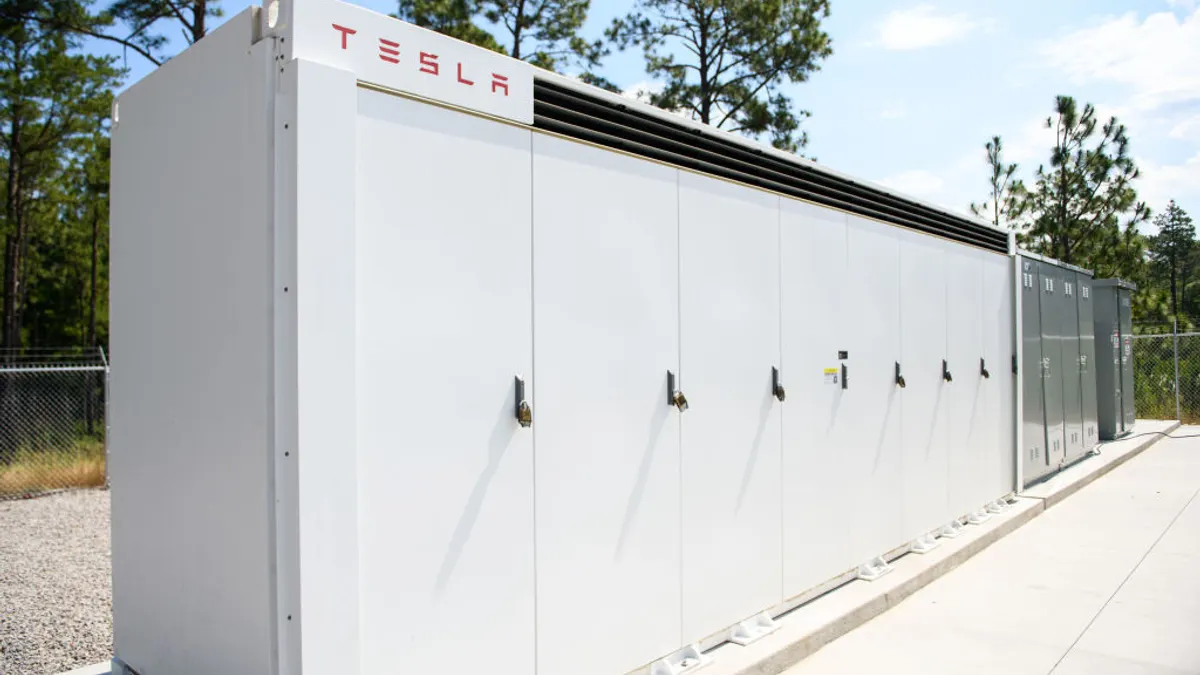
It is worth pointing out here that a similar camera-only system used by Tesla has recently been subject of a Florida court order for the automaker to pay up to $243 million in damages to victims of a fatal crash of an Autopilot-equipped Model S in 2019.
Nonetheless, Ofir says the technology has advanced quickly in the past two years thanks to the amount of computing power now available in the market. It is able to achieve reaction speeds far in excess of those by even the best human driver.
“We get to a latency with the vehicle of sub-100 milliseconds,” he says, compared to a human’s best response time for events on the road of 330 milliseconds.
“So, our system responds nearly three times faster than (a human) to anything that is happening on the road,” he claims, adding, “This includes vectors if moving objects behind the vehicle (are) in (a) 360-degree (field of view), so the system is safe.”
Of course, speed of reaction is only one aspect a human brings to an incident and questions remain, such as whether the faster-reacting robot will actually make the right decision.
Ofir points to data released by Tesla for the end of 2024 that claims 1.5 billion autonomous miles (2.4 billion km) driven by its customers paying for the so-called “Full Self-Driving” driver assistance package.
“Recorded accidents were still two orders of magnitude lower when compared to anyone else in the industry,” he claims, although about 50 lawsuits against Tesla over the FSD system are currently pending.
Imagry fully supports the U.K.’s recent plans to fast-track autonomous vehicle trials, allowing services without safety drivers and app-based ride-hailing.
Ofir says this could put the nation in the same category as the U.S. and China, who are racing away in the development of autonomous technologies from the more cautious approach being taken by the European Union.
“Germany, an original pioneer of the technology, is now at risk of falling behind on autonomous compared to the U.S., China and now, even the U.K.,” he warns.
At the conclusion of our interview, he shows a company autonomous test vehicle negotiating a crowded city street and complicated intersection.
“Here, the car would do exactly the same behavior as I would,” he says, asking, “Is that the point where we say that’s enough to prove it is safe and good enough?”