

While BMW saw its operating profit margins for its automotive division beat forecasts in Q3 2025 as it focuses on battery-electric vehicle investments, the automaker remains committed to a “technology neutral” powertrain approach.
In fact, during a Q&A session after the automaker’s Q3 financial presentation, CEO and Chairman Oliver Zipse, added his voice to growing opposition against the European Union’s plans to enforce zero-tailpipe vehicle sales from 2035, which is currently under review.
In response to a media question, he said the company is not asking for a weakening of the legislation but for a different regime that will achieve the EU’s CO2 targets.
Zipse said that lawmakers must consider all the sources of CO2 emissions in vehicle production, rather than just tailpipe emissions. As an example, he said that an automaker’s use of “green” steel is not taken into account.
“What we are asking for is a new regulation that is more effective in greening the whole fleet,” he said. “The corporate regulation as it now stands prescribes what a company must do whether the CO2 emissions are being reduced or not.”
Meanwhile, BMW’s Q3 results showed the company’s automotive division saw its EBIT profit margins rise 2.9% to 5.2% from 2.3% for the same period in 2024, CFO Walter Mertl said on its earnings call.
He also confirmed that BMW is on track to meet its full-year target for pre-tax earnings after surpassing €8 billion ($9.19 billion) year-to-date through Sept. 30. However, it’s a 9.1% decline from the same period a year ago.
Sales growth was led by the U.S. (up 9.5%) and Europe (up 8.6%) for a total of 588,140 vehicles delivered during Q3, a YoY increase of 8.7%. Global sales reached 1,795,734 units in the period, an increase of 2.4%.
The company also claimed an 18% rise in electric vehicle sales. Electrified vehicles, which include both EVs and plug-in hybrids, accounted for 26.2% of BMW’s sales volume in Q3, up from 23.3% in 2024.
“In the third quarter, we once again proved that our business model is robust and resilient,” said Zipse. “We have all the right factors for continued success: a technology-neutral approach, exciting products, a strong global presence and outstanding innovation capabilities throughout the entire value chain.”
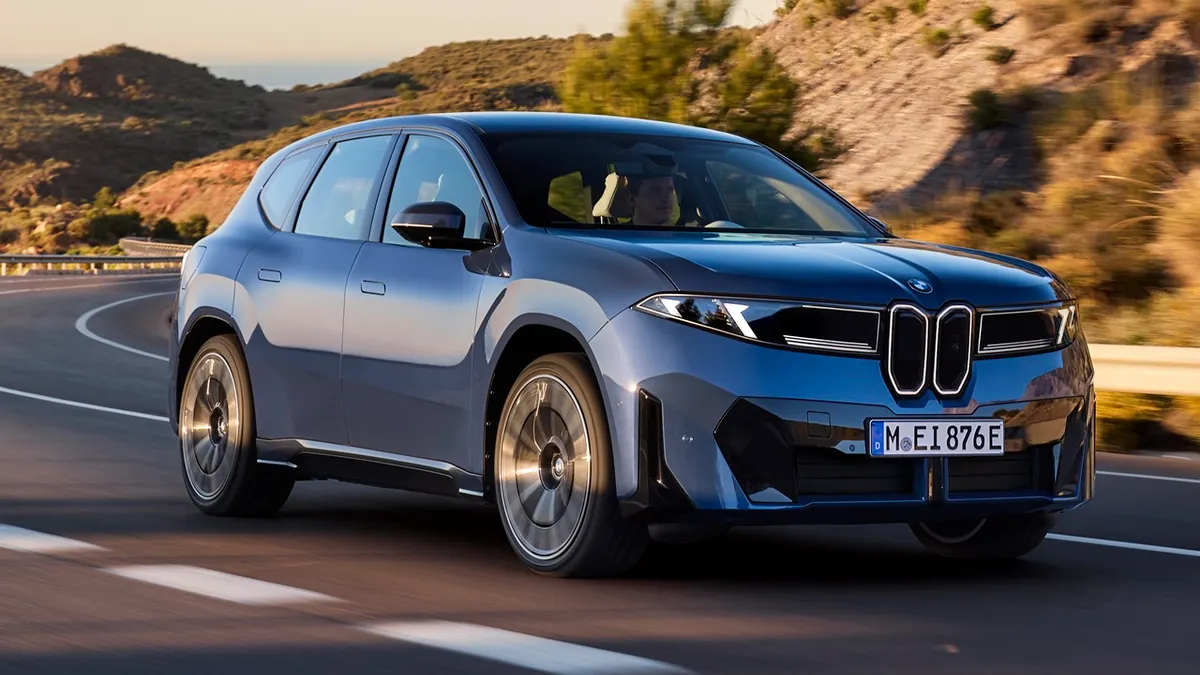
BMW expects further positive growth momentum in 2026 from the new BMW iX3, the first of its next-generation Neue Klasse EVs to hit the market.
“The response to the BMW iX3 has been extremely positive: In Europe, new orders significantly exceed our expectations, confirming the strong customer interest,” said Zipse.