Editor's note: This story is part of the WardsAuto digital archive, which may include content that was first published in print, or in different web layouts.
DRESDEN – Many people have the anxiety dream where they sit down in a classroom and a test is handed out they did not study for.
Auto writers have a nightmare where they get behind the wheel of a test car and discover they no longer know how to drive. The controls are vaguely familiar, yet the owner’s manual has to be consulted just to figure out how to turn on the ignition.
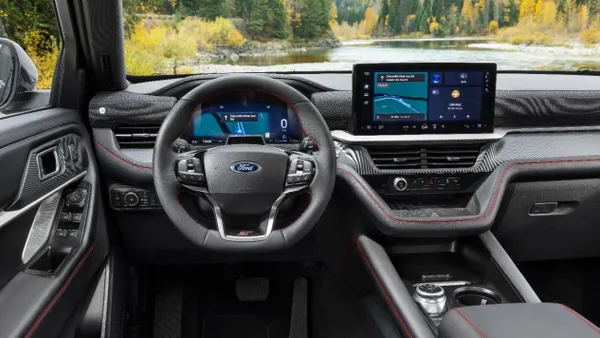
Unfortunately, for many journalists reviewing the fourth-generation BMW 7-Series in 2001, the nightmare became reality. They really did need help starting the car and figuring out how to operate the stumpy little electronic shifter on the steering column. Even adjusting the radio was a challenge, because it had to be done via a hideously complex central controller called iDrive.
Even so, the car went on to become the biggest-selling 7-Series ever. Many of the ‘02s maligned electronics innovations and design features now are commonplace, such as the initially confusing ignition system that replaces the traditional key with a key-fob transponder and push-button starter.
The car’s tall rear-end design, derisively nicknamed “Bangle-butt,” after BMW’s head of design, Chris Bangle, also has since been imitated on popular cars from the Toyota Camry to the Mercedes-Benz S-Class.
But engineers and designers clearly realized that in their eagerness to make the ‘02 7- Series the most technically advanced sedan of the day, they also made it unintuitive and intimidating to drive.
BMW takes a decidedly more conservative and consumer-friendly tack with the fifth- generation ‘09 7-Series which debuts in the U.S. this spring as the 750i and 750Li short- and long-wheelbase versions. The shift lever has been moved back to the center console where it belongs, the iDrive has been simplified and the Bangle-butt is gone.