Editor's note: This story is part of the WardsAuto digital archive, which may include content that was first published in print, or in different web layouts.
Constructive criticism played an integral role in the development of the in-dash displays for the upcoming Focus electric vehicle, says Ford’s lead human-machine interface engineer.
Developing the EVs displays and HMI was unchartered territory for Paul Aldigheri and his team, as it was the first pure EV they had worked on.
“Because this was new, we initially started with ethnographic research with folks who were interested in EVs, or may have built and owned their own EVs,” Aldigheri tells WardsAuto. Among people recruited to offer feedback was a pilot. Although he had no experience with EVs, his insight proved valuable, Aldigheri says.
Like EV drivers, pilots “are running on relatively limited resources with difficulty to refuel,” he says. “EV range is more variable than with an internal combustion engine when it comes to temperature and hills, and running out of (charge) is not the same as running out of gas; there’s a difference in the time to recharge and availability.”
Also consulted was the Michigan Electric Auto Assn., a group of electric-vehicle enthusiasts, many of whom have built their own EVs.
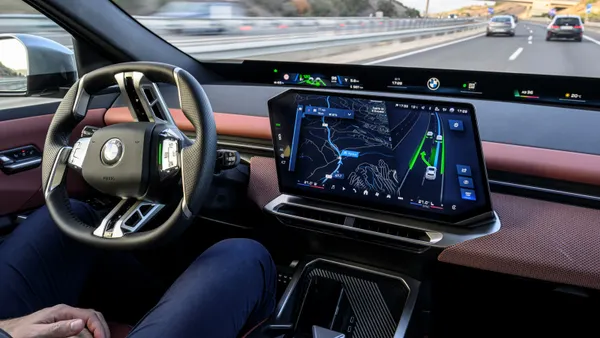
Feedback from the early test groups led to the development of early versions of the Focus’ multiple displays, including two 4.2-in. (10.7-cm) full-color LCD screens flanking the centrally located speedometer.
But some of the EV enthusiasts’ suggestions were deemed too complicated for normal consumers, most of whom would be experiencing an EV for the first time.
“There’s a difference in providing information to an expert than there is (to) a novice,” Aldigheri says. “Once we explained (to the experts) we had to cater to a different population, a light went off in their heads.”